


Nunavut Quest youth program eyes expansion for next year
Growth depends on committee approval, earlier planning
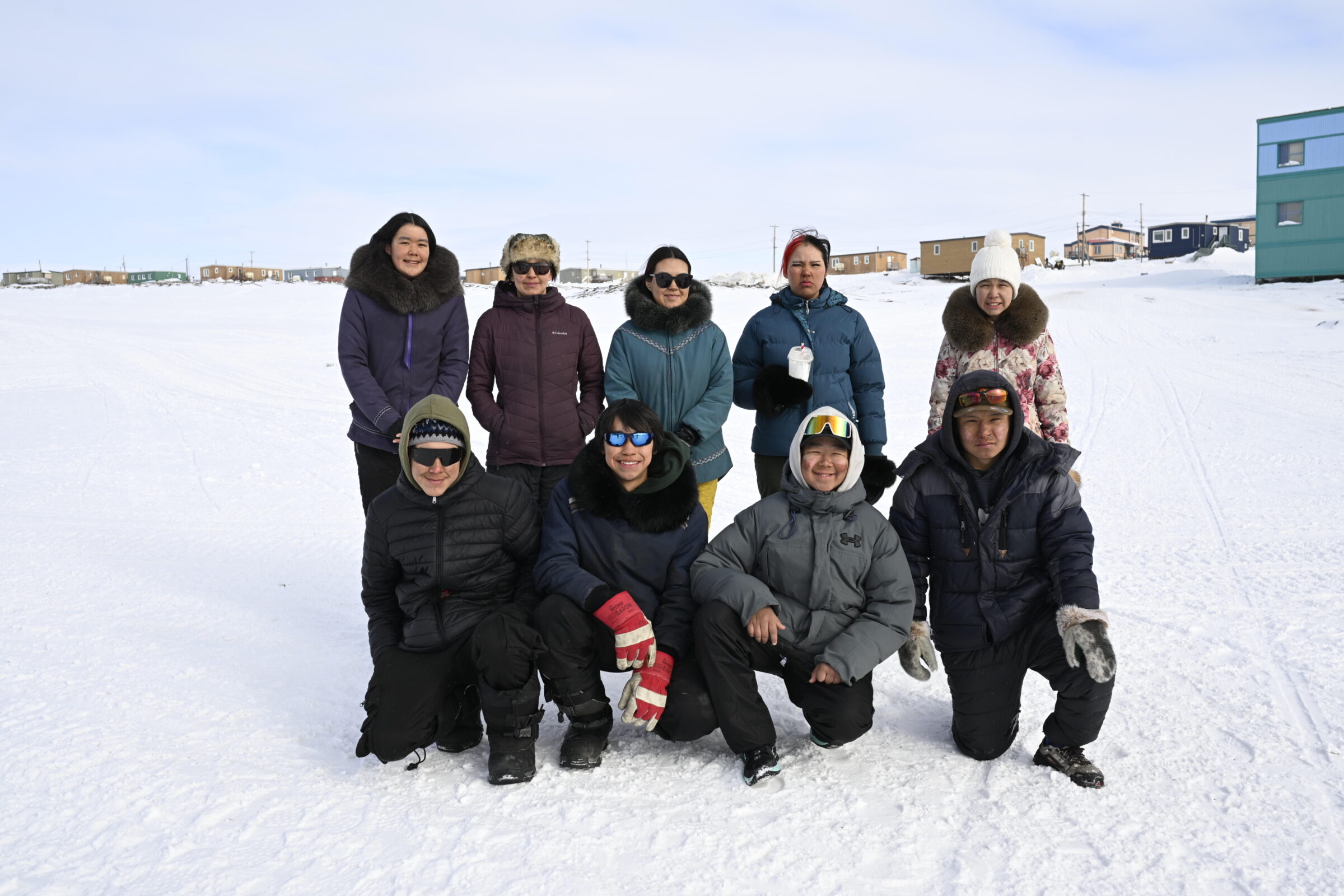
Participants in the 2026 Nunavut Quest field course pose for a group photo. Back row, from left: Jennifer Quassa, Kelsey Kanatsiak, Janet Killiktee, Lindsay Kalluk and Brianna Inuarak. Front row, from left: Venant Oolateeta, Leeland Panimera, Hezekiah Uttak and Bobby Tatatuapik. (Photo by Dustin Patar)

Nine youths from Igloolik, Arctic Bay and Pond Inlet followed this year’s Nunavut Quest from start to finish, documenting the race while getting a taste of what it’s like to raise a dog team and travel with it.
Next year, organizers hope to offer the opportunity to participants from Sanirajak and Clyde River as well. But the program — and its potential growth — depend on renewed approval from the volunteer-run Nunavut Quest committee, which includes elders and mushers from Igloolik, Arctic Bay and Pond Inlet.
This year’s race, a 580-kilometre trek from Igloolik to Pond Inlet, began April 9. The students, aged 12 to 20, travelled with the racers and their support teams producing daily stories, photos and videos in partnership with Nunatsiaq News, CBC News, Connected North and Oceans North.
The participants spent more than a week living, travelling and working together. They shared tents, chores, meals and reporting assignments, with guidance from freelance journalist Dustin Patar.
For Shanshan Tian, the program’s lead, the greatest success was how the youths found their place within the group.
Seventeen-year-old Lindsay Kalluk of Arctic Bay emerged as a strong writer who often helped her peers with their articles, whereas others looked to 16-year-old Leeland Panimera of Igloolik to help with daily tasks because of his experience on the land with his grandparents.
“Everyone comes into a group with something to offer and something to learn,” Tian said.

Students relied largely on cellphones for photography and reporting. The program supplied all other equipment, including camera accessories and a mini drone.
Funding came from media partners and a Government of Nunavut culture and heritage grant.
“We believe in the program and what it does for youth mental health, what it does for cultural preservation, what it does for sharing the stories of Nunavut Quest,” Tian said.
But organizing the program and making sure everything runs smoothly comes with some challenges.
“I think the big piece this year is that they were worried about insurance issues and liability issues,” Tian said.
Nunavut Quest’s insurance didn’t include the students, but Niksik, the Inuit-led non-profit that runs the program, has its own insurance policy to cover their participation.

Another issue was transportation. The Nunavut Quest committee worked with organizers to transport the students after plans to bring a driver or land instructor from each community fell through. Mushers ended up bringing students to the starting line, while Igloolik-based drivers and instructors carried out the rest of the program.
“It made it challenging in the sense that it was a lot of youth to manage with few drivers,” Tian said.
Looking ahead, she hopes to secure Nunavut Quest committee approval earlier, which would allow more time to raise funds and recruit instructors.
She would also like to see the program formally recognized for academic credit, noting that students gain experience in journalism, photography, wilderness travel, outdoor leadership and volunteerism.
“Anything is possible, and we’re ready to dream,” Tian said.

A great program worth supporting for many many years. Well done to all involved.
I have a question if Shanshan Tian is the program Lead of Niksik then how is Niksik an Inuit-led non-profit? Who else is involved?
I would assume the board is made up of Inuit who lead it. It states they (Shanshan) are the program lead, which means the board hired that person to work for them.
Be grateful Shanshan stepped up and the program is running, rather than casting aspersions on her identity.
waste of money.
Why does the admin only approve comments that he thinks is good.