


Animated short film depicts Inuit life ‘on the go’
Co-directors Marc Séguin and Elisapie Isaac hope to bring ‘Piluk’ to northern audience after world première
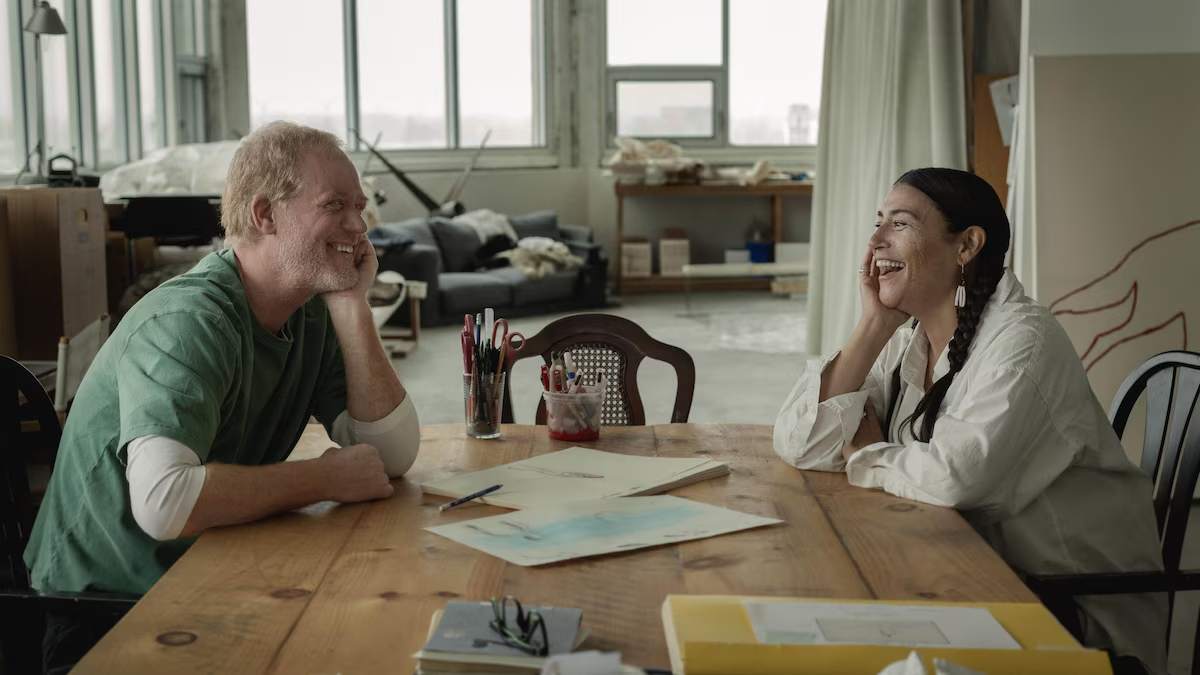
Multidisciplinary artist Marc Séguin, left, and artist Elisapie Isaac’s animated short film “Piluk” draws on Inuit stories of movement and connection to the land. The film will make its world première at Switzerland’s Locarno Film Festival in August. (Photo by Éva-Maude, courtesy of the National Film Board)

For Salluit artist Elisapie Isaac, the animated short film Piluk grew from the stories she heard growing up about Inuit families moving across the land.
The theme of movement is part of the main character Piluk’s identity, as the young girl matures and finds her way from the Arctic tundra to an urban landscape.
“We were nomads and we knew the land so well,” said Isaac in an interview with her co-director, multidisciplinary artist Marc Séguin, on Tuesday. “This idea of constantly being on the go, moving and walking, creates a certain kind of special people.”
Piluk is set to make its world première next month at Switzerland’s Locarno Film Festival. It has been selected for the festival’s Pardi di Domani competition, which showcases short- and medium-length films.
The name Piluk comes from the Inuktitut word for caribou hair and was inspired by the traditional name for Isaac’s late sister, Sailasie Pilukuluk Isaac, she said.
“[Piluk] doesn’t have to be Inuk, as we all have a rite of passage,” Isaac said. “I realized this isn’t just a kids’ animated short film as at one point, we all have to face challenges and accept that we are much stronger than we think.”
Séguin, whose first drawings for the film date back to 2018, also brought a personal connection to the character’s design, modelling the red-haired Piluk after his daughter Elsie.

Created using graphite, acrylic and pastel artwork on textured paper, Piluk took about eight years to complete and involved more than 8,800 drawings, Séguin said.
It began after Isaac and Séguin, who had previously worked together on his directorial debut Stealing Alice in 2016, first discussed creating a music video. The idea later grew into a short film after the National Film Board encouraged them to develop the concept.
One of Isaac’s favourite scenes is when Piluk’s mother gives birth and later gives the baby to a family.
Isaac, who was adopted herself, described the moment as “sad, but yet so beautiful.”
The scene’s emotional impact is heightened by the sound of Piluk’s mother giving birth to her, recorded by Isaac at the National Film Board studio in Montreal in 2024 as part of the film’s soundtrack, which includes ambient sounds and throat singing.
“Having delivered three babies, having felt all those cries, and that fear and pain at the same time, I’ve never felt more real than on the verge and on the edge of life,” Isaac said, recalling that some of the men during the recording session were visibly shaken by the sounds.

The animals featured throughout the film include an Arctic wolf, a wounded polar bear and migrating caribou. They were important to Séguin because they connected the story to the landscape and the environment, he said.
“It was really important that we talked about our world, as it’s not a Disney film. It’s something that’s deeply rooted in where we were born and where we live,” he said.
Isaac said she hopes Piluk will eventually screen across Nunavut and Nunavik after the international festival, which runs from Aug. 5 to 15.
(0) Comments