

Keep those fans out of storage, because more heat could be coming to Nunavut
Warm air from eastern Canada could return to North before summer’s end, says meteorologist
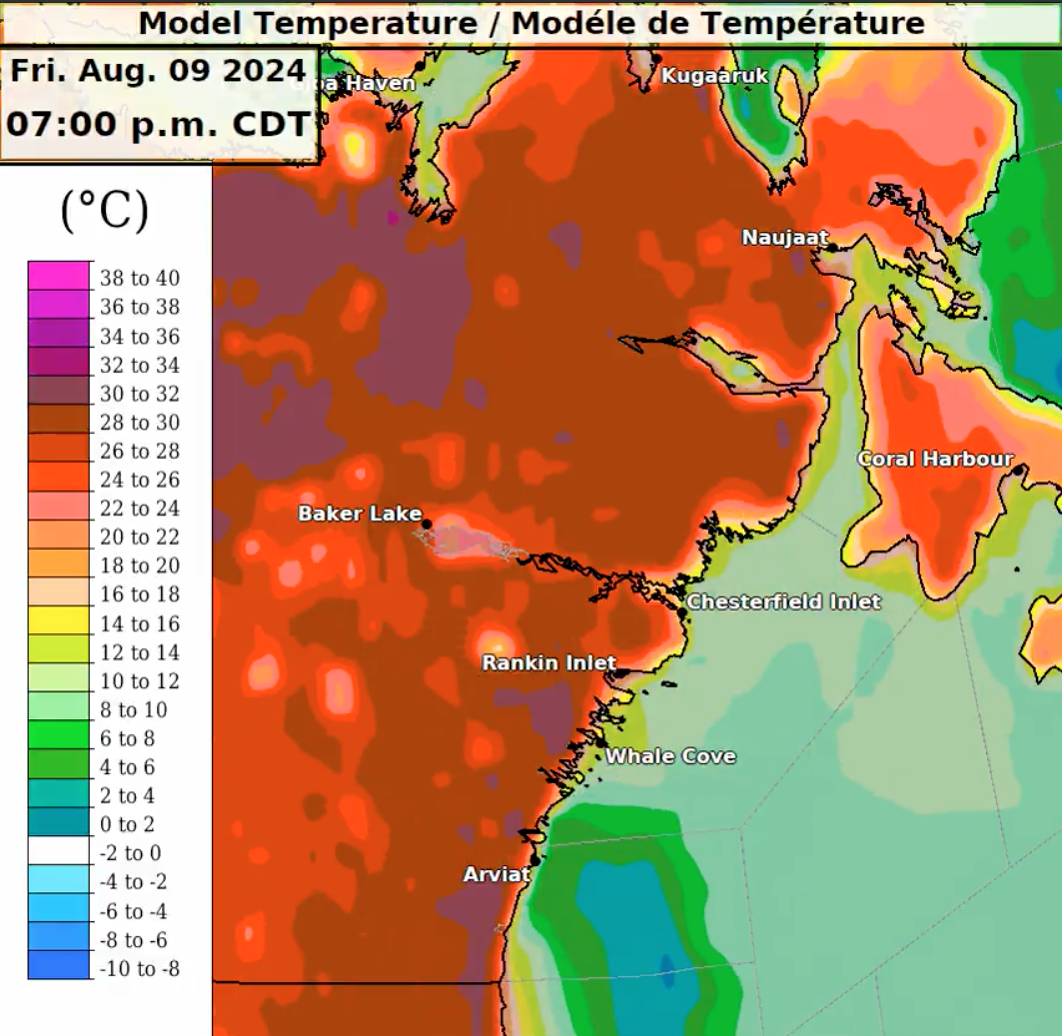
Many parts of Nunavut could experience another heat wave following record breaking temperatures in parts of territory in early July, says one meteorologist. (Photo courtesy of Environment Canada)
After a hot start to July, people across Nunavut can expect more heat waves this summer and future ones, says an Environment and Climate Change Canada meteorologist.
“It is a definite possibility,” Brian Proctor said.
The mercury rose across all three of Nunavut’s regions from July 3 to 7 with record-breaking temperatures of 27.5 C hitting Kugaaruk on July 5.
In Iqaluit, the temperature hit 25.1 C, just short of its record-breaking temperature of 26.7 C, set on July 21, 2008.
In the Kivalliq, Chesterfield Inlet saw temperatures rise to 23.9 C on July 3. The seasonal monthly average there is 15 C.
The July heat wave was tied to a lot of warm air coming from eastern Canada, Proctor said, adding that the same pattern could happen again in the next few months.
“There is a distinct possibility we could see another warm event or two in portions of Nunavut before we get to the end of the summer,” he said.

Climate models looking at the future show more “high-amplitude conditions,” which means there is potential for extreme weather swings. That can include more extreme cold temperature events too. Extreme temperature swings are unusual compared to what Nunavummiut generally experience, Proctor said.
The Nunavut government released a public service announcement July 17 about the dangers of heat waves and tips on how to get relief from them.
“Heat warnings are rare in Nunavut, and our homes, workplaces and community infrastructure are generally not designed for extended periods of heat,” the announcement said.
Elders, infants, young children and pregnant women are particularly at risk of heat-related illnesses, as well as those with chronic illnesses such as heart disease and diabetes.
Problems can arise quickly, the announcement said. Signs of heat related illness — such as heat exhaustion or heat stroke — include dehydration, nausea, vomiting, headaches, malaise and dizziness.
Kimmirut hit will over 28 no one talks about that