


Lawyers debate accused killer’s mental state during murder trial’s closing submissions
Crown says Danny Paul Eyaituk deserves 2nd-degree murder conviction ‘at a minimum’ while defence urges ‘manslaughter at worst’
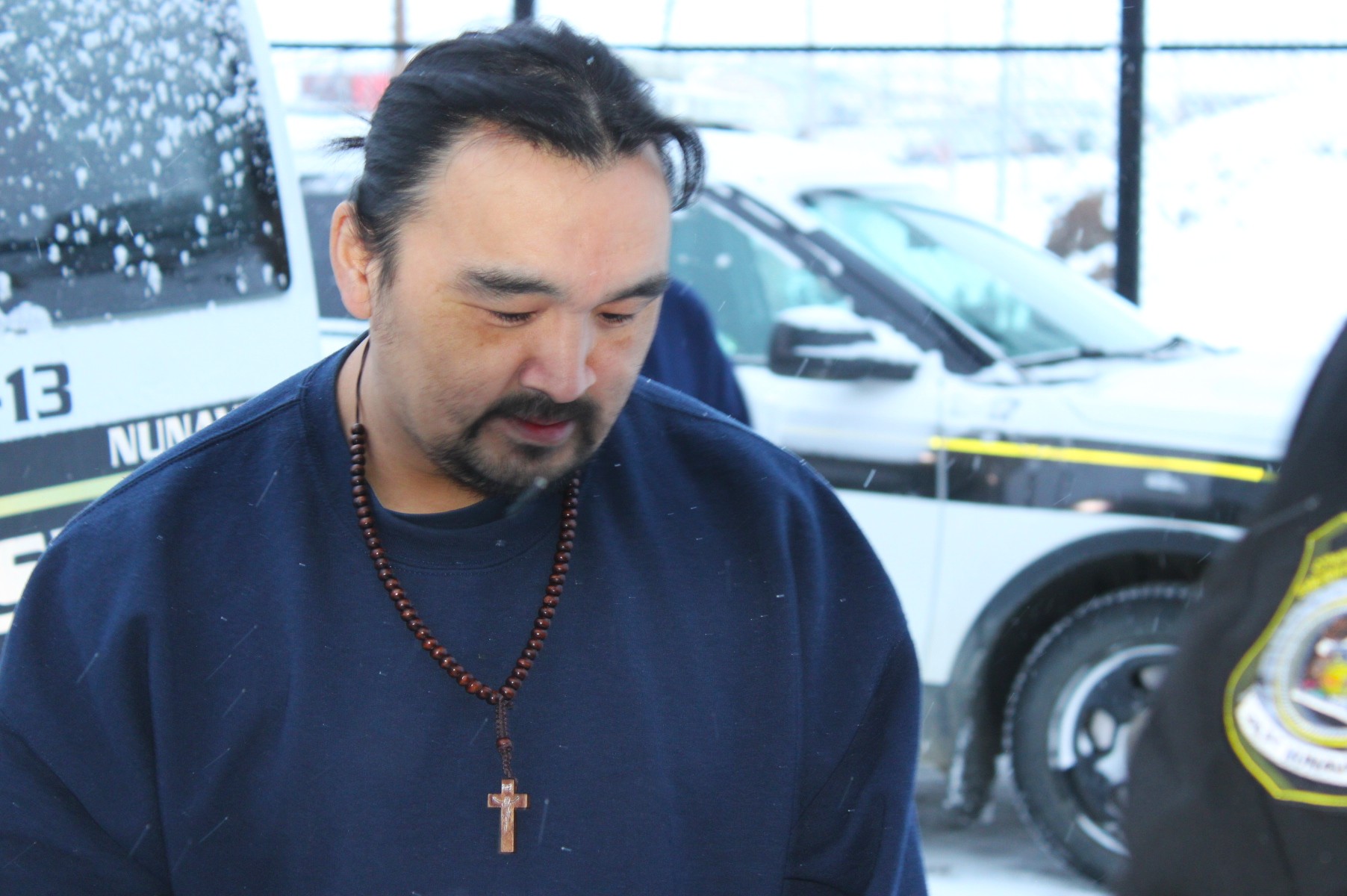
Danny Paul Eyaituk arrives at the Iqaluit courthouse Monday morning. He appeared again Tuesday for the final day of his trial for first-degree murder in the death of his wife Annie Tracy Oqaituq, who was found dead in their home on April 19, 2024. (Photo by Daron Letts)

Danny Paul Eyaituk’s mental state was the key issue debated by Crown and defence lawyers who made their final submissions Tuesday in the Sanikiluaq man’s first-degree murder trial.
Eyaituk is on trial in an Iqaluit courtroom for the shooting death of his wife Annie Tracy Oqaituq, 36, who was found dead in their Sanikiluaq home on April 19, 2024.
Defence lawyer Alan Regel told Justice Susan Cooper she should consider “manslaughter at worst,” but Crown lawyer Emma Baasch called for a verdict of second-degree murder “at a minimum.”
Regel argued that expert witness forensic psychiatrist Dr. Maryana Kravtsenyuk expressed enough uncertainty about Eyaituk’s mental state around the time of Oqaituq’s death to cast doubt on whether he had enough control of his senses to be guilty of murder.
“The Crown is, I suggest, relying on speculation that ignores the important evidence of the mental illness and the psychiatric condition that he suffered from,” Regel said.
Throughout the trial, Regel has said Eyaituk was not criminally responsible for the death.
The Criminal Code says a person cannot be held responsible for a crime committed while suffering from a mental health disorder that makes them incapable of appreciating the nature of the act.

Eyaituk had testified earlier in the trial that he had used cocaine and cannabis on the day of Oqaituq’s death. He used the substances on a daily basis, according to previous witness testimony.
Eyaituk had suffered multiple bouts of drug-induced psychosis, including on the day of the alleged shooting, Kravtsenyuk said in her report. In his closing submission, Regel emphasized these as contributing factors to the accused’s mental state.
Baasch argued that, based on the expert witness’ report, Eyaituk “could understand the consequences of his actions and he could plan connected with reality and was cognizant of his actions,” at the time of his wife’s death.
“He had organized thought before and after,” she added, quoting from Kravtsenyuk’s report.
As for Eyaituk’s drug use on the day of the offence, Baasch referred to Kravtsenyuk’s report again: “His thinking and mental state were impaired, but not that they were absent.”
Eyaituk appeared in a blue sweatshirt with his hair tied back in a short ponytail. He leaned back in his seat and wiped his face with a tissue as his lawyer spoke. He rested his cheek on his hand and peered down much of the time as Baasch spoke.

The trial began June 9 in Sanikiluaq and continued until June 25 but stopped while Kravtsenyuk was on the stand due to witness, judge, counsel and courtroom availability, defence lawyer Alan Regel said in an email to Nunatsiaq News. The trial resumed in Iqaluit on Monday.
Cooper will present her verdict at 9:30 a.m. on. Jan. 19. Eyaituk will appear at that hearing by video feed, she said.
(0) Comments