

Elections Canada seeks Senate approval for Inuktut ballots in Nunavut
Proposed pilot project would roll out in election scheduled for October 2029
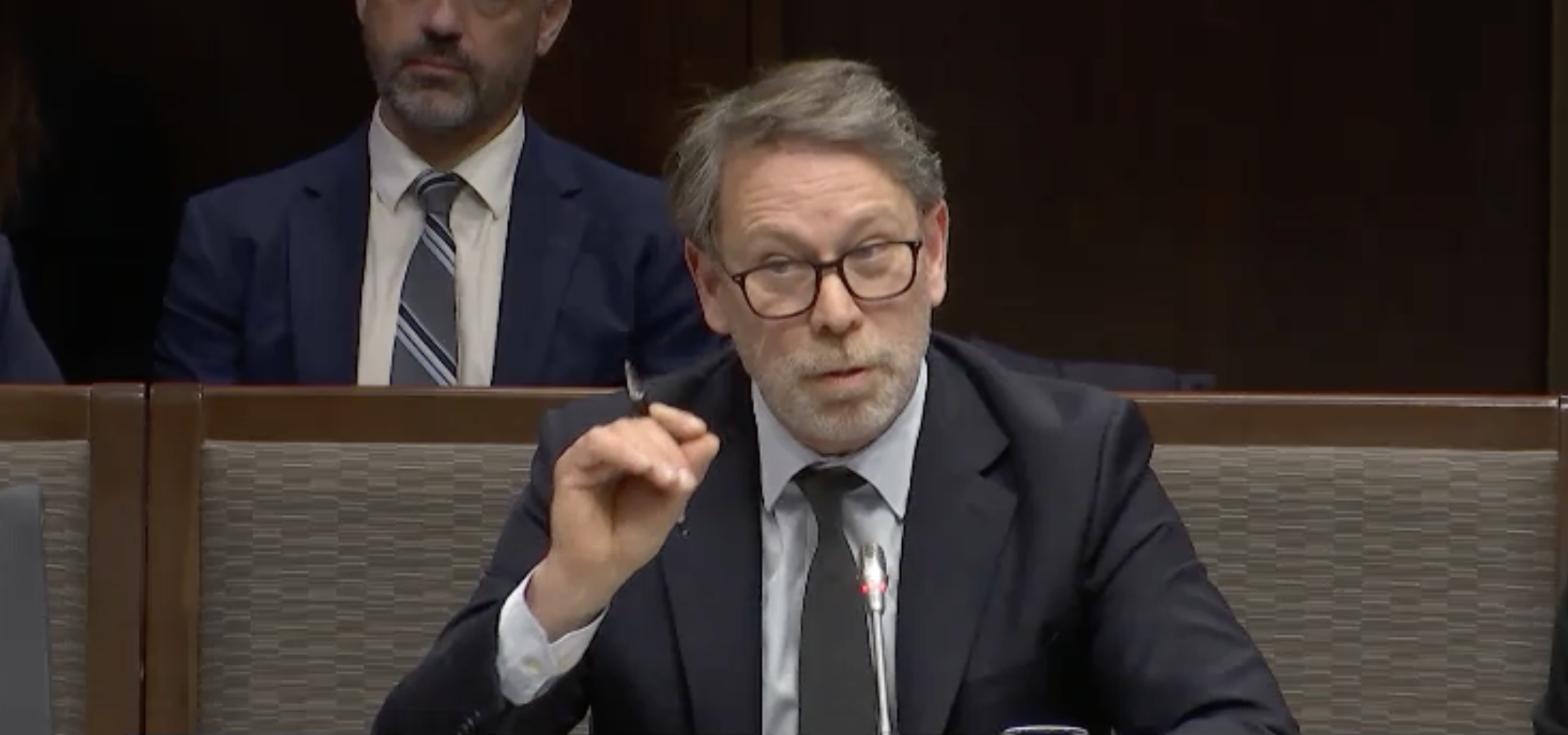
Elections Canada chief electoral officer Stéphane Perrault speaks to the Senate’s legal and constitutional affairs committee Wednesday about a proposed pilot to include Inuktut on federal election ballots in Nunavut. (Screenshot courtesy of Senate ParlVu)

Elections Canada’s proposal to put Inuktut on federal ballots in Nunavut could help remove barriers for Inuit voters, but increasing voter turnout is not its primary goal, chief electoral officer Stéphane Perrault says.
Perrault told the Senate’s legal and constitutional affairs committee in Ottawa Wednesday it’s a pilot project intended to make federal elections more respectful of Nunavut’s linguistic and cultural realities.
“If it does increase turnout, if it does remove barriers, then all the better,” Perrault said.
“But we believe that turnout is a complex issue, and we play a very limited role in turnout in elections. Our focus is on reducing barriers.”
The pilot project follows a 2022 recommendation from the House of Commons procedure and house affairs committee to test Inuktut on federal ballots in Nunavut.
It did not roll out in time for the 2025 election because Senate had not authorized the project before Parliament was prorogued in January 2025.
Approval from committees in both the House of Commons and Senate is needed for Elections Canada to test new voting methods.
In the 2025 federal election, 35.4 per cent of eligible voters in Nunavut cast ballots, up slightly from 33.8 per cent in 2021, according to figures Elections Canada official Karine Morin presented during the committee meeting.
The proposed pilot project would allow candidates and political parties to voluntarily submit their names in Inuktut — which includes Inuktitut and Inuinnaqtun — to be included on nomination papers and ballots. It would also allow Nunavut voters to cast special ballots to be completed in Inuktut.
“I think that including Inuktut is first and foremost a question of respect for the community,” Perrault said. “It is the main language that is used there. People live and speak that language. Governance is conducted in that language.”
Elections Canada would need Inuktut experts in Iqaluit and Ottawa to verify names and help count special ballots, Perrault said.
A special ballot should still be accepted if a candidate’s name is misspelled, as long as the voter’s intention is clear and the candidate can be identified, he said.
Elections Canada provided Inuktitut ballot facsimiles — in the form of posters hung in polling stations — in the 2021 and 2025 federal elections, but the official ballots did not include Inuktut.

Perrault said Elections Canada is preparing to roll out the pilot project for the election scheduled for October 2029, and will assess the pilot through feedback from voters and polling workers, including focus groups in Nunavut.
Nunavut languages commissioner Karliin Aariak told the Senate committee the proportion of Nunavut residents who speak Inuktitut as their mother tongue fell to 52.9 per cent in 2021 from 65 per cent in 2015.
Her office received complaints about the absence of Inuktut on federal election materials during the 2021 and 2025 elections, she said.
“An absence of Inuktut in signage and on the federal ballot signals a policy of assimilation, the very thing that you know the Inuktut Protection Act deplores,” Aariak said.
Gloria Uluqsi, president of Nunavut Tunngavik Inc., said Elections Canada should work with Elections Nunavut, NTI and language experts to ensure names are accurate and ballots are easy to read.
The Senate committee said it would consider a draft report Thursday. Once adopted, the report will be presented to the Senate.
(0) Comments