


Iqaluit food centre says new partnership provides a platform for advocacy
Qajuqturvik Food Centre first in Inuit Nunangat to partner with Community Food Centres Canada
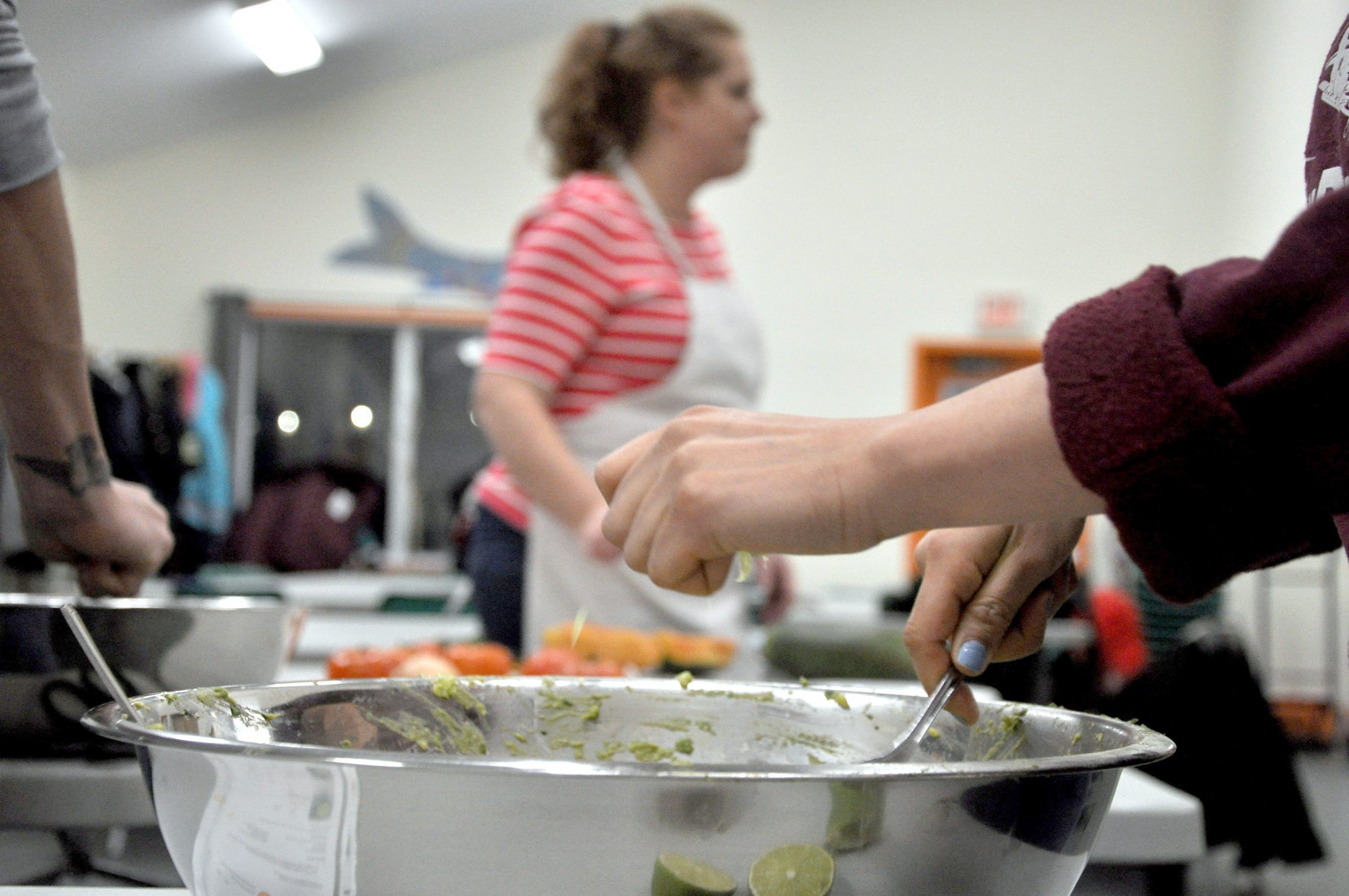
A new partnership between the Qajuqturvik Food Centre in Iqaluit and Community Food Centres Canada will help the centre advocate for food security in Nunavut on a territorial and national scale, the centre’s executive director says. (File photo)
A new partnership between the Qajuqturvik Community Food Centre in Iqaluit and Community Food Centres Canada will help the Iqaluit centre have a voice in the national conversation on food insecurity, says Qajuqturvik’s executive director.
Community Food Centres Canada, a non-profit network that advocates for food security, announced the partnership in a news release on Monday, June 1.
“We want to have more of a say on the sort of territorial policies that are developed and even some of the municipal policies that affect the marginalized residents of the community,” said Wade Thorhaug, Qajuqturvik’s executive director.
“Being a partner with an organization that’s already doing a lot to shape the conversation on food security on the national level really helps us with our advocacy push at the territorial level.”
Qajuqturvik, which was first established in 1990, has worked with and received funding from Community Food Centres Canada since 2018. This announcement solidifies a partnership that’s been in the works for a long time, Thorhaug said.
Qajuqturvik is the first community food centre designated as such by the organization in Inuit Nunangat, and one of 12 such centres across the country.
That means it’s even more important for the centre to advocate for northern food security, Thorhaug said.
“We hope to have an impact on the national level. I think it’s important for us to be the representative from not just Nunavut but Inuit Nunangat and sort of provide a voice, not just for our issues on the national level, but also to bring in standard operating procedures that have been developed in other cities and worked in other communities with similar issues to Iqaluit,” he said.
“A lot of our board members, our staff and volunteers have all spent a lot of time familiarizing ourselves not just with the food landscape in the territory but also some of the bigger issues throughout the country…. [T]hrough all that collective experience we’re able to have really focused recommendations when it comes to the change that needs to happen.”
The new partnership also highlights that eliminating food insecurity in Nunavut is a collective effort, Thorhaug said. But for him, it’s not up to non-profits like Qajuqturvik to solve the problem.
“Ultimately, when it comes to a really big issues, a massive issue like food insecurity, it’s not up to small charities like us to try to meet all that need. That needs to come from government policy to ensure that people have the means to get the food that they need,” he said.
“There’s quite a few groups, within the government and non-governmental organizations, that are all working on this issue. But sometimes our efforts can be a bit uncoordinated.”
Thorhaug said the food centre had plans to hold an event marking the partnership in April, but COVID-19 restrictions prevented them from doing so.
Pandemic shows benefits of basic income
Qajuqturvik provides meals to people in Iqaluit, seven days a week. The centre also offers a long list of programming, including a drop-in community kitchen, a food skills program for kids and a full-time pre-employment culinary skills program.
Its programming has been put on hold during the pandemic and its meal service has changed to takeout only, five times a week. The centre also started distributing country food and fresh produce through the food bank and gave out grocery store gift cards to households in need.
But in April, the food centre saw a 50 per cent drop in people accessing its daily meal service. Thorhaug said he thinks that’s because people received federal benefits in response to COVID-19, such as the Canadian Emergency Response Benefit.
“That has been an interesting experience for us. And it’s been indicative of the power of having income. The biggest change happened … right around the time when the federal benefits started to come through and got into people’s bank accounts. We noticed it right away,” Thorhaug said.
“It shows that when people who do lack the income for the essentials in their lives, when they do have a top-up of some sort, it goes towards covering those essentials.”

Although the pandemic has been a “tragedy in many respects,” Thorhaug said it has also highlighted a lot of the issues the food centre has long advocated for.
“We’re hoping that we can take this experience and talk about how transformative just a basic income of $2,000 a month can be on a family,” he said.
(0) Comments