


Fish species will dash poleward with warming oceans: new study
“This generates new opportunities for fisheries in the Arctic”
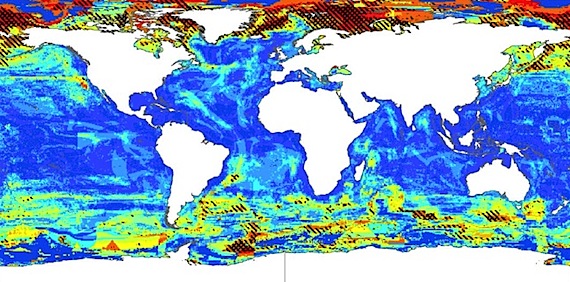
Where there’s yellow to red you can see where new fish and invertebrate species may go due to warming ocean temperatures in this map from a new study looking at climate change effects on global marine biodiversity.
More new kinds of fish are expected to move into the Arctic Ocean as the oceans warm — at a rate of up 100 kilometres north every 10 years — says a new study from the University of British Columbia.
“As fish move to cooler waters, this generates new opportunities for fisheries in the Arctic,” Miranda Jones, lead author of the research, said in a UBC news release. “On the other hand it means it could disrupt the species that live there now and increase competition for resources.”
While the tropics may see more species die-offs, high intensities of species invasions — what the researchers call “global hotspots of invasions” by new fish and invertebrates such as jellyfish — are projected to occur “in higher latitude regions, such as the Arctic Ocean,” said the study published Oct. 10 in the ICES Journal of Marine Science.
Fewer species extinctions are expected in the higher latitudes than at the equator because temperature-sensitive fish will still be able to seek out cooler areas, the study suggests.
You could expect to find two new species per 0.5 degrees of latitude in the Arctic Ocean by 2100 — which would result in about 180 new species in the Arctic waters above 55th parallel, according to the research.
The study, which used International Panel of Climate Change temperature change models, predicts fish will move poleward at rate between 15.5 km abd 26 km per decade, depending on the level of warming.
A 2013 research study also shows fish in northern European waters already moving north 10 times faster than land animals due to ocean warming.
(0) Comments