


Makita to Bennett: respect NIRB’s advice on uranium mine
Nunavummiut Makitagunarningit wants Liberals to keep election promise
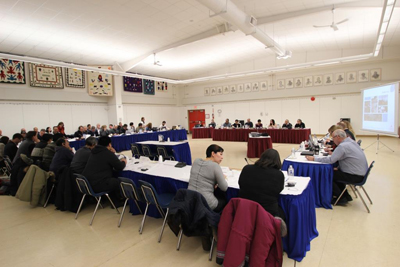
The Nunavut Impact Review Board’s public hearing on the Kiggavik uranium project held in March 2015. The NIRB eventually recommeded against approval of the project “at this time,” due to Areva Resources Canada’s inability to provide a firm start-date. (FILE PHOTO)
Nunavummiut Makitagunarningit is sticking to its message: no mining for nuclear energy in Nunavut.
This means that when it comes to deciding the fate of Areva Resources Canada’s proposed Kiggavik uranium mine in Nunavut’s Kivalliq region, Carolyn Bennett, the newly-appointed federal minister of Indigenous and Northern Affairs, should side with Nunavummiut.
And she should reject Areva’s proposal.
The citizen-based group, also known as Makita, gave Bennett that advice in a letter made public Jan. 25.
The letter points out that community consultations in Baker Lake, the closest Nunavut community to the proposed site of the Kiggavik mine, and letters from community-based organizations, display strong local opposition to the project.
And Nunavut MP Hunter Tootoo promised in his election campaign last summer and fall that it would be “the government that grants the licenses, but the communities that grant permission,” the letter said.

“I urge you to keep the promises made during the recent campaign, and reject Areva’s proposed Kiggavik urnaium mine,” Eric Ukpatiku, a Baker Lake resident and member of Makita, told Bennett in the letter.
In May 2015, the Nunavut Impact Review Board recommended to Bennett’s predecessor, Bernard Valcourt, that he should reject Areva’s proposal because the French-based mining company’s lack of a project start-date raised serious environmental and socio-economic concerns.
But two months later, Areva Resources Canada Inc. urged Valcourt to approve the project despite the uncertainty of a start-date, citing the review board’s lack of consideration for “available remedies” for that uncertainty.
“To deny the project approval in the absence of significant, unresolvable issues is inconsistent with current economic strategies and development policies that speak to responsible resource development that can contribute to self-reliance and improved quality of life,” Vincent Martin, the CEO of Areva Resources Canada said in a July 3, 2015 letter.
But in their submission to the review board, Makita questioned Areva’s record of “responsible resource development” in other parts of the world.
The mining company left enormous environmental and social problems behind in the African countries of Niger and Gabon, Makita said, citing European newspapers.
And letters from a host of community-based organizations show strong opposition to the project, Makita wrote, including from the Baker Lake Hunters and Trappers Organization, the Kivalliq Wildlife Board and the Beverly and Qamanirjuaq Caribou Management Board.
“[Makita] believes that the public record demonstrates that Areva’s proposal should not be approved at this time, and that Areva’s request to overturn the NIRB decision was unfounded and inappropriate,” Ukpatiku wrote in his letter to Bennett.
But Areva touts the uranium mine project as a major economic boost for the territory, capable of creating hundreds of jobs.
“With few other sources of economic development on the horizon, the mining industry forms a cornerstone of the North’s economic and social development plan,” Martin told Valcourt in July, 2015.
(0) Comments