


Mining industry can help fill Nunavut’s infrastructure void: minister
Nunavut’s lack of infrastructure one of “the biggest barriers to proper development”
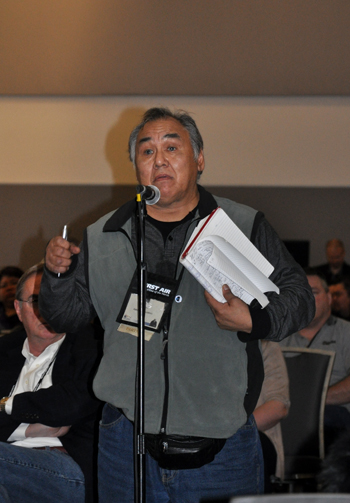
“We can’t always wait for mining companies to help us build new infrastructure,” said Grise Fiord’s Larry Audlaluk. “The (federal government) is obligated to help tax-paying Northerners.” (PHOTO BY SARAH ROGERS)
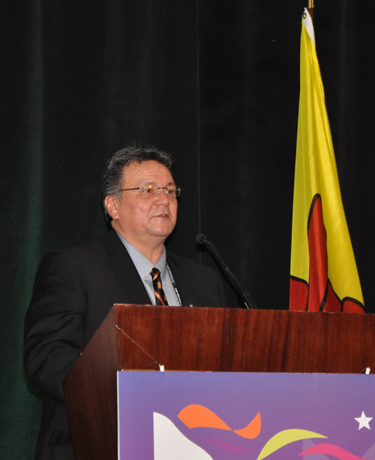
“The term ‘infrastructure deficit’ does not do us justice, because it implies we have infrastructure but are behind in maintenance,” Nunavut’s minister of economic development, Peter Taptuna, told an Ottawa conference Feb. 4. “In fact, Nunavut has very little infrastructure.” (PHOTO BY SARAH ROGERS)
OTTAWA – Building basic infrastructure across Nunavut continues to be a massive challenge for the Government of Nunavut, the territory’s minister of economic development and transportation told the Northern Lights conference in Ottawa Feb. 4.
That’s why the GN is eyeing the territory’s growing mining sector as a way to attract some private investment to pay for much-needed infrastructure in Nunavut’s communities.
“The mining sector is one that is growing the fastest in Nunavut, and it’s an opportunity for cooperative infrastructure projects,” Taptuna told a panel discussion called Building Northern Infrastructure.
“One way to do it is through development partnership agreements (DPAs).”
Through DPAs, Taptuna said the GN can leverage the fuel tax rebate to encourage mining companies to take on commitments such as building ports in the communities adjacent to their mining operations or constructing microwave transmission towers to reduce dependence on satellite connections.
That could help the territory gain some dependence from the federal transfers it relies on to build much of the territory’s infrastructure, Taptuna said, money that is mostly earmarked for health and education.
As it stands, Nunavut has only the most basic infrastructure to keep it running, including gravel airport runways, almost no ports and no roads connecting the territory’s communities to each other or the to the rest of Canada.
“The term ‘infrastructure deficit’ does not do us justice, because it implies we have infrastructure but are behind in maintenance,” Taptuna told the Ottawa audience. “In fact, Nunavut has very little infrastructure.”
Taptuna called Nunavut’s lack of infrastructure one of “the biggest barriers to proper development” across the territory.
“The next question, of course, is where is the money going to come from?” he said.

Taptuna said Nunavummiut remain hopeful that the federal government will eventually construct harbours, which, apart from Pangnirtung, are non-existent in communities.
But the needs of mining companies to move manpower and product to and from the region means the private sector will likely move to build that infrastructure faster than any level of government would, Taptuna said.
Some of the major projects under consideration include building a port and road at Bathurst Inlet.
Studies have already shown the project would help connect an area of great mineral potential to a number of mineral companies. Taptuna said, while helping the entire resupply system across the Kitikmeot region.
There is a growing need for major upgrades to the territory’s major transportation hub; traffic at the Iqaluit airport continues to grow at a rapid pace, Taptuna said, due to demographic growth and mining operations.

And a feasibility study looking at a road to connect Manitoba with Nunavut’s Kivalliq region along the Hudson Bay coast will soon be made public.
“Given the cost to realize this project, it’s difficult to imagine this proceeding without a partnership with private-public sectors,” Taptuna said.
Taptuna said the GN supports mining activities that demonstrate that they can be sustainable and profitable to Nunavummiut.
Larry Audlaluk, a community leader in his home community of Grise Fiord, says he knows first-hand about the infrastructure needs in Nunavut.
“The last time our hamlet office was upgraded was in 1980; the gymnasium was last upgraded in 1985,” he told the Northern Lights audience. “Buildings get old and outdated and the cold can wear down infrastructure.”
Audlaluk called infrastructure development a “monumental task” for the GN, although he believes the federal government needs to share more of the burden.
“We can’t always wait for mining companies to help us build new infrastructure,” he said. “The GN needs to drop that idea and move to catch up with the rest of the country. The (federal government) is obligated to help tax-paying Northerners.”
The Northern Lights business and cultural showcase was held at the Ottawa Convention Centre Feb. 1 to Feb. 4.
(0) Comments