


Nunavik launches new session of addictions support training
“It is important for Inuit to be able to care for other Inuit”
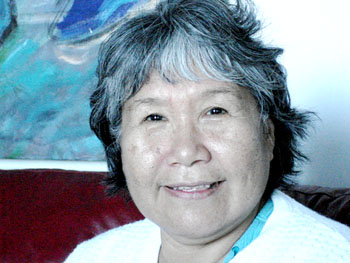
Roda Grey is a retired Kuujjuaq-based addictions counsellor, although she’s still helping to deliver new addictions support training to front line workers in Nunavik. (FILE PHOTO)
Nunavik health officials have delivered their first training session on addictions intervention, in an effort to enable communities to support their own citizens at risk.
The two-day training session, first piloted in 2012, is offered in English, and now Inuktitut, to frontline workers from the health, education and justice sector.
Nunavik addictions counsellors Roda Grey and Mary Kaye May just wrapped up the training session in Kangiqsujuaq, on Nunavik’s Hudson Strait.
“It was very powerful,” said Grey, a retired Kuujjuaq-based counsellor , who still does occasional work with the health board.
The two-day session trained 18 people, including elders, social workers and police officers, on how to identify a person at risk of developing a drug, alcohol or gambling addiction, and how to intervene effectively.
A big part of that is understanding the different factors behind consumption patterns in a region like Nunavik and how they came about, Grey said.
“An important part of the program is showing the story line, and the history of Inuit and how they were introduced to alcohol,” Grey explained.
“Then these workers start to have an understanding of how things came to be.”
Workers in Nunavik, whether they are Inuit or not, must learn to be self-reflective about the support they wish to give, Grey said, and learn to be aware of prejudices they might have in the process
People who are struggling with an alcohol addiction are often told just to stop drinking, Grey said, but it doesn’t work.
“We’re teaching these frontline workers how to communicate with their clients,” she said. “And the approach shouldn’t be judgmental.
“We don’t tell clients that their addictions are bad for their health. We show them how substance abuse can be dangerous to their health,” Grey said.
That allows the client to reach their own conclusion, she said.
Community-based training on addictions for front-line workers in Nunavik was an action recommended by Ilusiliriniqmi Pigutjiutini Qimirruniq (IPQ), a clinical project in Nunavik with a focus on mental health.
The goal, said Grey, is to empower communities to help their own.
The recent workshop in Kangiqsujuaq was also offered in Inuktitut, an important element in communicating with Inuit at risk.
That was no easy task though, says Grey.
“The language in addictions is very new… because addiction wasn’t part of our world until more recently,” she said, noting there is still a heavy reliance on English terms.
With only one regional addictions treatment centre — Isuarsivik in Kuujjuaq — Grey admits there is still a huge service gap in Nunavik.
“It’s not enough,” she said. “I think people struggle to find someone to help them.”
But by offering Inuktitut training, Nunavik’s health officials hope to increase the number of Nunavimmiut able to support their neighbours at the local level.
“It is important for Inuit to be able to care for other Inuit who are struggling with addictions,” said Minnie Grey, executive director of the NRBHSS in a Nov. 6 release.
The health board has training sessions lined up in four more communities in 2016: counsellors will visit Quaqtaq in January, Kuujjuaraapik in February and Aupaluk and Ivujivik in March.
Other communities interested in hosting their own training session can contact Michael O’Leary at the NRBHSS at (819) 964-2222 ext. 261 or Michael.oleary@ssss.gouv.qc.ca.
(0) Comments