


Nunavut bureaucrat evades questions about suicide prevention plan
“I don’t have a timeline at this point,” ADM Rosemarie Keenainak says
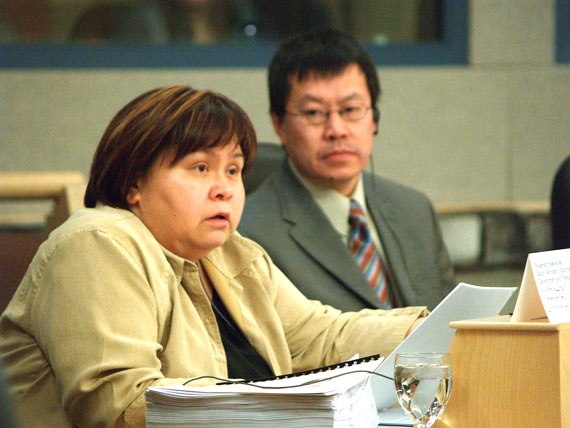
Rosemary Keenainak in 2008 when she served as deputy minister of economic development and transportation, at the legislative assembly with Peter Ma, who then served as deputy minister of finance. Keenainak is now assistant deputy minister of health, a department that Ma headed for several years, including the period when the Nunavut suicide prevention strategy was developed. Ma was shuffled into the presidency of Qulliq Energy Corp. in November 2013 and now works as president of Nunavut Arctic College. But Ma was deputy minister of health in 2011 when the GN released the strategy with no budget attached to its various items. On Sept. 18, speaking under oath at a coroner’s inquest, Keenainak could not answer questions about how the Nunavut suicide prevention plan will be renewed or when it will be implemented. (FILE PHOTO)
Rosemary Keenainak, the assistant deputy minister at the Nunavut Department of Health, provided no definitive answers Sept 18 in her testimony at the coroner’s inquest on suicide as to whether the Government of Nunavut is committed to any of the 42 recommendations outlined in the “Suicide Prevention Action Evaluation.”
“At this point, the report is with the partners and we are discussing the recommendations and once we’re in a better position to respond collectively, and each organization has their own approval processes, and we will then be able to do that down the road,” Keenainak said.
“I don’t have a timeline at this point.”
The assistant deputy minister is the most senior health official to testify at the inquest so far.
Jurors at the inquest witnessed a sometimes tense exchange between Keenainak and the lawyer acting for Nunavut’s coroner, Sheldon Toner.
“We are working with our partners on a new plan, whether it’s going to be a strategy or an action plan or a different format, that’s what we’d like to do with our partners,” Keenainak said in response to Toner’s repeated questions on the GN’s commitment to the suicide prevention strategy as it exists now.
Keenainak explained to Toner that she is not in a position to comment on several questions regarding the implementation of specific suicide prevention policies by the GN outlined in the prevention strategy, or on other recommendations given by mental health experts at the suicide inquest.
Keenainak’s testimony seems to validate earlier statements made at the inquest by Nunavut Tunngavik Inc.’s former social and cultural director, Natan Obed, who said bureaucracy and communication issues within the GN contributed to the failed implementation of the suicide prevention plan.
“There has to be recognition that the partners come into this with different perception, different ideas on how this partnership is supposed to work, and that’s probably part of the issue,” said Keenainak.
“There needs to be an assessment and a recommendation on how to make the next phase of a strategy or an action plan on how it would work better.”
Keenainak reiterated that the GN is committed to combating the territories’ alarmingly high rates of suicides and that funding and capacity has increased throughout Nunavut’s healthcare sector.
“When I joined the department in 2013, the total budget for mental health and addictions was $14 million [from 2013-2014]… that increased to $20 million [in 2015 to 2016]. So we have increased funding,” said Keenainak.
Keenainak defended her role as a policy administrator when asked by lawyer Katheryn Kellough to point out something “specific that’s been done that’s having a positive impact on reducing the level of suicides in Nunavut.”
“Again, I’m not an expert in that area. I’ve been involved in setting some of the foundations within the department because the government does acknowledge that we didn’t have capacity,” Keenainak said.
As for moving forward, Keenainak agreed that many of the obstacles faced by the suicide prevention policy could be avoided if the GN cabinet were to sign off on an office whose sole role would be to implement it.
“It could be one of the options considered,” said Keenainak on the assumption that any position created would have to be authorized at the top of the GN’s power structure.
Six jurors will continue to hear testimony this week from the government, Inuit organizations, academics and families affected by suicide.

They will be expected to submit recommendations to address Nunavut’s disturbing suicide numbers at the inquest’s conclusion Sept 25.
(0) Comments