


Nunavut hamlet lands bowhead by “traditional” method
Whale gun doesn’t work so hunters use rifles and lances
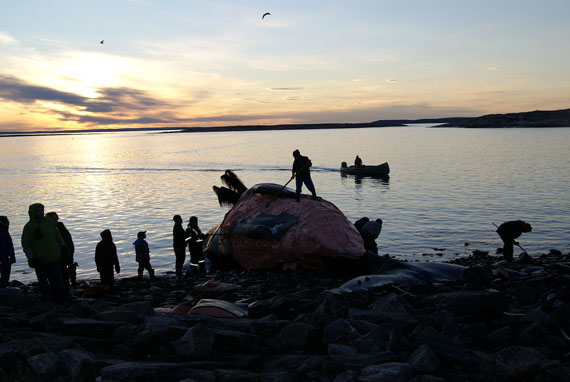
In the early morning light of Sept. 17, Naujaat hunters butcher their catch, a 48-foot bowhead whale. (PHOTO BY MAY LAIN)
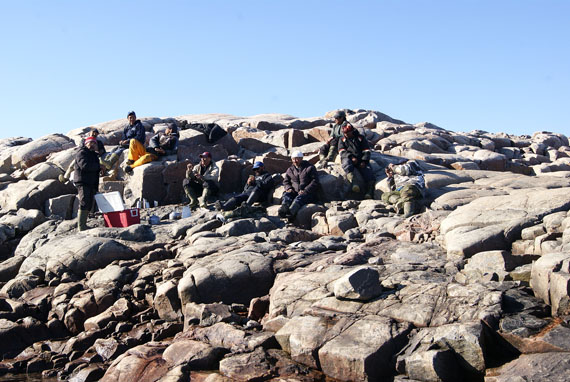
Tired Naujaat hunters gather by the rocky shoreline to rest after the all-night effort required to land their bowhead whale. (PHOTO BY MAY LAIN)
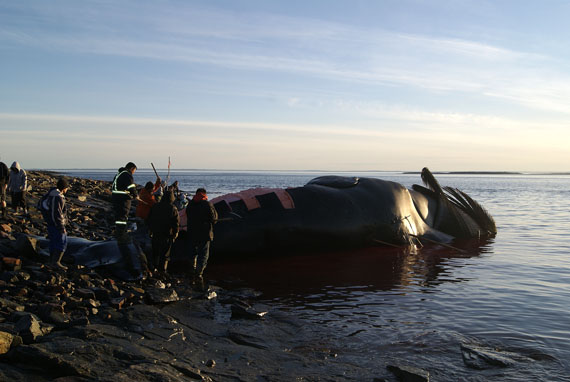
After discovering that the trigger mechanism on their grenade gun didn’t work, Naujaat hunters used rifles and lances to catch their whale. (FILE PHOTO)
Sometimes the old ways are the best ways, but for Laimmiki Malliki, co-captain of Naujaat’s successful bowhead hunt on Sept. 17, they turned out to be the only way available.
“The grenade gun didn’t work, so we had to do it the traditional way, using rifles and lances,” said Malliki, a veteran of Naujaat’s six modern bowhead hunts since the ban was lifted in 1996.
The grenade gun is a special weapon designed for whaling that fires a grenade-like projectile into the body of the whale, where it’s supposed to explode.

In the crucial first chase, when the hunters thought they would celebrate that night over a dinner of fresh maktaaq, Malliki and his team discovered the trigger mechanism on their grenade gun was faulty — rendering it useless and ending all hope of a quick catch.
“We had to start shooting it with rifles to slow it down, and then when it slowed down enough we used lances,” Malliki said.
The 48-foot (14.6 metres) whale was sighted on the evening of Sept. 16, and the first harpoon found its mark shortly after the five Naujaat hunting boats took to the sea in pursuit.
What happened over the next 12 hours was a test of endurance for the entire crew, and a moonlit ordeal that didn’t see them drag their catch ashore until the following morning.
At times the hunters could only track the whale in the darkness by the sound of it breaching the surface for air.
“We used spotlights and flashlights to spot the whale when we were chasing, and right at the beginning of dawn, we killed it,” said the co-captain.

Malliki credits his team for showing no signs of fatigue during the hunt, and they worked straight through the entire night to land Nunavut’s first successful bowhead catch of the year.
“They only got tired after they killed it,” he chuckled when reflecting on the adrenaline-fueled night.
“After we killed it, they got tired, and when we were towing it to the shore some of the people were sleeping in the boats.”
The epic hunt brings an end to an equally exhausting season for the Naujaat hunters, who had spotted plenty of whales but couldn’t maneuver through an ice-jammed Repulse Bay.
“That was our problem all summer until two weeks ago, when the ice was gone and we could start hunting. When were started we could spot whales but they would just go under the ice,” Malliki said.

Residents of Naujaat will have an easier winter with the available bowhead meat from the successful hunt.
“The whole town was very happy about it,” said Malliki.
“Anyone who wants muktuk came over right away to get what they want. Everyone was happy.”
As of Sept 21, hunters were still cleaning and distributing the bowhead meat and maktaaq.
Despite a record number of five bowhead tags allotted to Nunavut from Ottawa this year, Naujaat is so far the first community to successfully land a whale.
At least two of those tags will go also unfulfilled.
Last week Gjoa Haven called off their bowhead hunt for the season due to ice packs in the region, leaving the single tag allotted to Kitikmeot region to go unclaimed.
While Naujaat has one of two tags in the Kivalliq region, no other community bid for the second tag — which was only just awarded to the region this year.
Two communities in Qikiqtaaluk are still in the hunt — Pangnirtung and Hall Beach— but have yet to cash in.
There is no deadline on the bowhead tags.
But encroaching ice, and winter, will soon leave unsuccessful communities with no choice but to abandon their hunts.
(0) Comments