


Photo: Mask from Qajartalik on display in Kangiqsujuaq
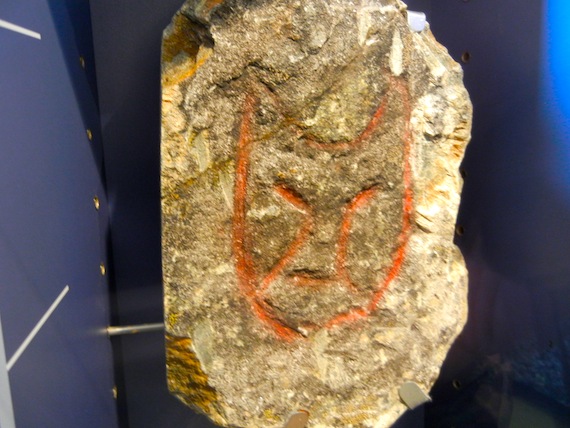
A cat-like face peers from a rock on display at the Pingualuit provincial park’s visitors centre in Kangiqsujuaq. The engraving, collected in the 1960s was sent to the Museum of Civilization (then the National Museum of Man) and later returned to the community, came from the nearby island of Qajartalik, where, on a 120-metre-long kayak-shaped ridge, are what some have dubbed “devil’s faces.” In their shape, these carvings resemble the tiny carved masks that archeologists associate with the Dorset, or Tuniit, culture, believed to have flourished in the Eastern Arctic at least 2,000 years ago. Some display cat-like features and appear to have horns. Lines radiate from many of the mouths, perhaps symbolizing the breath of a shaman. Since 1994 Nunavik’s Avataq Cultural Institute has tried to have the Qajartalik rock carvings recognized as a national historic site and presented an official request in 1997. In December 2008, Parks Canada mandated Avataq to again present the request. The file was then handed last summer to the Historic Sites and Monuments Board of Canada, through Parks Canada — where it’s still under study. See more photos later from the centre on this Facebook page and on Nunatsiaqonline.ca. (PHOTO BY JANE GEORGE)
(0) Comments