


A timeline of the JBNQA
Retracing the steps leading to Canada’s first modern treaty — 50 years later
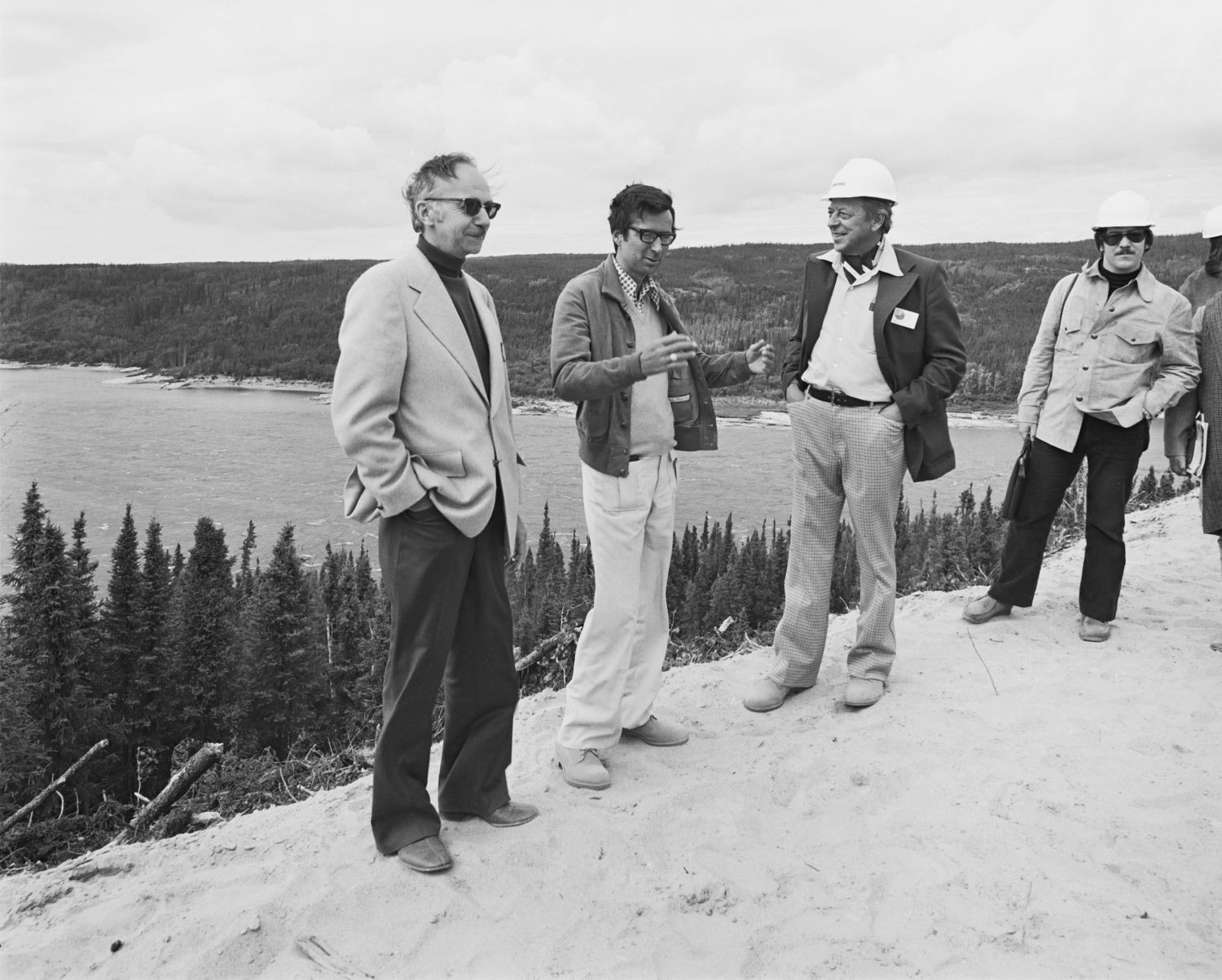
Former Quebec premier Robert Bourassa, near the James Bay area, discussing development plans. (Photo courtesy of Hydro-Québec)
Government of Quebec presents the ‘Project of the Century’ – April, 1971
In 1971, the Government of Quebec, then led by Liberal Premier Robert Bourassa, announced the start of the James Bay hydroelectric development project.
Bourassa called it “the Project of the Century.”
The project, set to be built on lands occupied by Inuit and Cree, could create floods due to the diversion of water to fill reservoirs. The construction began without the consent of the Crees or the Inuit.
Inuit leaders gather in Fort Chimo (Kuujjuaq) to create the Northern Quebec Inuit Association
– January 1972
After having a scattered meeting in Puvirnituq four months prior, Inuit leaders of Nunavik convened again in January 1972, with a clearer set of ideas.
Leaders needed to rise to represent Inuit against the looming threat that was the James Bay Hydroelectric Project.
At that time, a Kuujjuaq mechanic, Charlie Watt, was named leader of the NQIA.
Together with the help of lawyer James O’Reilly and the Crees, they planned to take the Quebec government to court.

Superior court decision forces negotiation – November 1973

Quebec superior court justice Albert Malouf, centre, in 1978 (Photo courtesy of Fonds La Presse)
In November 1973, Quebec Superior Court Justice Albert Malouf ruled in favour of the Crees and Inuit after they had taken the Government of Quebec to court.
The two groups were demanding that the James Bay hydro projects stop, that they recognize the unceded Indigenous rights, and begin negotiating in good faith.
The ruling was suspended just a week later by Quebec’s court of appeal.
Even though construction restarted, negotiations also began.
This would lead to two years of negotiations among the Crees, the Inuit, and the governments of Quebec and Canada.

James Bay and Northern Quebec Agreement signed – November 1975

Charlie Watt, Zebedee Nungak, then-Quebec premier Robert Bourassa and then-Cree chief Billy Diamond sign the JBNQA in Quebec City on Nov. 11, 1975. (Nunatsiaq News file photo)
The governments of Quebec and Canada, alongside representatives of the Crees of Eeyou Istchee and Inuit of Nunavik, signed the first modern Indigenous treaty on Nov. 11, 1975.
It would lead to sweeping changes in the lives of Nunavimmiut.
Creation of Makivvik – June 1978
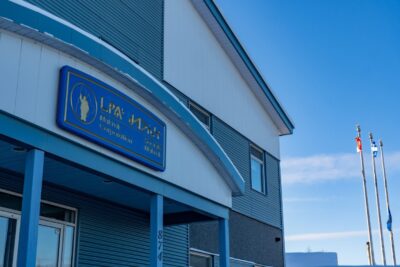
Makivvik has its headquarters in Kuujjuaq, with offices in most Nunavik communities and Montreal. (Nunatsiaq News file photo by Cedric Gallant)
Through the JBNQA, Makivvik Corp. was created to administer the funds provided by the treaty, which totaled $90 million.

Its role also expanded into the economic development of Nunavik through operating businesses, generating jobs, protecting Inuit culture, and building housing. In September 2023, Makivvik’s treasurer George Berthe published in the annual report that the corporation owns nearly $940 million in assets.
This article is part of Nunatsiaq News’ commemoration of the 50th anniversary of the signing of the James Bay and Northern Quebec Agreement in 1975.

This project has been made possible in part by the Government of Canada.
The Makivik/Makivvik Corporation has done and does well by its beneficiaries. The Inuit of the day were aware of the importance of the land, the language, the culture. They were up to the challenge of the day. We have much to be grateful for. We the beneficiaries need to partake in the legacy of sharing and looking out for one another. The challenges do not stop, currently loss of language need to be given more resources and attention, It is something too easily overlooked by the leaders who are fluent speakers.
I remember life the JBNQA , honey bucket , sub par housing . when , we got running water , my grandmother ,thought she moved into a mansion.
While in high school, we had to write essays about our thoughts about the Hydro dam or the actual agreement, as first hand I am sure the flooding in 1979 was because of the dam inland and 1984 thousands of tuktuit drowned which brought light to an entity benefiting Kuujjuamiut.
However, seems like there was (wasn’t, unless it does exist, only in french) any environmental or cultural impact studies on the post effects from the Hydro damming.. and the impacts to our land etc…
It had an impact on the water level, we are lucky we had lots of rainfall in last few weeks, but few years ago. The water level got so so low, during low tide, we can even walk across our river.
One resident from Kuujjuaq jokingly said, we can use the term “Kuujjuakullu”, probably referring the etti, bitti river we now have after the damning of our once mighty river..
Some said, back before the damming, Kuujjuaq had delicious arctic char and ships were able to dock right in front of the our beautiful community.
Today, I believe there are impacts of all kinds but that information is somewhere…
Also, when working committees went into the communities, community had positive and negative impacts within the communities and the close families of the working committee had joy, gratitude, curiosity…. few family members learned deep trauma as it brought alcohol into their homes and all night party-goers despite their children trying to sleep.. trauma as it brought physical, spiritual and sexual abuse during their post-community visit.
It sounded like it anyway, when they did Commeration or when Makivvik negotiators visited when most of the core group, most were still alive, there was formal presentations and we could in the background of a person intoxicated and who yelled out, undisclosed information. And their parent was one the negotiators.
Today, I would imagine it we Inuit have come a long, long way. Don’t forget, there an I.T.N. movement which today, is a secret but few speak out in the social media. That was part of Nunavik History, Youth of Nunavik deserve to know that part of undisclosed history.