


Cabinet to discuss Kitikmeot Inuit employment pilot project
Cambridge Bay MLA proposes broadening definition of Inuit for hiring purposes

Cambridge Bay MLA Fred Pedersen suggests the territorial government launch an Inuit-only hiring strategy in the Kitikmeot as a five-year pilot project. (Photo by Daron Letts)

Nunavut’s cabinet ministers will discuss a proposed pilot project that would see only Inuit hired for territorial government positions in the Kitikmeot Region.
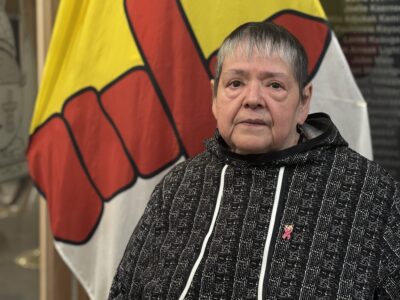
Human Resources Minister Annie Tattuinee says she will bring a proposal for a Kitikmeot-based Inuit hiring pilot project to cabinet. (Photo by Daron Letts)
Cambridge Bay MLA Fred Pedersen pitched the idea in the legislative assembly Monday.
“We can take it into consideration,” said Human Resources Minister Annie Tattuinee.
Pedersen’s proposal would see non-Inuit employees offered similar positions in other regions. Only Inuit would be allowed to replace them.
This practice would apply to positions that become open as non-Inuit staff retire. Pedersen suggested the pilot project could run for five years, but its length would be up to cabinet.
“I look forward to hearing what cabinet’s thoughts are on it,” he said during an interview.

The current Inuit employment rate in the Kitikmeot is 57 per cent, slightly above the territorial average of approximately 50 per cent.
According to Article 23 of the Nunavut agreement, the government is obligated to pursue an 85-per-cent Inuit workforce. Eligible Inuit are defined as those enrolled as beneficiaries under Article 35 of the agreement.
“It is evident that this government has had issues meeting a Nunavut Inuit hiring target of around 85 per cent,” Pedersen said.
He suggested that the government consider broadening the definition of Inuit to include other Inuit land claim groups from beyond Nunavut — such as Inuit from Inuvialuit, Nunavik, Nunatsiavut or urban Inuit from the south — many of whom are related to Nunavut Inuit.
Pedersen acknowledged the change would be difficult, given the clear definition outlined in the Nunavut Agreement.
“It’s fairly hard to change,” he said.

However, he pointed to an approach adopted by the Northwest Territories, which enacted the Indigenous Employment Policy in April.
That policy offers preferred hiring status for Indigenous peoples, with primary consideration given to recognized members or descendants of First Nations, Métis or Inuit who are indigenous to the present boundaries of the Northwest Territories.
When the policy went into effect, Indigenous employees made up about 30 per cent of the NWT government’s workforce, while Indigenous residents made up close to half of the NWT population.
“I’ve heard anecdotally that their Indigenous numbers have increased since they changed the policy,” Pedersen said.
While Tattuinee agreed to discuss Pedersen’s regional hiring pilot strategy, she stopped short of agreeing to consider broadening the definition of Inuit beyond that outlined in the Nunavut Agreement.

“Our priority is Inuit enrolled under Article 35,” she said.
(0) Comments