


Clock ticks down in Nuuk
With only two months to go, the Nuuk host society prepares for the games
MIRIAM HILL
Preparations for the 2002 Arctic Winter games in Nuuk, Greenland, are coming down to the wire.
According to Michael Binzer, general manager for the Nuuk team, contractors are putting the finishing electrical touches on the main sports arena that will house many of the events in Greenland.
Binzer was in Iqaluit this week to meet with the Iqaluit team for some last-minute strategizing and planning. “When I started out we didn’t have the [sports] facilities we needed, which was pretty late to realize that,” he said. “We let the politicians realize this was an obligation. Then we had a multi-sport facility built for $10 million. It is finished and heated, but we need to have electrical installations finalized. It’s right down to the end.”
There are only two months left before 2,000 Arctic athletes begin travelling to Iqaluit and Nuuk for the week-long games, being held jointly between the two cities. As in Iqaluit, banners have gone up in the 15,000-strong city advertising the games, which begin March 17.
Flight challenges
Although not exactly last minute, the cancellation of regularly scheduled flights between Greenland and Iqaluit caused a minor logistical nightmare, Binzer admitted.

Nuuk doesn’t have an international airstrip, which means jets must fly to one of the more northern communities and passengers must transfer to smaller shuttle planes with a capacity of 42 people. “We’re talking about 1,000 people being shipped in on small charters,” he said.
“I had to make an agreement with Greenland Air to have all maintenance put aside for the whole period of March. Then we had to change the whole flight schedule in Greenland for a week,” Binzer said. The former sales manager for Greenland Air also pulled a few strings. “It helps to have some contacts in the airline company.”
Volunteering a new concept
There are 53 committees working on the Nuuk organizing team, each with between five and 10 members. The committees deal with issues including sports, culture, logistics, marketing, venues and volunteers.
“We don’t have the concept of volunteerism in Greenland so that’s a big challenge,” Binzer said. About 800 volunteers are needed, and 675 have registered to date. “The primary thing we’ve done is give the event recognition — to make it of a certain status to be involved in the games.”
Committee chairs were hand-picked by the organizing team. The team went to CEOs of local companies, politicians, and other trusted locals. Of 53 chairs only four are not local.

Nuuk’s challenges
While Iqaluit and Nuuk do face many of the same logistical challenges, such as feeding huge numbers of athletes and ferrying them to different venues, Nuuk has one additional challenge. Its staff has never staged an event of this sort before. Many key Iqaluit team members have helped in organizing previous games in previous years.
“Here you have some people involved in the games, like Kim Wasylyshen [general manager of the Iqaluit team], who have done this before,” Binzer said. “And you have a Canadian tradition. This is Canada and you have a way of doing business that is totally different from us.”
Even something as simple as language is a challenge. In Greenland English is the third language after Greenlandic and Danish.
Accomodations
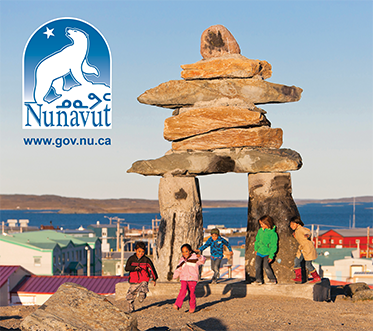
Athletes competing in Nunavut will be housed under one roof at the old Arctic College residence at the end of Federal Road, but in Nuuk they will be spread between facilities.
“Three of the big schools are being closed and we will move out all the chairs, all the tables, and move in new beds,” Binzer explained. Students in Nuuk are going to school on Saturdays now so they won’t miss out on their studies when their schools are closed during the week of the games.
Visitors will have a difficult time finding somewhere to stay in Iqaluit during the games, but Binzer said the same isn’t true in Nuuk.
“We have almost 500 hotel rooms and, apart from that, we have other accommodation facilities, like bed and breakfasts, small apartments with kitchenettes,” he said. “We told TV crews they would not have hotel rooms.” They’ll stay in hostels and small apartments.
Showing off the culture
Both Greenland and Iqaluit are too small to host the games on their own, Binzer said, But a joint event is a great opportunity to show the cities’ shared culture.
Nuuk may look vastly different from Iqaluit, with its high mountains, Scandinavian architecture and never-frozen sea, but Binzer said he feels the same excitement level and interest as the clock ticks closer to the games’ joint opening ceremonies.
(0) Comments