


Court extends Baffinland creditor protection, Inuit groups seek safeguards
Mary River mine operator has enough liquidity to continue operating through June 5
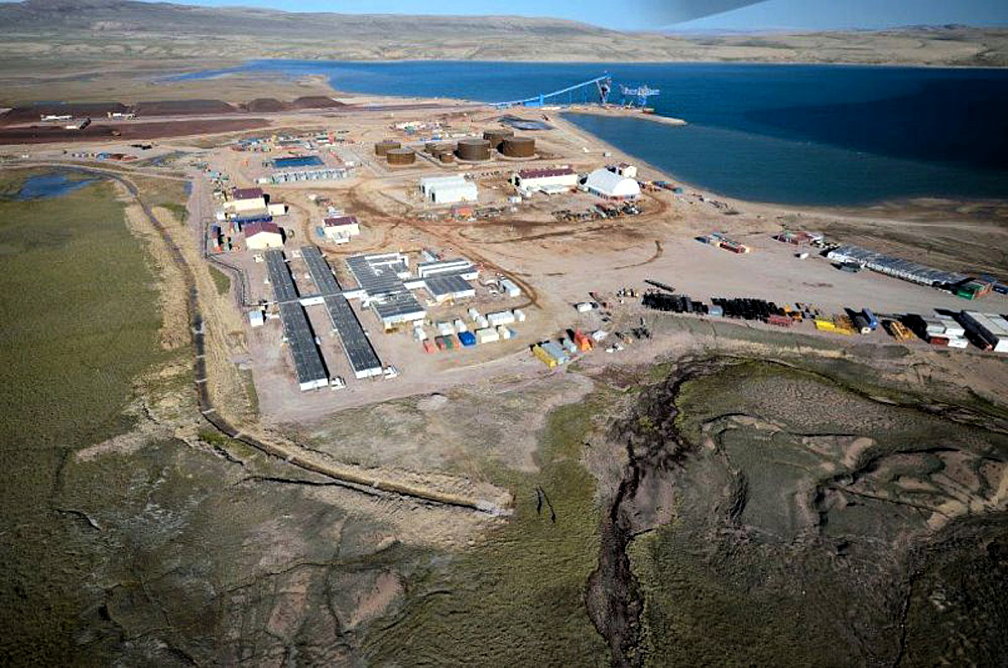
Baffinland Iron Mines Corp., which is more than $1 billion in debt, has had its creditor protection extended from May 25 to June 5, according to Ontario Superior Court of Justice records. (File photo)

Baffinland Iron Mines Corp.’s court-ordered creditor protection was extended by two weeks as a result of a hearing held Monday.
Ontario Superior Court of Justice records show a stay of proceedings was extended to June 5 from May 25, after Justice Shelley Conway said the company that owns the Mary River Mine had “sufficient liquidity” to continue operating until then.
Two Inuit organizations reacted, saying they expect operations to continue at the mine, which is near Pond Inlet, despite the company’s ongoing creditor protection proceedings.
The Qikiqtani Inuit Association and Nunavut Tunngavik Inc. said they understand the iron mine’s operations, employment and agreements with Inuit firms are expected to continue while Baffinland restructures its finances and seeks interim financing.
Baffinland sought creditor protection May 15 after it disclosed more than $1 billion in debt, linked partly to its failed Phase 2 railway expansion proposal, which Ottawa rejected after years of hearings and opposition from some north Baffin communities.
QIA and NTI said in a joint statement on Tuesday that the company’s restructuring under the Companies’ Creditors Arrangement Act is “a serious concern for Inuit in the region,” the mine’s 300 Inuit employees, as well as Inuit business and contractors that work with Baffinland.
The restructuring process could potentially involve new ownership of the mine, QIA and NTI said, echoing Baffinland’s own May 15 statement.
The uncertainty around Baffinland’s future also affects “the communities of Mittimatalik [Pond Inlet], Igloolik, Clyde River, Sanirajak and Arctic Bay whose members have built careers at the mine and rely on the economic activity it supports,” their statement said.
Baffinland is Nunavut’s largest private-sector employer with 1,200 people on its payroll, according to court documents.
The company paid $14.2 million to QIA last year through royalties, commercial lease payments, water compensation and Inuit Impact and Benefit Agreement payments, spokesperson Peter Akman said.
It also paid $9 million to the Government of Nunavut through payroll and territorial employee taxes, as well as $37.7 million in federal and territorial income taxes, he added.
Court filings say the company now faces liquidity pressures severe enough that it may struggle to buy fuel before the annual sealift season ends, potentially forcing the mine to “cease operations entirely.”
However, Akman said the company expects no operational disruptions and that day-to-day decisions continue under court oversight.

NTI and QIA’s statement said, “The mine can only operate, under this ownership or any new ownership, if Nunavut Agreement obligations remain in place and are respected.”
They also said reclamation security is in place in the event of a mine closure, which they said is not currently anticipated.
Baffinland has posted approximately $136.7 million in reclamation security with QIA and Crown-Indigenous Relations and Northern Affairs Canada, Community Services Minister Craig Simailak told the Nunavut legislature on May 22.
Reclamation security is a financial guarantee provided by mining companies to ensure sites are “physically, chemically, and biologically stable upon closure,” QIA’s abandonment and reclamation policy says.
A May 25 Ontario Superior Court order requires the court-appointed monitor to publish, within five days, a list of all known creditors owed more than $1,000 by Baffinland and its affiliated entities.

The next hearing is scheduled for June 3 in Ontario Superior Court in Toronto.
Dang. If only we were still under N.W.T.. Nunavut government and Inuit bodies are the farcest leaders in North America.
For sure. All those mines in NWT are doing super awesome right now. Just look at Ekati, cranking out product! And the GNWT is swimming in royalties!
I mean to be fair Ekatie just went into CCAA in the nwt leaving a ton owed to creditors including impact agreements.
Ekati Mine has been in continuous operation since 1998, producing close to 100 million carats of diamonds, injecting tens of billions into the Canadian and NWT economy, billions into the hands of NWT indigenous business, billions in wages to NWT workers, almost 2 billion in royalties, and been the economic lifeblood of Yellowknife and the North Slave region for a quarter of a century.
It is quite true that as a result of advances made in the manufacture of synthetic diamonds, the market for natural diamonds has tanked and this has eroded the financial viability of Ekati mine for the current owners.
However, it is disingenuous to suggest that the present day Ekati outstanding financial liabilities are the sum total of the economic impacts of this operation for the NWT.
On the whole, the benefits the NWT has received from Ekati vastly overshadow the current financial situation.
This enormous mess employs a mere 1200 people, only 300 of whom are Inuit. Close the mine and have programs to rehire the truck drivers, cleaners, and cooking staff to work in their home communities.
Go take a look at the difference in job availability and salaries of those jobs locally vs. at the mine then let us know which is more promising…
Stop all money that directly and indirectly goes towards this project and focus it towards increased services in town. Food prep services in more soup kitchens for those cooks and cleaners. Elder care services for them through funded home visits. If someone can drive a rock truck for twelve hours, they could drive a Fed/GN/Municipal mini bus to offer transportation around town. All I mean is to relocate mining spending to job creation in towns. Far less long term costs to the land and the communities than 3-on, 3-off mining shifts.
Mining is only a slice of the very small part of the economy of Nunavut, yet by far the most costly.
What mining spending? This is a privately funded enterprise. Do you think the shareholders are benevolent and will say, ‘you know what, let’s lose all of the money we invested, not make any money by continuing to operate this mine or sell the product to customers. We’ll just shut ‘er down, pay for the clean up and just give the non-existent money from the zero profits we made away to a community to add one more municipal truck driver so that the GN doesn’t have to fund the Hamlets to pay for that.’ Makes perfect sense. lol!
That is not what I said/meant. My point is that any public money is better spent on other services, rather than any type of subsidy or promotion of private mining enterprise. Mining is short term, high-interest income that is socially and environmentally ruinous. The economy of Nunavut is 90% federal transfer. Mining is only a fraction of that remaining 10%—a disastrous part. I am suggesting, if Inuit employment and well-being are the concern of the closure, then there are better ways to create employment through important services. No one expects any benevolence at all from the mining companies.
Zero public funding or subsidies have gone into this mine or any other mine.
accounts for 37% to over 46% of Nunavut’s total Gross Domestic Product (GDP). This makes the resource sector the territory’s single largest private-sector pillar, frequently surpassing public administration as the largest contributor to the overall territorial economy.
Mining, quarrying, and oil and gas extraction accounts for accounts for 37% to over 46% of Nunavut’s total Gross Domestic Product (GDP). This makes the resource sector the territory’s single largest private-sector pillar, frequently surpassing public administration as the largest contributor to the overall territorial economy.
Why don’t Inuit contribute to a package that keeps jobs for Inuit? The least QIA can and should do is to participate in a financing package with the dead money they’re holding from royalties already received. And the Nunavut trust could also participate in the financing from the billions they’re holding in what is also effectively dead money–losing purchasing power as returns are less than real-time inflation.
The delays and non-cooperation by Inuit are a prime reason Baffinland got to this. So Inuit should now be at that table to show they’re serious about Inuit employment and being masters of developments in their own lands. But as the saying goes and should have gone all along, timing is of the essence.
It’s called an IIBA and that’s signed and in place. Has been for years…
And nothing is being done with IIBA money…
And whose fault is that…
After how badly this mine has been mismanaged financially, you would be throwing away money by investing in this project. IIBA money should be used to help Inuit, not failing mining firms.
Their current amount of debt is typical for this type of mine and operation. What is not typical is the perception people have about this mine and the regulatory delays because of that perception.
Every other iron ore mine in the world that is similar in profile to Baffinland is operating at 30 Mt/year production to be profitable. Baffinland is at what, 6 Mt/year?
Obviously they’re going to have trouble paying their bills if they’re not making any money.
So they want any new owners to continue the kick-backs and graft or no mine? Hope is closes for good then!
The good people of Nunavut protested the expansion of the railway that would let the company ship all year round and increase production.
They spent 1b getting ready. Now they bankrupt.
You reap what you sow.
Sad for the employees, their families and communities.
I hope there’s a lesson learned for the future diamond mine on Baffin.