


Doctor says accused killer suffered psychosis leading up to his wife’s death
During one episode, clinicians attempted to have Danny Paul Eyaituk involuntary admitted to a psychiatric institution
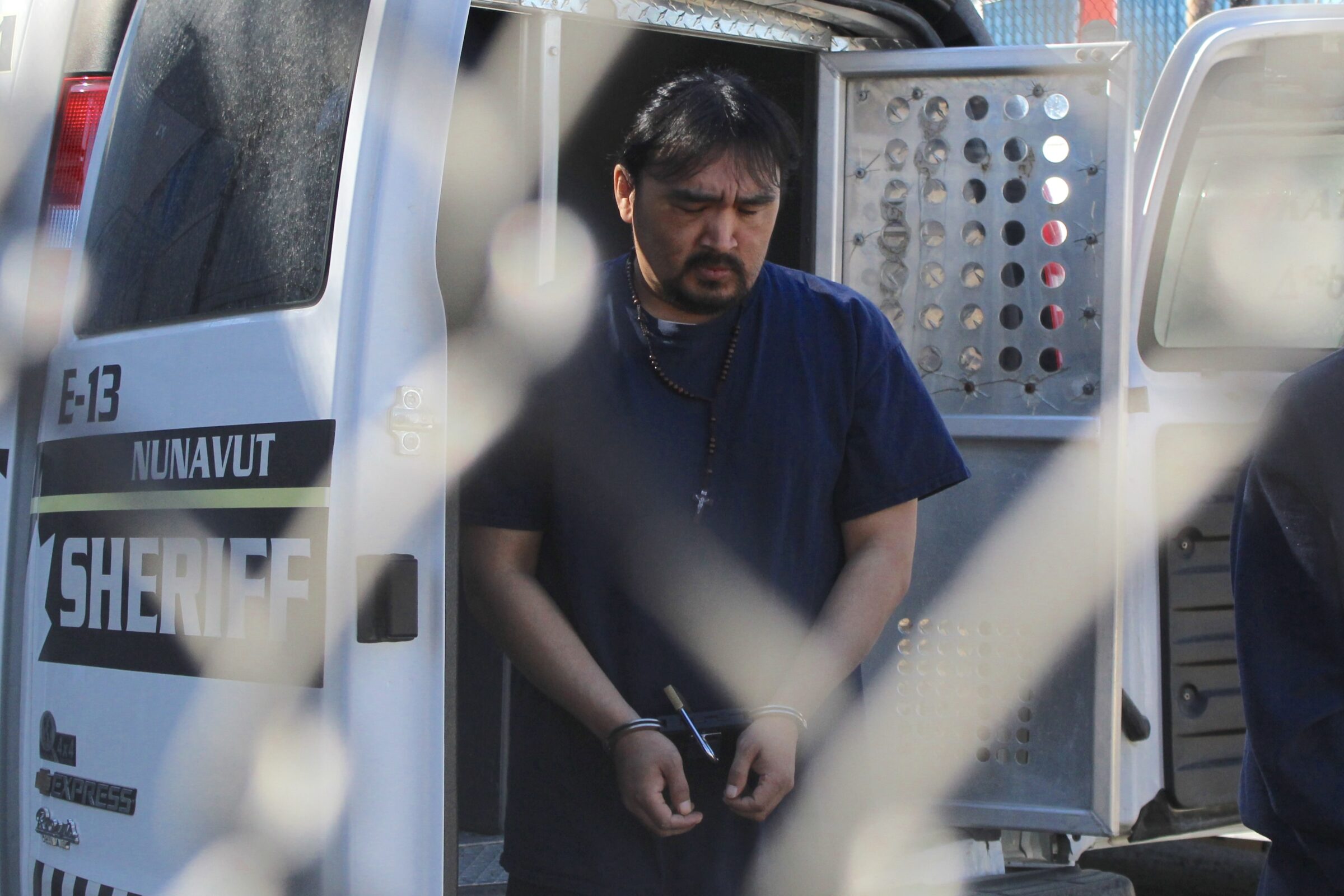
Danny Paul Eyaituk makes his way to an Iqaluit courtroom on Wednesday for his first-degree murder trial. (Photo by Arty Sarkisian)
A Sanikiluaq man who allegedly murdered his wife suffered from drug-induced psychosis during the five months before her death, the final witness in Danny Paul Eyaituk’s trial says.
“From my review of available clinical records, it appears Mr. Eyaituk had some mental deterioration, starting in the end of 2023,” forensic psychiatrist Dr. Maryana Kravtsenyuk told an Iqaluit courtroom via video feed on Wednesday.
Eyaituk, 40, is on trial for the first-degree murder of his wife Annie Tracy Oqaituq, 36, who was found dead in their home on April 19, 2024. The trial began in Sanikiluaq on June 9 but adjourned on June 16. The trial resumed Wednesday in Iqaluit.
Eyatiuk and Oqaituq’s sister Parsa Oqaituq testified earlier that he had dealt with mental illness for much of his life.
On Wednesday, as the third week of the trial began, Kravtsenyuk went through a report that defence lawyer Alan Regel asked her to prepare to assess whether Eyaituk could be found not criminally responsible for Oqaituq’s death.
Canada’s Criminal Code says a person cannot be held responsible for a crime committed while suffering from a mental health disorder that makes them incapable of appreciating the nature and quality of the act.
Kravtsenyuk read a summary of Eyaituk’s clinical records from November 2023 to February 2024.

He was using cocaine and cannabis on a daily basis with “increasing paranoia, disorganized thinking, non-sensical responses; [there are] references to delusions; hearing his deceased grandfather, seeing dead people, visual hallucinations and emotional liability were all described in those clinical records,” she said.
Paranoid delusions usually affect a person who believes someone is out to get them or harm them. Sometimes there are specific people they are paranoid about, she added.
Severe symptoms of drug-induced psychosis can come on after ingesting drugs. This severity can “fluctuate significantly” and will improve with abstinence.
On Jan. 1, 2024, an on-call physician at the Sanikiluaq health centre wrote that Eyaituk had been suffering from severe episodes of paranoia and delusions for two months.
Clinicians who assessed Eyaituk during that time planned to medevac him to a psychiatric facility.
“He was deemed certified under the Mental Health Act,” Kravtsenyuk testified. “Drug-induced paranoia is a form of substance-induced psychosis; substance-induced psychosis can involve delusions, specifically paranoid delusions,” she added.

While Eyaituk was waiting to be medevacked, he was fairly quickly cleared and discharged afterward. With time and treatment, he stabilized.
He visited the health centre at least one more time in Feburary 2024, again suffering from a mental health crisis, two months before he allegedly killed his wife.
The trial continues on Wednesday in Iqaluit.
(0) Comments