


Embrace the KISS principle, Inuit Nunangat University
Keep it simple when it comes to naming future university’s faculties
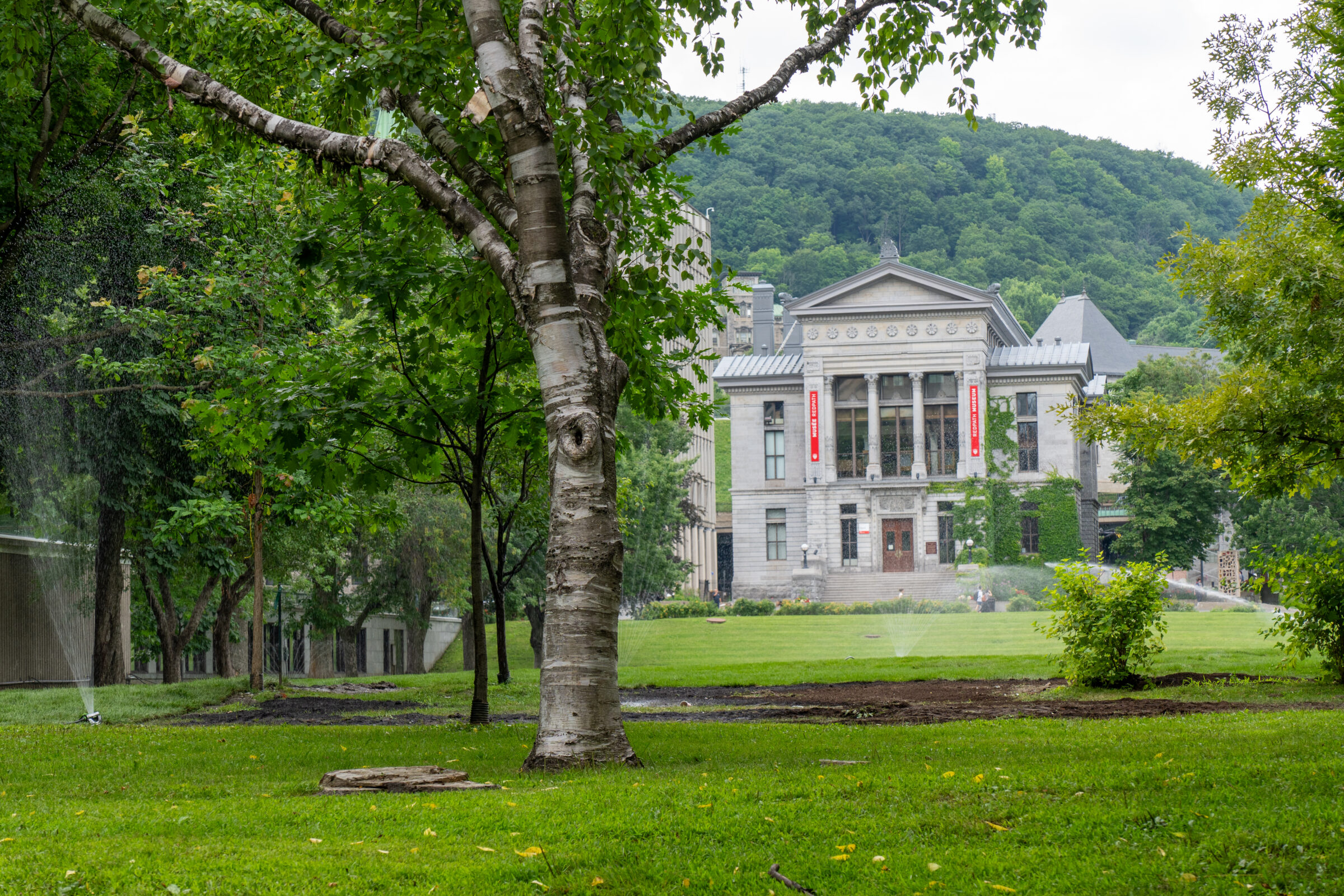
Canadian universities like Montreal’s McGill University organize their subjects by faculty. The future Inuit Nunangat University is proposing some unconventional names for its faculties and recently asked for feedback on them. (File photo by Cedric Gallant)

Well, ITK, since you asked … the proposed names for faculties at the future Inuit Nunangat University are a little bit out there. Even a little flaky.
Inuit Tapiriit Kanatami, the national organization representing Inuit in Canada, launched a survey to get feedback on aspects of the university it has been planning to build for Inuit students for nearly 15 years.
Its new Inuit Nunangat Curriculum Survey asks Inuit to rank the importance of the new faculties at the university.
Faculties are the subdivisions within a university where similar subjects are grouped together. Biology, chemistry and physics are often taught within the faculty of science, for example.
At many Canadian universities, faculties have traditional — perhaps even bland — names but they make it obvious what subjects are taught — arts, science, medicine, law, engineering, education, nursing and so on.
But ITK is proposing some unconventional names for the faculties at its future Inuit Nunangat University, such as the faculty of resourcefulness and sustainability, the faculty of surroundings and relationality, and the faculty of expression.
The faculty of expression will teach subjects like sculpture, Inuit art history and digital media. At other Canadian universities, those topics would fall under something mundane like a faculty of arts.

The proposed faculty of surroundings and relationality will focus on health-related professions, including midwifery and nursing. At Montreal’s McGill University, for instance, nursing belongs to the faculty of medicine and health sciences.
The university’s first faculty will be the faculty of silatursarniq, an Inuktitut word that means the process of becoming a wise person.
The public learned about that when the Rideau Hall Foundation announced a $1-million grant to ITK to help develop it.
Lately, it seems we learn more about the university’s progress from the Rideau Hall Foundation than from ITK itself.
One of Inuit Nunangat University’s goals is to help Inuit get into leadership roles. Students are more likely to be taken seriously if their university education is similar to the academic experience their counterparts from other universities got.
In the competitive world of recruiting students, you can understand why a university would want to appear modern and on the cutting edge. But there’s a fine line between cutting edge and irrelevant.

It’s hard enough for graduates to break into the work world after they graduate. Don’t give them a diploma that will prompt employers to say, what’s that? If employers don’t understand something on a resume, they’re more likely to pass it over.
Getting a good university education is hard enough. Getting a job after getting a diploma is competitive.
Toronto’s York University runs TV ads heralding the fact that 90 per cent of employers are satisfied with its graduates, noting a York degree “prepares you for long-term career success.”
Why make it harder on Inuit Nunangat University graduates who will have to explain to prospective employers what they learned as a student in the faculty of surroundings and relationality or the faculty of resourcefulness and sustainability?
Cautiously. Getting off tract with being carried away with names and labels, especially where Inuit are in pursuit of learning from the greater masses of experience and education platforms established already. Get away from this segregation to make Inuit different, and not emphasizing the core importance. In other words don’t focus on trivial at the expense of real education concepts. This thing about leadership roles has been haunting inuit students since beginning of educational time. Why such emphasis that way. Too many students are misunderstanding their education to leaders as though leadership is the only way to succeed with learning, such a set back myth to success. Leadership comes with years of solid work and high learning that it need not take an early goal oriented agenda. Let the leadership evolve rather than planned. I see too many young people with minimal education misguided into believing they are leading rather than participating as an educated individual of society. Stop forcing such concepts that can’t be forced.
I couldn’t agree more. A degree with a name that does not immediately signal to a potential employer what knowledge a prospective employee brings will be a degree greeted with suspicion and not taken seriously.
Fairly sure those names are there to shift blame on ‘difference’ when inevitably the graduates they produce will find recognition of their skills limiter internationally and possibly also provincially. Nobody would get a heart surgery from an ITK graduate of the, idk, organ spirit vessel department, if is or her competency was evaluated the way their high school diplomas were.
I respect the managing editors opinion and piece here, though I think they could of used a better way to explain their position.
The charter for the Inuit Nunangat University explains what the goal and position of the University is. Whether or not it happens is another. The University here is building its academia based on Inuit knowledge systems. Of course it will not base its faculty surrounding dominant western knowledge systems. Take any Indigenous Studies courses in University, and it will go and speak to what INU is doing, and likely why its not naming, nor educating its students in those falcuties and names mentioned. It will be using its own knowledge system. Where I find the wording to be poor choice is the word “flaky”. Even calling a system that belongs to the non dominant western system as “not keeping it simple” is actually the proof one needs to understand why ITK is trying to build an education institute based on another knowledge system.
With the wording, all Corey is doing here is enforcing the idea that the western education system is the only right way to educate people on knowledge. Knowledge that is deeply rooted in the western values. He could be correct, but as the managing editor of Nunatsiaq, a paper reporting on areas largely inhabited by Inuit, pretty rich to say their knowledge systems and way they want to autonomously handle the education of their people as “flaky”
You’re inferring way more than can be taken from what has been said.
To call something flaky in this context might be to say it is vague, unconvincing and poorly thought out. All of which apply here (depending on your perspective, of course).
Nothing in Corey’s critique suggests Inuit Knowledge systems are flaky. To make sense of your argument is to imagine a belief in the sacredness of every word or idea that comes from an Inuk (I’m convinced many people believe exactly this).
As I see it terms like ‘Inuit knowledge systems’ are more often used to obscure and shut down criticism than to shed light, at least in public conversation. This suggests an alternate reality where a different kind of physics only people of a certain heritage might understand. Of course this is a fallacy. Granted, fallacies are a western concept, no need to address them at all!
I wonder though, if you want to teach a non-western knowledge system why call it a University (a word rooted in Latin and Roman usage) at all? I suspect the allure of legitimacy that comes with the term too great to resist?
The use of the word ‘flaky’ is referring to the English translation of the names, not the values behind them. I find you incorrect in your interpretation.
I do agree with the other poster. Calling it a ‘university’ is problem. The concept of the university is fundamentally rooted in broader Western culture (though this is a troublesome term as there are so many ‘Western’ cultures with varying educational approaches) and the traditional teaching methods are also rooted in traditional broadly Western approaches.
I would support ITK using a different name to describe its educational institution as it certainly doesn’t sound like it will be ‘university’ as broadly understood. This doesn’t mean it doesn’t have value.
If anything, it looks like a bit of cultural appropriation by the dominant Inuit culture to ride of the cachet and prestige of calling something a university.
Flaky names = unconvincing and poorly thought out.
What did I miss exactly?
I’d suggest you get over your focus on ‘dominant Western knowledge systems’ as this is the way it is done in most of the non-Western world too. Look at faculty/divisional names in Indian, Korean, Japanese, Chinese, Russian and other major non-Western post-secondary systems and they follow the same pattern. Why? Because it works.
Knowledge really is power. Im thinking something is misunderstood here. Itk may have limited say in how the birth of such a university could possibly turn out. Yes the brain child of the university no doubt is ITk, no more than it could have been other interested organizations or parties or even individuals that had potential to born this idea. The real question who will do the actual birth of the education to be implemented within the walls? Only the higher educated can have that power to make this a reality. Does ITK define itself as qualified to do that ? Is ITK an educational facility based to take this on? Thats the real question for ITK. It’s a specialist role really. Or in its stead we are in fact dependent upon the more educated specialists of the ongoing educational organizations and a cooperation of already established universities to make this university happen. That’s something we’ve all need to know. If other universities are the brains of what goes in these rooms of knowledge, there maybe limited room to pick and choose, names and labels and categories of inuit friendly words of choice of customization. If knowledge is power, just saying, who has the power to build a university? Yes universities are just that universities for all.
The crazy thing is that all the ladies-who-lunch and those running the foundations that will cheerfully throw some money at ITK’s university project – and prattle on about “other knowledge systems” and assorted pretentious twaddle – would never seriously consider sending their own kids there.
This is strictly a feel good future university and following the same pattern that has repeatedly seen us undermine education and betray northern kids with social passing instead of standards, NS remedial education instead of college and now this carbuncle.
For those of us who remember the fireworks and how much we all knew the need for capacity development to get Inuit into government was going to take a huge effort, this just completes the abandonment and betrayal and ensures we will continue to limp along with a government stuffed full of people hired for reasons other than their abilities to contribute anything useful.
There’s already a university in Inuit nunangat, its called greenland university. Just partner with them instead of trying to reinvent the wheel.
Monkey see.
Monkey do.
Inuit Nunangat refers to Inuit lands in Canada. These are divided into 4 regions: Nunavut, Inuvialuit, Nunavik, Nunatsiavut.
In a formal government/ itk sense, yes, but get rid of borders and the real inuit nunangat (place where inuit live) extends from Russias far east to Greenland.
Canada, America (Alaska), Russia and Greenland are all part of the real Inuit Nunangat.
Good luck with that. Mainland European and Canadian system are so different that the administration will be a huge challenge. Then we get into visas and the whole issue of international student costs. I can’t imagine that the Danes/Greenlanders are overly keen to host a bunch of foreigners unless they pay full price.
We have traditionally struggled with articulation agreements between other Canadian jurisdictions. It will be light years more challenging internationally.
On a practical level, are there are enough potential students with Inuktitut that is good enough in all areas to do post-secondary university level work in? Speaking is not the same as academic reading and writing.
In what world are the highschool graduates in Nunavut prepared to go to college, much less Nunavut University. This is a joke and a waste of money. Fix the K-12 system first by hiring ESL teachers for all grades. Teach these kids to read, write and speak English and Inuktut. At best a highschool graduate from Nunavut has a grade 8 equivalent education.