


Family medicine leader hopes residents end up ‘falling in love with Nunavut’
4 residents to train in Iqaluit in 2027, 4 more to join in 2028, through University of Ottawa partnership with GN
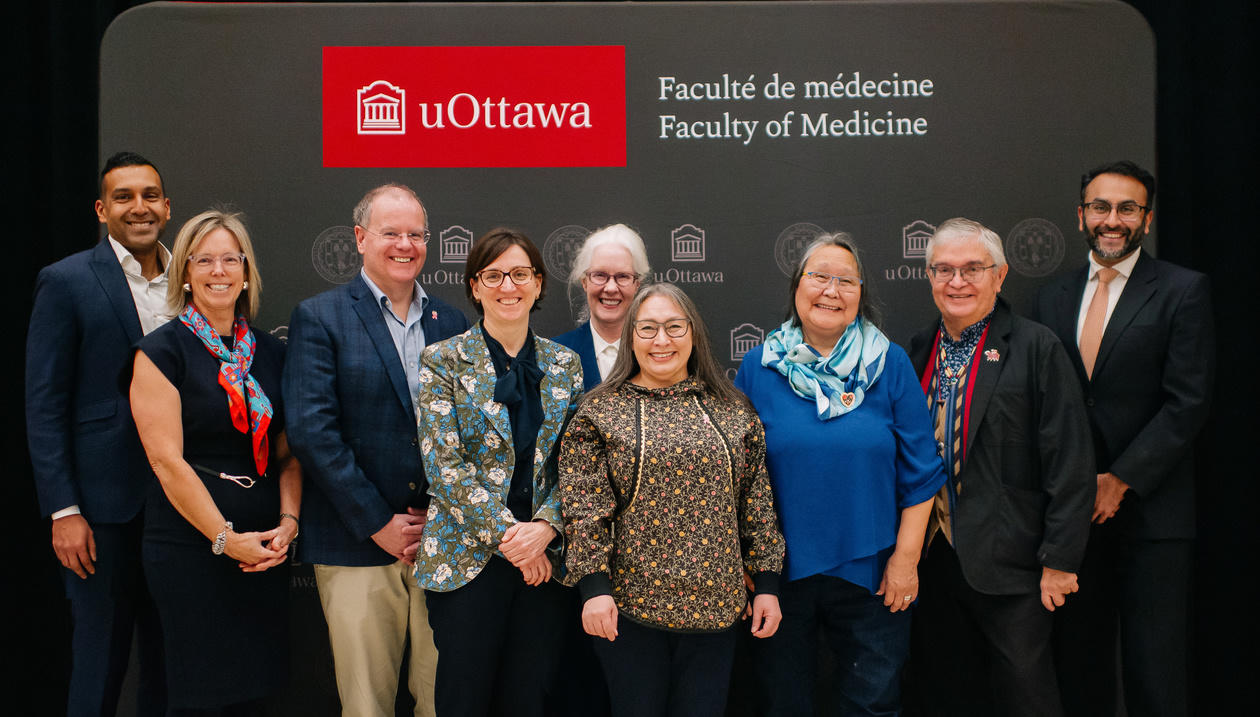
From left, Dr. Sohil Rangwala, Dr. Elizabeth Muggah, Dr. Francois de Wet, Dr. Marie-Eve Sylvestre, Dr. Melissa Forgie, Nunavut Health Minister Janet Pitsiulaaq Brewster, elder Meeka Kakudluk, elder Simon Brascoupé and Dr. Avik Nath pose during the Nov. 16 announcement of a five-year partnership between the Government of Nunavut and the University of Ottawa to train family medicine residents in the territory. The program will bring four residents to Iqaluit in 2027, with four more joining in 2028. (Photo courtesy of University of Ottawa)

More than one-third of Nunavut’s full-time physicians came through in-territory residency programs, says the Health Department’s chief of staff, who hopes a new partnership with the University of Ottawa will encourage more doctors to make Nunavut their home.
“History has shown us that people tend to stay where they train,” said Dr. Francois de Wet, who is also chief of staff at the Qikiqtani General Hospital in Iqaluit, in an interview on Monday.
A five-year agreement to have some of the university’s medical students do their residencies in Nunavut was announced Nov. 16 by Nunavut Health Minister Janet Pitsiulaaq Brewster at the University of Ottawa’s Faculty of Medicine.
That program will bring four family medicine residents to Iqaluit in 2027, with four more joining in 2028. Residents will spend two months in Iqaluit during their first year of training and five months in their second year.
De Wet said residents will work under the supervision of qualified physicians, including during visits to other communities, where they can see patients in local health centres.
The residency positions will not be used to fill vacancies or replace existing physicians in Nunavut, he added.
“This program is really built around educating [medical] residents, supporting them, making them better physicians, and immersing them in Inuit culture and into the North to understand what a great place this is to work at,” de Wet said.
Dr. Elizabeth Muggah, the chairperson of the university’s family medicine department, said the program could also help support existing physicians by providing additional coverage when doctors need time away.
“We are hoping that this could be one part of a broader strategy that the Government of Nunavut is using to recruit and retain,” Muggah said in an interview last week.
“We hope what happens there is that some of those family physicians end up falling in love with Nunavut and join the incredible teams of physicians, nurses and health-care practitioners who are there to provide care.”
The territory has 26 full-time physicians based in Iqaluit and two in Rankin Inlet, de Wet said. He considers a physician full-time if they work 220 days a year.
While there are no Inuit-specific quotas for the eight residency positions, De Wet said Inuit students are expected to enter medical school next year through a separate university partnership with the GN and Nunavut Tunngavik Inc., which provides at least two funded medical-school positions for Nunavut students.
Medical residents will be expected to complete an online cultural competency course before arriving in Nunavut, de Wet said.

The course will discuss the effects of colonialism and residential schools on Nunavummiut, as well as the history and experiences of Inuit communities, he said.
The Government of Nunavut will pay the residents’ salaries for the two years of their training, as well as a smaller co-ordination fee to the University of Ottawa.
The territory already has dedicated housing for medical residents in Iqaluit, de Wet said.
Residents generally live in shared accommodations with other trainees, although additional housing can be provided for those staying longer who want to bring their families.
🤣🤣🤣🤣🤣 I’m guessing he hasn’t read the article on Nunatsiaq News, written by a nurse who (did) spent time in Nunavut. In it she said she earns others in health services avoid Nunavut.
The headline was…(Tah Daa) “Nunavut is scary.”