


Kuujjuaq Greenhouse gets $1M in federal funding
Money to support a new service building, food-processing activities and equipment to help preserve locally grown food
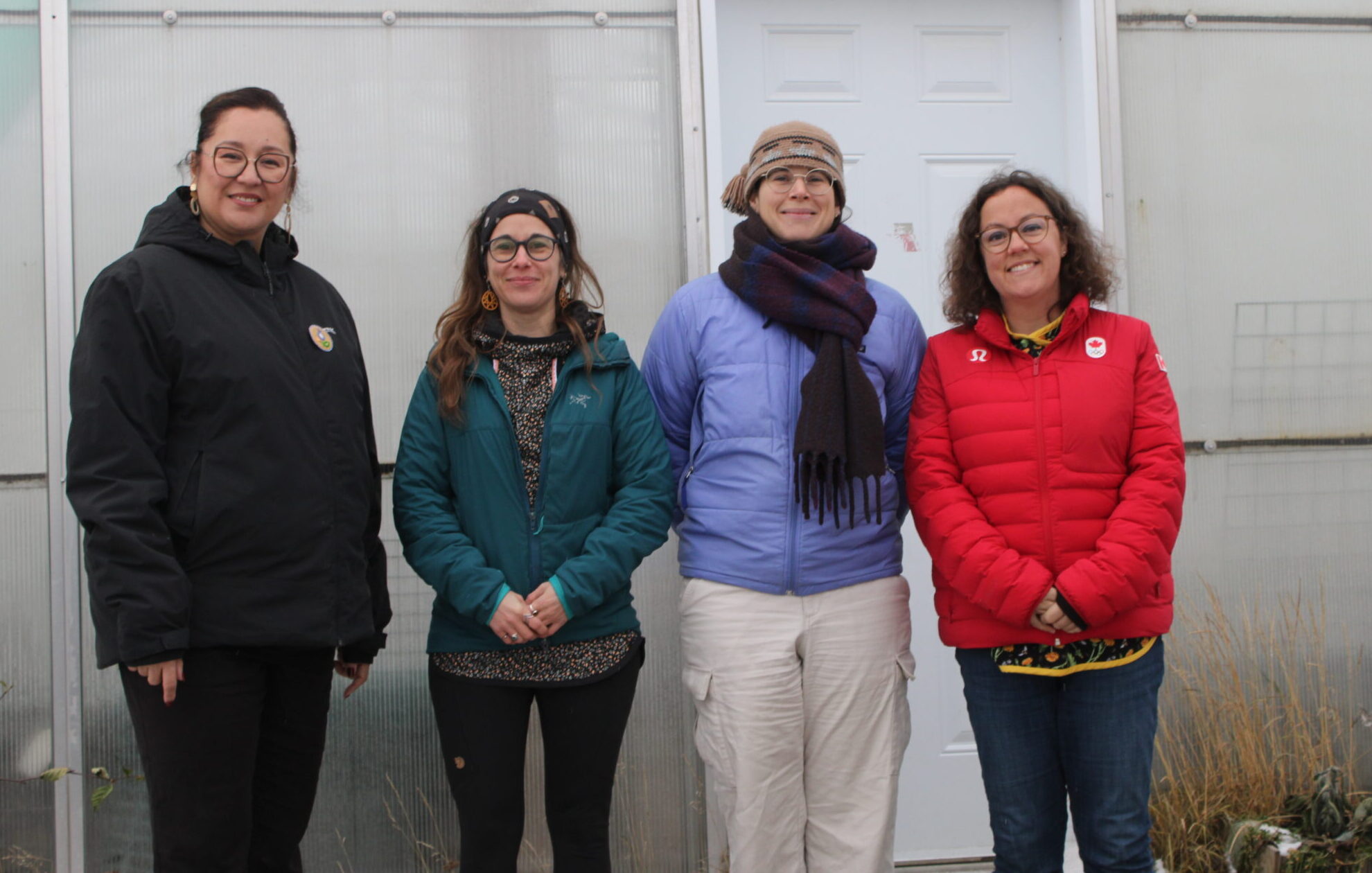
Federal Indigenous Services Minister Mandy Gull-Masty, left, Kuujjuaq Greenhouse committee members Michèle Séguin-Letendre and Roxane Archambault, and Crown-Indigenous Relations Minister Rebecca Alty, pose during a visit to the greenhouse Friday to announce $1 million for a new service building and expanded food-processing activities. (Photo by Dominique Gené)
The Kuujjuaq Greenhouse has $1 million in federal funding to expand local food production and processing in the community.
Indigenous Services Minister Mandy Gull-Masty and Crown-Indigenous Relations Minister Rebecca Alty toured the greenhouse Friday morning as part of a funding announcement from Canada Economic Development for Quebec Regions. It’s a federal program that gives financial support to small and medium-size businesses and non-profit organizations.
The money will go toward the construction of a new service building connected to the existing greenhouses that were built in 1999 and 2012, said Roxane Archambault, a member of the four-person volunteer committee managing the Kuujjuaq Greenhouse. The project is operated by the municipality.
The new building will include an insulated space to help extend the gardening season, washrooms and improved facilities to provide more comfortable working conditions, Archambault said. The committee also hopes to integrate a seedling container into the new building.
It will also support the greenhouse’s food-processing activities, preservation equipment and workshops on growing fresh food.
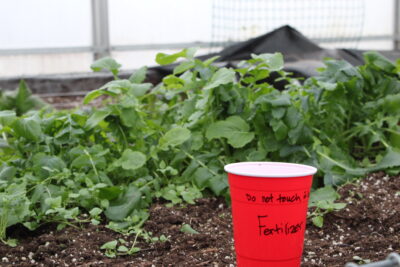
The Kuujjuaq Greenhouse’s gardening season has wrapped up for the year, with community members expected to return to their plots when the season reopens in late May or early June. (Photo by Dominique Gené)
“We’re really glad to get this funding. We were not sure what we would do without it,” Archambault said in an interview in French.

The project is expected to be completed by fall 2027, she said.
The Kuujjuaq Greenhouse currently has 46 gardening plots available to community members, Archambault said. Inuit beneficiaries and residents who have lived in Kuujjuaq for at least 10 years automatically qualify for a plot.
After Inuit and longtime residents get their plots, anyone else can apply for a plot, after living at least one year in the community.
The remaining plots are awarded by lottery if necessary. Organizations also automatically qualify.
Alongside individual plots, there are community plots with fresh produce, such as lettuce, spinach and herbs available to residents.
This gardening season has officially ended and is expected to resume in late May or early June next year.

Gull-Masty congratulated the greenhouse committee on the project and said she hoped to return for another visit in the summer.
They say money doesn’t grow on trees but it sure seems like it grows in Nunavik greenhouses.
In 2018 , makivik got , a $350K hydroponic container , here in kuujjuaq as Plan nord program , worked for 2-3yrs . Wonder , how long this program is going to last ?
People need to accept that the multitude of recent community greenhouse projects including this one that are kick started and funded by the Canadian taxpayer are nothing more than costly, misplaced cultural assimilation.
We have zero history of farming up here. We have vanishingly small potential of establishing farms up here. Greenhouses to feed people are the bright idea of southern agriculturalists who are culturally prone to thinking food security means growing your own food out of the ground.
With northern people unwilling to say no to free money, it is an easy sell job to get at least a few people in any community to go along.
Cash in hand, the hard questions are avoided. Like, how exactly is a greenhouse going to make a serious dent in the dietary needs of a northern community? What would it all cost, especially considering the enormous carbon footprint required of keeping leafy things warm in subzero weather?
Has anyone actually compared the energy inputs for a stalk of leaf lettuce grown in the north to that which is flown up? How exactly are we farther ahead, and would we be better served if we just imported vegetables from where it is easy to grow them?
While we are pondering this, someone please explain to me how northern people can in reality subsist on the products of a greenhouse given that 75-95% of vegetables are water (we have our own lakes up here, thanks), and vegetables mainly contain carbs and fiber? Cold weather living requires fats and proteins that are mainly absent from greenhouse grown food.
Reindeer husbandry and aquaculture can go much farther in addressing our real food security needs. However, implementing these projects requires much more thought, planning, community buy-in, effort and investment than these feel good greenhouse projects. People intuitively know this, and that is why nobody brings these ideas up.