

Narwhal, seals and more adorn University of Ottawa wall
Aija Komangapik, originally from Iqaluit, is one of 5 artists involved in mural project intended to give recognition to Indigenous cultures
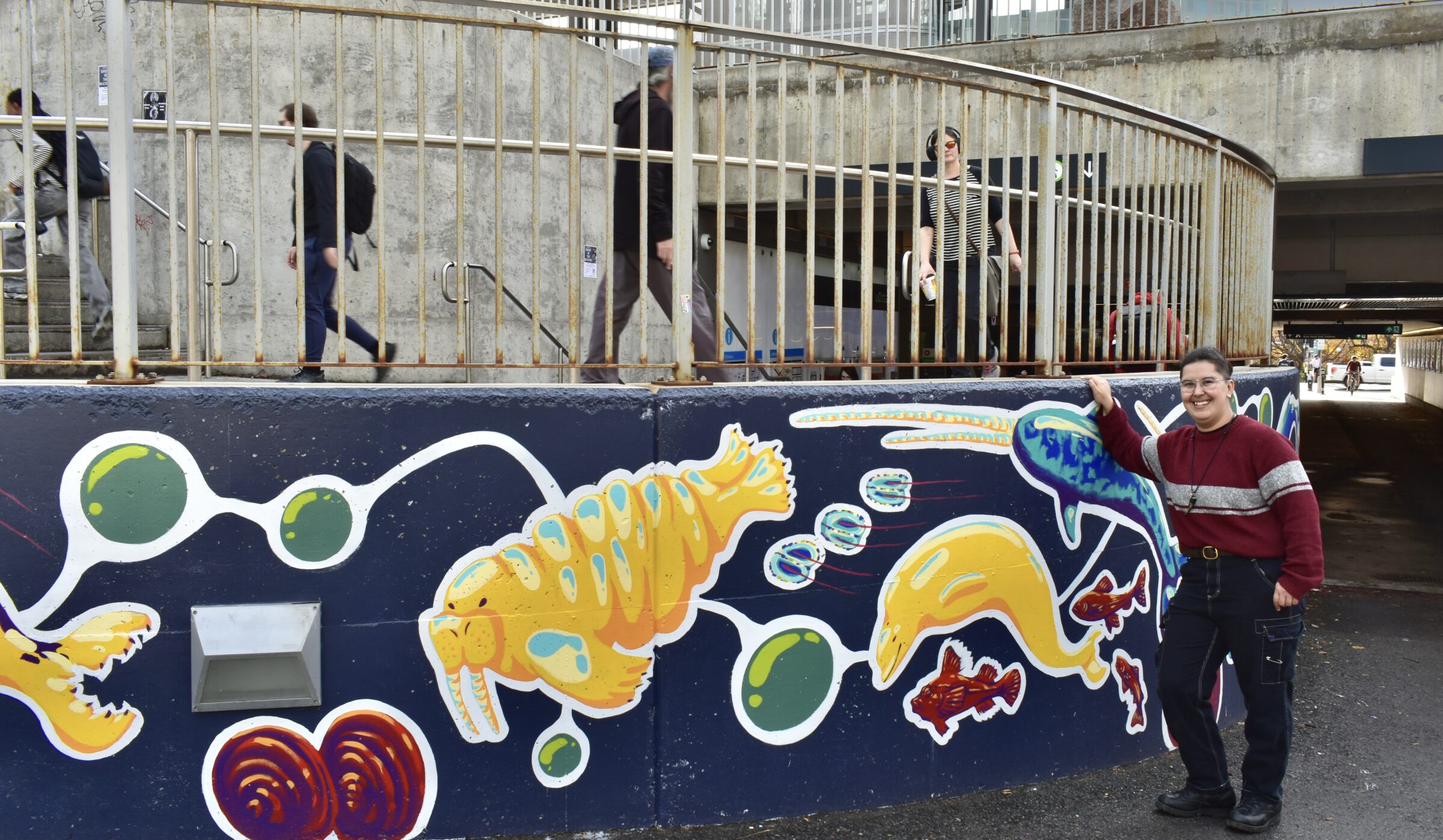
Inuk artist Aija Komangapik stands beside her section of a new Indigenous mural on the wall next to the University of Ottawa’s train station entrance on Nov. 5. Komangapik, who is from Iqaluit but is based in Ottawa, painted Arctic marine life, including a grey seal, a beluga whale, a walrus and a two-tusk narwhal. (Photo by Nehaa Bimal)

Aija Komangapik painted a grey seal as part of a mural project at the University of Ottawa because it is an animal she knows well.
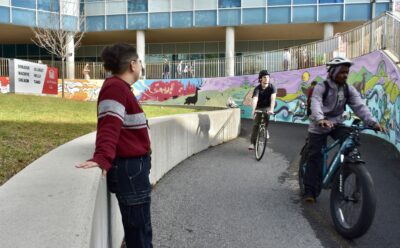
Cyclists ride past as Inuk artist Aija Komangapik looks at a new collaborative mural along a bike pathway at the University of Ottawa in Ottawa on Nov. 5. Komangapik was one of five Indigenous artists from across Canada who painted sections of the campus project. (Photo by Nehaa Bimal)
“The grey seal is the one I catch, the one I use to prepare sealskins. It’s the one I hunt to provide people with meat,” said the 28-year-old artist and hunter.
She included the animal in her section of a new mural on the wall beside the university’s train station entrance, which also serves as a bike pathway.
Her section begins with a painting of the sea goddess Sedna’s severed fingers, which then leads to illustrations of a blue whale, a two-tusk narwhal, a beluga whale, a walrus and seals.
“The creation for all the animals starts in the ocean, and for Inuit, it starts with Sedna,” she said on Nov. 5, while standing in front of the mural as cyclists sped past.
Komangapik, who was born in Iqaluit but now lives in Ottawa, began hunting on the water in her 20s, after she moved down south when she was 12.
“I’ve been feeling very close to my culture again and hunting has really helping me get back in touch with myself,” she said.
The mural features Algonquin artist Miskomin Twenish of Kitigan Zibi Anishinabeg, Métis artist Bre Quirion of Manitoba, Cree artist Chris Chipak of Red Pheasant Cree Nation, and Kanien’kehá:ka artist Victoria Ransom of Akwesasne First Nation.
Each artist’s territory is represented in different sections, which, taken together, show water moving from the ocean to rivers, across the plains and toward the mountains, said Komangapik.
“It made for a more cohesive, more beautiful art piece as we were playing with each other’s colours and speaking with each other as artists,” she said.
“The mural gives off a similar feeling because of it.”
The university’s Office of Indigenous Affairs organized the mural. The project grew out of an earlier effort to recognize Indigenous languages and cultures on campus, said Tareyn Johnson, director the office, in an interview.

A sign near the bike pathway in 2019 that had greetings in five Indigenous languages, including Inuktitut, was repeatedly being vandalized, Johnson said.
Instead of fixing the damages, administrators reimagined how to enliven the alley-like area.
“Beautifying these spaces is a way of reclaiming land on campus,” Johnson said.
The mural was mostly completed in October. One section, which will feature Komangapik’s painting of Sedna, remains unfinished because that wall is owned by the City of Ottawa.
The university is awaiting approval to complete the work, likely next spring or summer.

“What I appreciate most is that the artists worked together to create something harmonious while still allowing for different contrasts and styles,” Johnson said.
(0) Comments