


New housing in Iqaluit not keeping up with demand, report finds
Canada Mortgage and Housing Corp. releases 2026 northern housing report
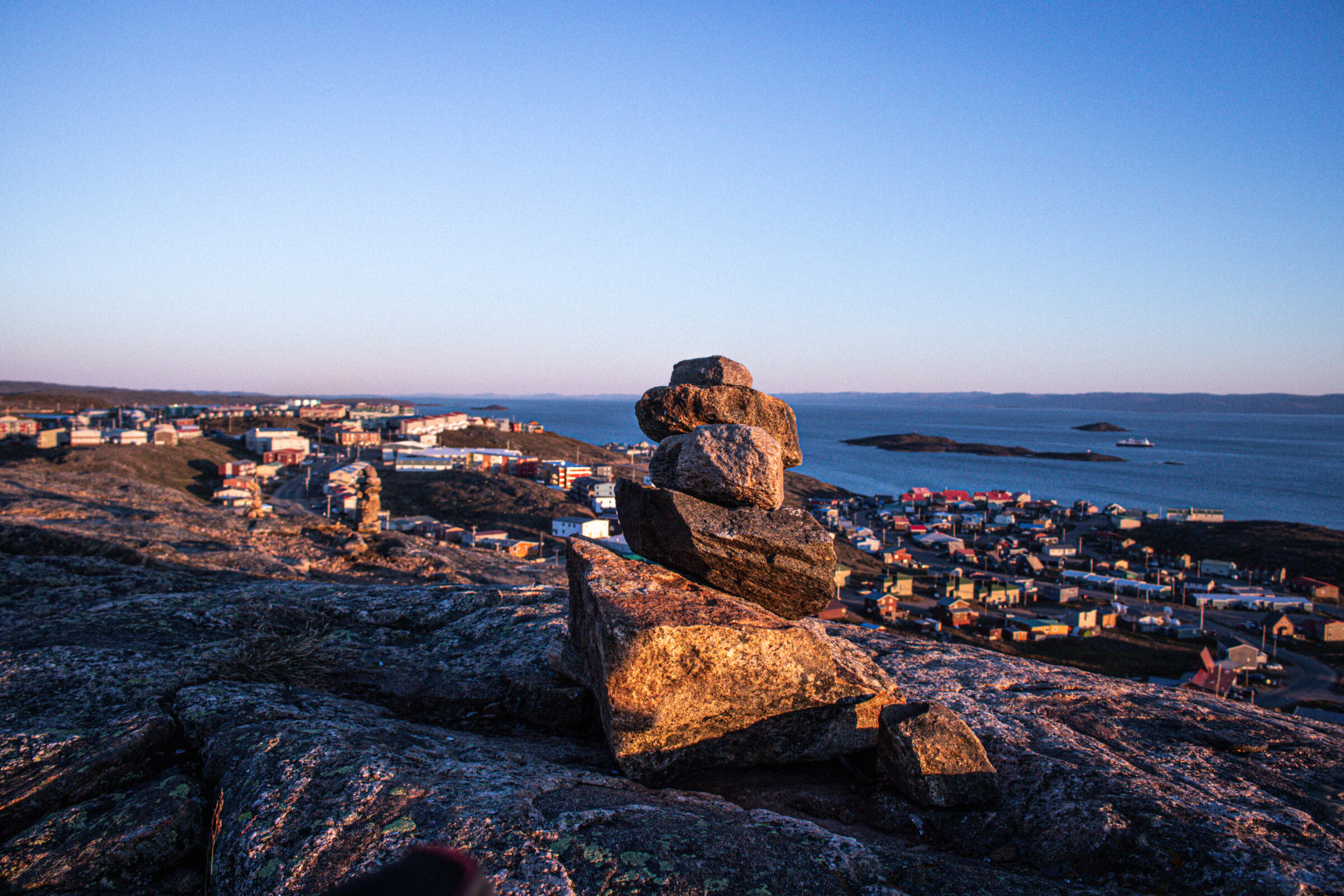
While the housing stock in Iqaluit is growing, vacancy rates remain the same, Canada Mortgage and Housing Corporation found in a report it released this week. This is because underlying demands and overcrowded housing remains high. (File photo by Jeff Pelletier)
Housing in Nunavut is getting more unaffordable, and this problem is especially bad for Inuit, finds a report released Wednesday by the Canada Mortgage and Housing Corp.
The report explores housing conditions in Iqaluit, Yellowknife and Whitehorse, including trends in supply and demand, as well as affordability and the role of public housing. CMHC compared data collected in 2025 to those in its last northern housing report, released in 2021.
Iqaluit residents put an average 56 per cent of their total household income towards a new mortgage in 2025, compared to 41 per cent in 2021.
When looking only at Iqaluit’s Indigenous population, the vast majority being Inuit, households were putting 70 per cent of their income towards a new mortgage in 2025, up from 51 per cent in 2021.
Indigenous workers in the North earn anywhere between 12 per cent to 20 per cent less than non-Indigenous workers, with Nunavut having the largest gap.
Ideally, households should be portioning no more than 30 per cent of total income to their mortgages. Anything more is unaffordable, the report said.
This situation has largely kept Iqaluit residents reliant on housing options outside of signing a new mortgage for a home, the report said.

The rental situation in Iqaluit is similarly challenging, with the city’s vacancy rate sitting at 0.3 per cent between 2023 and 2025, despite a “modest rental supply growth.”
This works out to six vacancies out of about 2,000 rental unit in Iqaluit.
“Underlying housing needs stemming from overcrowding continued to keep demand ahead of available supply,” the report said.
“As a result, nearly all unit types remained virtually fully occupied.”
Those in Iqaluit living in these rental units are paying the highest rent in the North, with the median cost sitting at $3,025 in 2025. This is compared to the median rent in Yellowknife at $1,975 per month and $1,364 per month in Whitehorse.
While northern income has grown between 2021 and 2025, nearly half of Iqaluit households still cannot afford rent.

The higher cost of living in Nunavut also means more income is put towards food, transportation and utilities. This means affordability measurements “based on rent or mortgage costs may understate the financial strain households face compared with the rest of Canada.”
Meanwhile, public-sector spending on housing continues to support economic activity, especially in Nunavut, where public housing accounts for 93 per cent of new residential construction. This is compared to a national rate of six per cent.
Nunavut Housing Corp. administers 20 per cent of all rental stock in Iqaluit, according to the report. As of February 2025, there were 36 vacant public housing units in Iqaluit, while waitlists exceeded 400 households.
The amount of new public-housing builds also contributes to the size of Nunavut’s transient workforce.
Transient workers work in a different province or territory than where they live. In Nunavut, the labour force was made up of 37 per cent of transient workers in 2025, compared to 21 per cent in Northwest Territories and 14 per cent in Yukon. Nationally, the rate sat at three per cent in 2025.

The high rates of transient labour in Nunavut might be a symptom of the overall lack of housing in the territory, according to the report, as it’s harder for workers to permanently relocate to Nunavut if they can’t find a place to live.
All of these factors leave people in Nunavut heavily reliant on government and staff housing, the report found.
In Iqaluit, these “non-market housing” options make-up about two-thirds of the entire rental stock.
The govt giving money to a for-profit potato company to build $1.5M/unit condos and apartments doesn’t help.
Why is race-based employment data only highlighted when it supports a particular narrative? In Nunavut, a well-qualified or trained Inuk will always outshine his non-indignous counterpart, no exception.
For example, reporting that Indigenous workers earn 12–20% less than non-Indigenous workers raises an important question…what factors are contributing to that difference? Income disparities can be influenced by many variables… education, experience, occupation, hours worked, seniority, and geographic location to name a few… Looking at race alone provides an incomplete picture.
If we want an honest discussion about workplace outcomes, then let’s examine all the relevant data. Where are the statistics on educational attainment, years of experience, attendance, punctuality, reliability, job performance, and promotion rates? Without considering these factors, it’s difficult to draw meaningful conclusions about the reasons behind wage differences…
You have no clue what you are talking about. You try and sound like a southern erudite who knows everything when you don’t. My partner worked for NCC for over a year as a certified carpenter with over 20 years experience. We found found out one of his co-workers from Newfoundland was hired by a relative who had never been a carpenter and was making more money than my partner PLUS he was provided housing and a food allowance AND he was trying to boss my partner around like he knew better. My bfs supervisor would ask my bf to fix his stupid ignorant mistakes. There was a really bad fall storm just before Xmas and the roof had blown off at NTI building and guess who fixed it? All the southerners were allowed to go home a week earlier than the locals with pay. The guys that fixed that roof in -30 in the dark with high winds were all local Inuit workers. So take your ignorance and shove it where the sun don’t shine.
You know the drill , hire , a consultant to find , solution .
The problem is not just Iqaluit. It is the entire territory. This is also nothing “new” regarding public, affordable and purchasable housing throughout the territory. It also has little to do with wages. The reason? The current affordable and purchasable housing is out of reach of everyone!
More ink, coverage, reports, and social media posts have been made over the last 4+ years. Enough to fill a house (Pun intended):
– Public Housing: There are 3,713 Nunavummiut on the waiting list for public housing alone as of March 31, 2026. There were 3,348 in March of 2025 so that is an increase of 11%. Maybe it is because of the 316 units NCCD or NCC 3000 or whatever they are calling themselves this week failed to deliver the homes they were contractually required to in Oct 2024 and Dec 2025. That were spread across all communities.
– Affordable Housing: Housing is so rare you are more likely to see Santa Clause on Christmas eve flying over. The inventory? Practically non existant. What is actually “available” is basically out of reach of those earning descent wages. Or they have to, as this article describes, spend almost 70% of their “Net” earnings on rent or mortgages.
– Land for construction by individuals to build their own homes: I’m joking. There is none.
Housing in Nunavut is a disaster! In regard to public housing. All anyone hears about is Nunavut 3000 and money coming from the FEDs but the problem keeps growing. Then as another commentator mentioned, you now add units being built for $1.5 million each and you understand quickly that this is not a solution or remedy to the housing problems that plague the territory.
So, can we just all stop talking about this “Housing Crisis” as if it’s urgent! Because if it was called a “crisis” back in 2022 when the then Government called it that; we can all probably agree that 4+ years later that title “Crisis” is not appropriate and should be replaced with “normal”. The talking head Politicians at the GN, the empty promises of funding and “accelerated” housing. It is NOT WORKING!
Is someone trying. I guess there are good people out there. In fact, I know there are. Most of them unfortunately fly under the radar as they work to try and hold the line on this housing debacle. The ones that are to blame for the current failures get promoted (think recent Premiers, Deputy “shake up”) or simply “bail out” like the last Premier & Housing Minister. It is so frustrating watching this go on and on and on. Watching those who are responsible to actually do something, pretending like they are. Watching this “new (9-month-old) government go along with the status quo is even more disappointing.
Yes, there are a great deal of issues regarding “why” the situation is what it is. Those reasons are all known and understood. They have been for many years. Lack of committed action on the part of the Politicians who are empowered to fix it is what permits them to continue unaddressed.
Until such time as everyone FED’s, GN, Inuit ORGs, Hamlets, Corporations, Builders etc… do not collectively come together and commit to finally addressing this Housing issue in a “constructive manner” (Pun intended); all we will continue to hear about is the increasing number of Nunavummiut’s looking for housing, either public, for rent or for purchase.
You can bet 70% on it!
And light stone is the director now at NHC
1.5 million for a unit
Ever go in a housing unit
Ever seen the maintenance room in one
Some of these units they build when it’s a multiplex they share one hot water tank for 4 units
Wow