


No woman should face harassment from taxi drivers
Iqaluit student deserves credit for identifying issue, seeking solutions
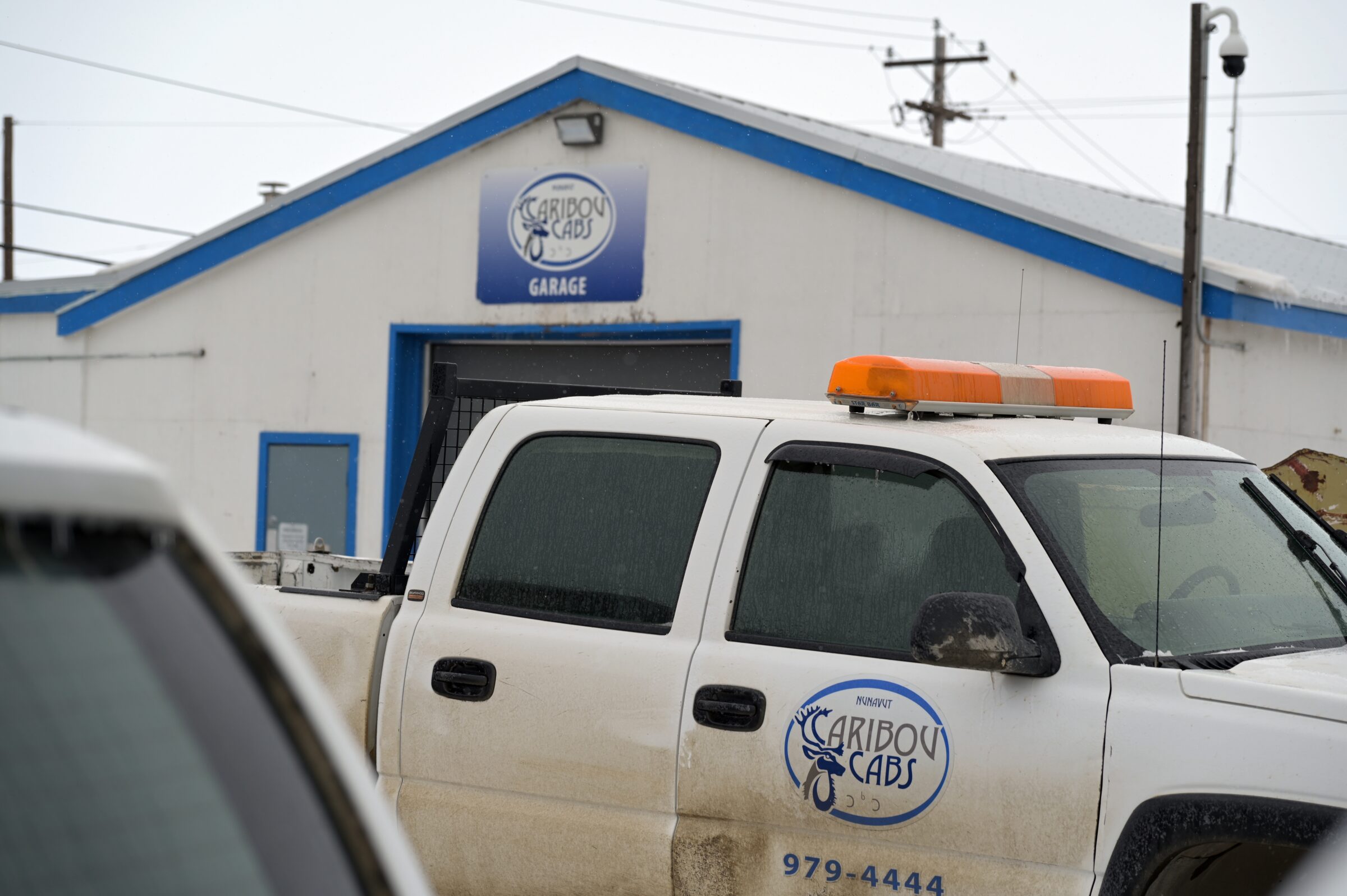
A Caribou Cabs manager says the company implemented a training program for drivers to avoid potential problems with drivers making passengers uncomfortable. Meanwhile Iqaluit woman Rosalie DeMaio is hosting a community meeting Thursday to discuss alternatives to taxis, saying unwanted advances by some drivers make women feel unsafe. (File photo by Mosha Folger)

It’s tragic that Iqaluit women feel the need to consider alternatives to taxis out of fear for their safety but it’s great they’re standing up for themselves.
Next week, Rosalie DeMaio, a Nunavut Arctic College student, is hosting a community meeting so people can discuss how to develop alternatives so they don’t have to rely on taxis.
Women routinely face unwanted come-ons from drivers, she said in an interview with a Nunatsiaq News reporter. (The news story about her concerns is on page 3 of this week’s paper).
DeMaio said a driver once called her “baby girl” when he asked about her night out at a bar. He offered her wine. She declined, saying she just wanted to go to bed.
He persisted.
“I said, ‘No, I want to go to bed.’ And he said, ‘You can go to my bed,'” DeMaio said, adding she has also been followed or watched after being dropped off.
The yuck factor of that story is off the charts.

No woman should be subjected to that kind of advance, but especially not while making use of what’s almost an essential public service.
It’s inappropriate, whether it’s when a woman is taking a taxi to the grocery store or home after going out for a drink with some friends.
Taxis are a vital part of how Iqalummiut get around. The service needs to be safe and reliable for everyone.
The number of people who attend DeMaio’s community meeting on Thursday at the YWCA-Agvik women’s shelter at 7:30 p.m. will be telling. It could give some indication how widespread this issue is.
Both the taxi company and the City of Iqaluit should take note of what’s going on and what people who attend the meeting have to say.
They should have more robust ways of rooting out offensive drivers.

Five years ago, the city’s recently revived public safety committee looked into the issue when taxi drivers were victims of some bored youths who threw rocks at them.
Now, if some drivers are causing problems for Iqaluit women, maybe it’s an issue the committee — which has been looking for something to do — could tackle.
Some of the experiences DeMaio described happened when she took a cab home from a bar. It’s potentially dangerous if women are reluctant to take a taxi home after going out for drinks with a friend. They might choose to drive their own vehicle.
Caribou Cabs manager Rod Mugford said the company has not received a direct complaint from female passengers but has embarked on a human resources program aimed at avoiding problems by training drivers in safety, anti-harassment, sexual misconduct and cultural sensitivity.
Some of DeMaio’s remedies include a women-focused rideshare service, a Facebook group or carpooling app to reduce women’s reliance on taxis.

DeMaio has been looking around for funding to help develop a cellphone app that people could use to co-ordinate their own rideshares.
That should be a no-brainer. Some organization should come to her aid. How much can it cost to develop an app? Some Nunavut organizations have spent money on a lot more trivial things. Give her a little seed money and see if it makes a difference.
Because it’s terrible and unacceptable that women don’t feel safe riding with some taxi drivers.
DeMaio deserves credit for identifying a serious social issue, airing it out and for putting alternatives on the table. That’s how change starts.
Once again, Corey Larocque and Nunatsiaq News demonstrate a complete misunderstanding of basic government jurisdiction.
The suggestion in this editorial that the City of Iqaluit’s public safety committee should “root out” offensive drivers or tackle taxi harassment is legally absurd. Municipalities have absolutely no authority to police criminal behavior or manage a private business’s employees.
This issue falls exclusively under two actual jurisdictions:
The RCMP: Unwanted sexual advances, criminal harassment, and stalking are Criminal Code offenses. A municipal committee has no mandate, training, or legal authority to investigate and enforce criminal law.
The Taxi Companies: Passenger safety and staff conduct are corporate liabilities. It is entirely on the business owners to vet, train, discipline, and fire problem drivers.
It is exhausting to continually read editorials from this publication that demand the municipality overstep its legal boundaries just to appear like it’s “doing something.” Criminal behavior is a police matter; employee conduct is a business matter.
Section 113 of the Cities, Towns and Villages Act gives the city very broad authority to make by-laws regulating taxis and their operators. This includes requiring operators (I.e. drivers) to have a taxi licence and putting conditions for the issuance and revocation of that licence.
So they could put in such a licencing regime as well as strict conditions for getting and maintaining such a licence, including the investigation of any harassment complaints and revocation of a licence if the complaint is founded.
But that would require the city to actually take responsibility and properly regulate and enforce.
Section 113 certainly gives the City authority to regulate taxis and taxi licences, but that does not give the City unlimited jurisdiction over every allegation involving a taxi driver.
The City can establish reasonable licensing requirements, for example, requiring a criminal record check, vulnerable sector check where legally appropriate, a satisfactory driver’s abstract, minimum driving qualifications, training requirements and compliance with established licence conditions. It can also suspend or revoke a licence where the requirements of the bylaw are not met. This is what it currently does.
But a municipal bylaw cannot override territorial or federal law, nor can it simply turn municipal staff into police investigators.
Not so fast skips over how exactly is the City supposed to investigate and determine whether an allegation of harassment is “founded”? What investigative powers would municipal staff have? What evidence standard would apply? Would they compel witnesses? Obtain private records? Interview an accused driver?
Those are not minor details. An accusation cannot automatically become a finding of misconduct simply because it is made to the licensing authority. There is absolutely a legitimate municipal role in making taxi licensing safer, but that role is limited to matters such as screening, driver qualifications, licensing conditions, and appropriate licence consequences where those conditions are not met. Outside of that municipal licensing function, alleged criminal conduct is within the jurisdiction of the RCMP, while the conduct, supervision, discipline, and employment of individual drivers remains the responsibility of the taxi companies themselves.
But saying section 113 means the City can simply “investigate harassment complaints and revoke licences if the complaint is founded” dramatically oversimplifies both municipal jurisdiction and the legal process.
Only there is Iqaluit. Where there is bars, liquor stores, capital city where people travel alot. Not rest of nunavut. It’s free clena safe I rest of nunavut
It is a sad state of affairs when women can’t trust the people that are supposed to get them home safe. A lot of these drivers lack basic cultural understanding and many see inuit women as easy and vulnerable–some even offering them drugs or alcohol. Down south a lot of cabs have emergency buttons that passengers can press. This would make the passengers feel a lot safer and definitely would make the drivers much more accountable for their actions. No more stolen sisters.
How is the supervisor/owner/manager of Caribou Cabs supposed to know there are problem drivers if nobody made a direct complaint?
I have encountered creepy taxi drivers everywhere, but felt the most vulnerable in Iqaluit on several occasions. Many years ago, I noticed I was often getting the same driver when I called Caribou Cabs. This driver started flirting with me and asking personal questions. One day another driver picked me up and during the ride casually asked me if I knew the other driver. I felt uncomfortable from the first flirtatious comment, but this made me think at least two drivers have talked about me and the dispatch somehow was sending a particular driver improbably often, … and they know where I live, where I work, my routine… I called caribou cabs to complain and they said they would look into it. I stopped using them in the mean time, didn’t hear back, called again and got the same response. Perhaps it was all just ignorant insensitive behaviour and nothing more sinister was going on, but as a person much smaller than these drivers, stuck in a vehicle they have control over, and living in a small town with them, I felt uncomfortable. I am also a survivor of trauma which adds another layer of stress for me in that type of situation.
I intended never to use their services again. But last year when I was in town for a work trip, my group was having trouble getting a taxi and caribou was the only option. The driver was super professional fortunately BUT if there were another option I would have 100% taken it and been willing to pay more for reliably safe service that treats drivers and passengers well. All is to say, yes to better regulations and training and oversight of a sector that is absolutely essential to daily life in Iqaluit, but I also think there IS a business opportunity here!
Caribou cab drivers make me uncomfortable, and I shouldn’t have to bring a friend or family member with me just to feel safe getting into a taxi.
If girls and women are raising concerns about drivers, TAKE IT SERIOUSLY. Who are we supposed to complain to if our concerns are ignored?
If the reason complaints aren’t being taken seriously is because there aren’t enough drivers to replace the ones behaving unprofessionally, then that is NOT an excuse. Staff shortages should never come before women’s safety.
Nobody should be allowed to get away with unprofessional or inappropriate behaviour simply because the company doesn’t want to lose a driver. Women deserve to feel safe. Period.