


NTI has a plan to adapt to climate change but needs money to implement it
Rapid changes in sea ice, harms to wildlife, thawing permafrost and extreme weather events are top concerns
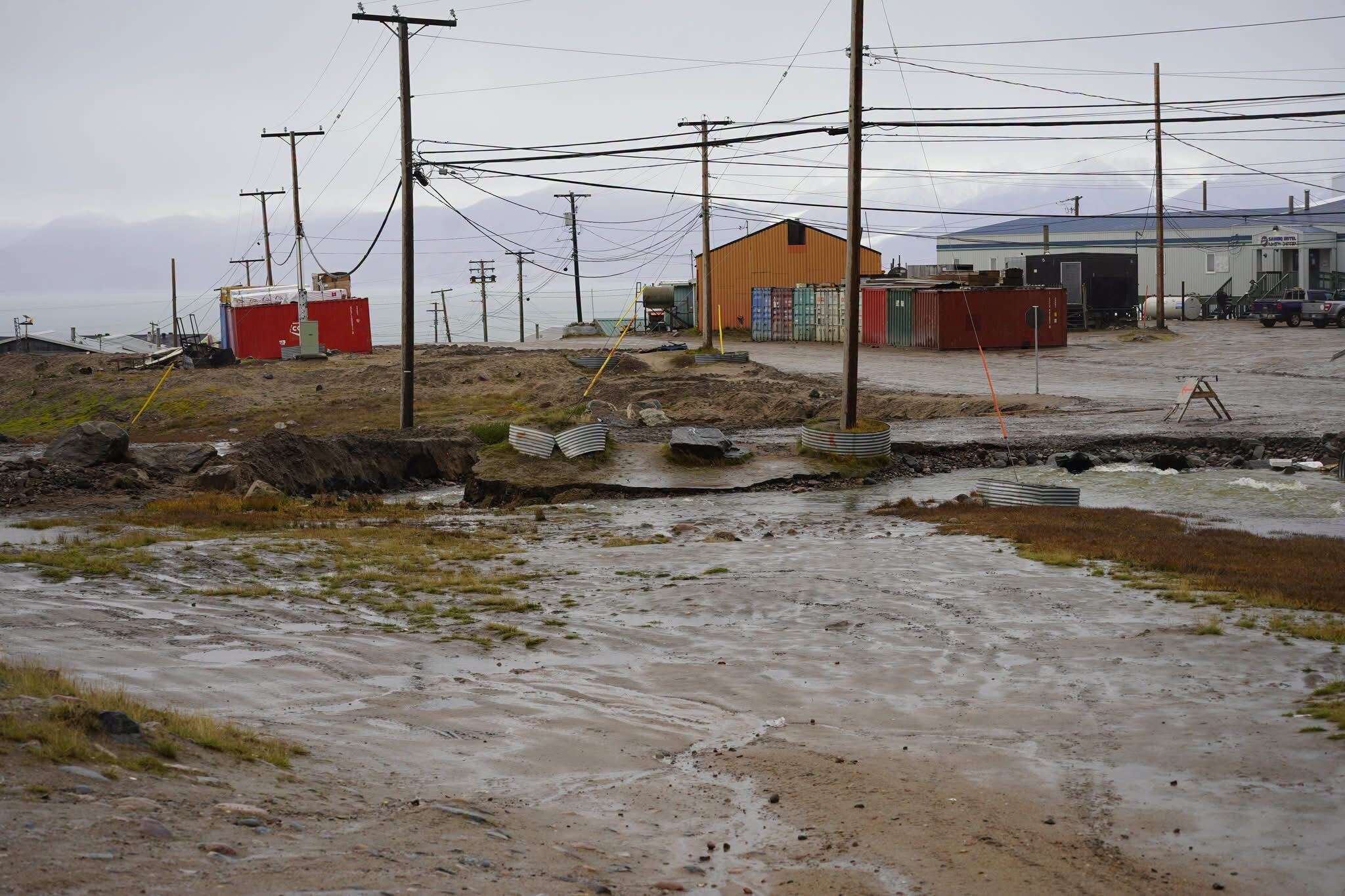
Extreme weather events are expected to increase as the Arctic warms. Heavy rains flooded Pond Inlet on Sept. 5, leading to washed out roads and bridges. (Photo courtesy of Andrew Tagak)
Nunavut Tunngavik Inc. has set a new vision for responding to climate change in the territory.
The plan – Anijaarniq Strategy: An Inuit Approach to Addressing Climate Change in Nunavut – identifies 15 goals based on engagement sessions with Nunavummiut.
Nunavut’s three Inuit associations, the Kitikmeot Inuit Association, Kivalliq Inuit Association, and Qikiqtani Inuit Association hosted the workshops over 2024 and 2025.
“This is one of the most intensive processes I believe that we’ve gone through in terms of the development of a strategy,” said NTI research director Cheryl Wray, who oversaw the development of the Anijaarniq Strategy.
The plan calls on the territorial and federal governments to commit money to achieve the goals identified in it, which include building more climate-resilient housing; transitioning to renewable energy systems; and creating Inuit-led climate research and adaptation programs.
“We require funding for this plan to be actionable,” Wray said. “This is a plan which requires all partners to come to the table.”
She said NTI has yet to decide how much to ask for from each government.

Those consulted as part of the plan said their top concerns are rapid changes in sea ice, harms to wildlife, unsafe travel, permafrost thaw and extreme weather events.
“One of the key issues that we’re facing up here is the delay in the sea ice freezing, especially for the migrating animals like caribou,” said Derek Elias, a business development officer with the Kitikmeot Inuit Association who organized the engagement session in Cambridge Bay. “We’ve had animals drown when trying to cross.”
He said the sea ice between Victoria Island and the mainland forms later each fall and isn’t as thick as it used to be.
“We’re just hoping that the territorial government is going to take climate change seriously and [provide] the appropriate funding, tools and resources for us to be able to tackle climate change and its effects,” Elias said. “It’s for our future generations.”
GN Environment Department spokesperson Estęla Aguilar declined to answer questions about how the department intends to work with NTI.
In a statement to Nunatsiaq News, Carolane Gratton, spokesperson for Crown-Indigenous Relations and Northern Affairs Canada, said the department recognizes the importance of “predictable, long-term climate funding.” She noted that it helped fund the development of the action plan.
She also said that since 2016, the department has provided NTI with over $8 million to support climate adaptation initiatives and policy development.
Over the same time frame, she said, the department also committed $90 million into infrastructure vulnerability assessments, clean energy and emergency preparedness in Nunavut.
(0) Comments