

Nunavik leaders get update on work to bring foster services north
Self-determination key topic with 263 youths from region in southern care
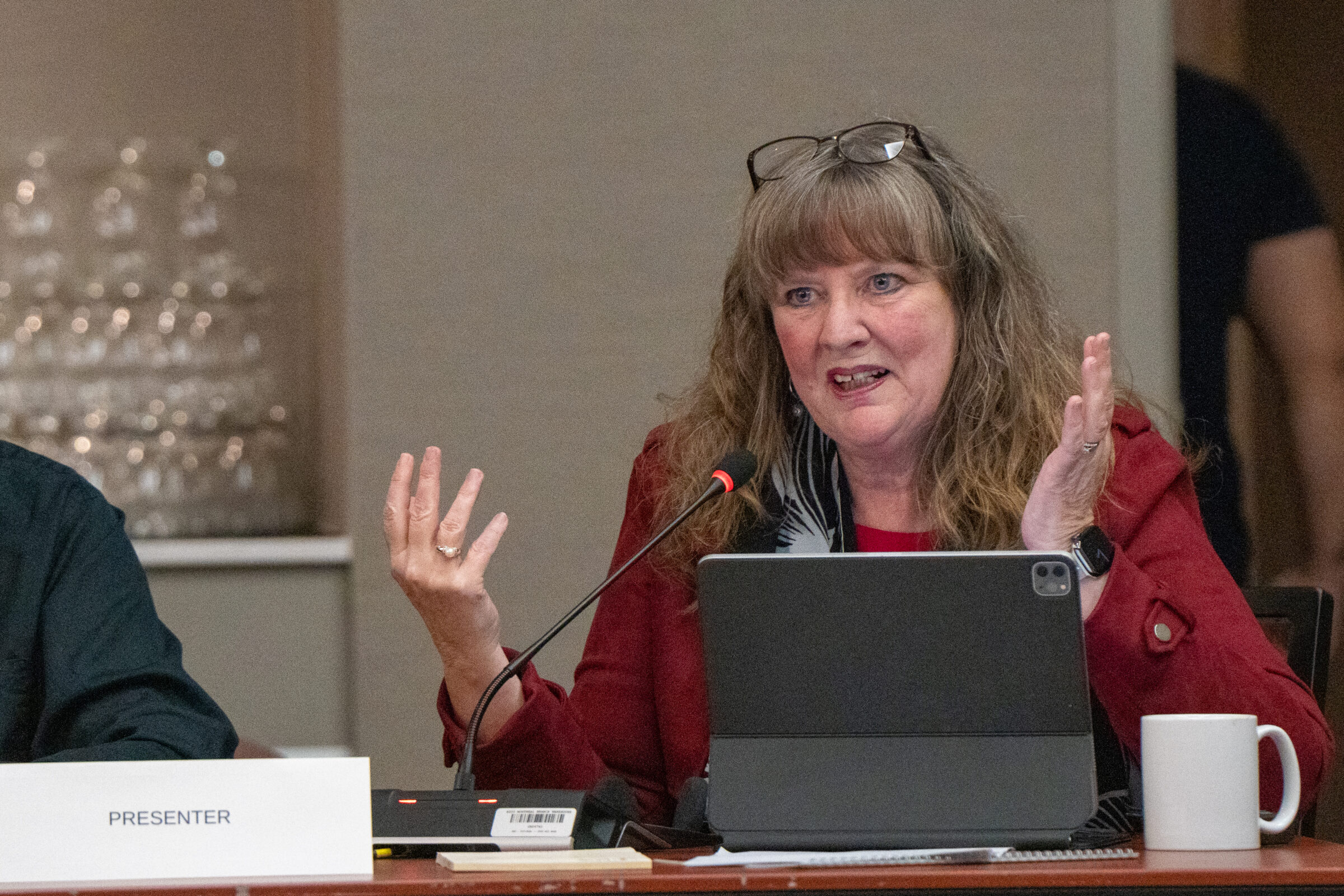
Lesley Hill, Quebec’s national director of youth protection, gives her thoughts about Inuit youth protection services Wednesday in Montreal. (Photo by Cedric Gallant, special to Nunatsiaq News)
With 263 Nunavik children fostered down south, community leaders are calling for more say over youth protection in the region.
Anthony Ittoshat, Nunavik’s chief negotiator for self-determination, describes how the James Bay and Northern Quebec Agreement must be amended to bring foster care services to the region. (Photo by Cedric Gallant, special to Nunatsiaq News)
The data was presented Wednesday at the Nunavik all-organizations meeting hosted by Makivvik Corp. in Montreal. Leaders from across the region are in the city this week to discuss various issues.
Self-determination over Inuit services is a major topic at the meeting.
Negotiators are working on changes to the James Bay and Northern Quebec Agreement that would allow Nunavik Inuit to legally run their own youth protection program, said Anthony Ittoshat, Makivvik Corp.’s chief negotiator on the topic of self-determination.
“We are working on an Inuit-relevant government to be developed,” he said. “Let what the Inuit want be heard. This is something we have been saying for many years now, and this is what we’re working on.”
Established in 2019, Nunavingmi Ilagiit Papatauvinga provides family services as part of the Nunavik Regional Board of Health and Social Services.

Nunavingmi Ilagiit Papatauvinga is working to bring youth protection services to the region, independent from Quebec’s youth protection office.
Mina Beaulne, the organization’s executive director, presented a 10-year plan to establish a youth protection service and improve its service models. The plan would come with a $6.1-million annual budget, she said.
That includes early childhood services that aim to reduce the need to involve the province’s youth protection office, which would in turn prevent foster placements outside of the community and region.
In a speech Wednesday, Lesley Hill, the national director of youth protection, highlighted the need for this type of prevention.
“We need to support the work of [Nunavingmi Ilagiit Papatauvinga] but communities need to work together to see how to help those kids stay in the communities,” she said.
Hill highlighted the importance of self-determination and quoted the Youth Protection Act as a way for Inuit to have a say over child protection.

After a short break, Maggie Emudluk, the head of the Kativik Regional Government, criticized the Youth Protection Act.
“The Youth Protection Law has ruined our lives. No surprise we don’t trust the system,” Emudluk said, without elaborating.
Youth Protection is to protect kids. Will this new system do that? It’s a basic question and the answer may be that they will ignore that to score political points just to say they brought kids back up North.
The current system already does terribly by giving Inuit parents the lowest of standard to adhere to get their children back. Returning kids to family members with a history of sexual abuse, severe mental illness happens all the time, and then someone else is left yet again to pick up the broken pieces. DYP doesn’t usually take kids out unless there’s a good reason for it and Nunavik already tolerates the unacceptable just to save face.
Some parents need to be reminded they aren’t entitled to their kids if they can’t provide them security, love and the bare minimum to survive. They aren’t toys, they’re people. They’re your responsibility, from the moment you pee on that strip all the way to adulthood.
Good thoughts written, stay on board, your input is needed. Enough denial. Fake news be gone with denial. Thanks
If any of the strategies are going to work we need to address the housing crisis first!
Serious over crowding leads to significant social problems and this has already been identified yet not taken seriously by government.
Last summer there were close to 70 staff accommodations built here in Kuujjuaq, when an announcement was made that just a few more than that had been funded to be build ACROSS NUNAVIK this coming construction season !
People living in staff housing often have the extra bedroom to take on a foster child or two and when they leave, they are often granted the right to take the child(ren) with them.
Institutionalizing children in groups homes in the North where imported staff are housed by their employers (which is already happening) is no better!