


Nunavut government continues legal fight against Igloolik hunter
Michael Irngaut’s lawyer calls for government’s appeal to be tossed
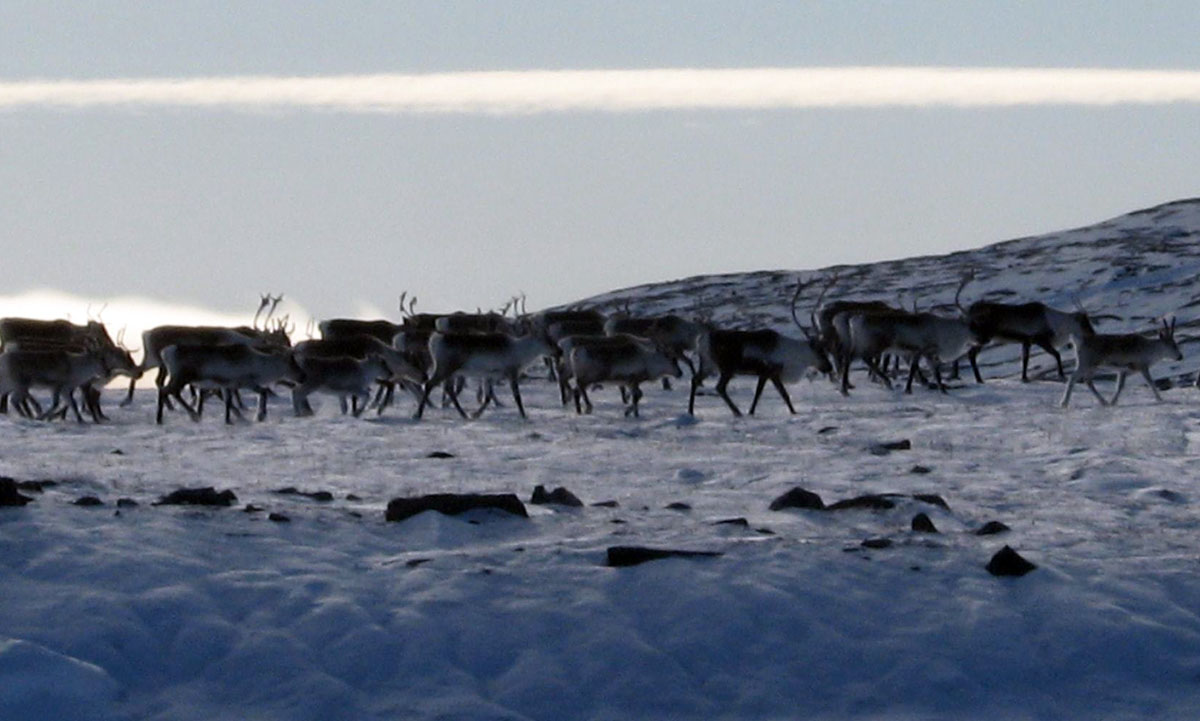
The Government of Nunavut is continuing its legal fight against an Igloolik man who hunted caribou while a hunting ban was in effect. (File photo)
(Updated on Dec. 5 at 10 a.m.)
The Government of Nunavut misunderstands its legal authority in its continued fight to see a young Igloolik hunter punished for harvesting a caribou in 2015, according to documents filed with the Nunavut Court of Appeal in Iqaluit.
The case of Michael Irngaut, the young hunter, came before the court Nov. 15—the same day his lawyers filed those documents.
Earlier this year, Justice Neil Sharkey tossed the two charges Irngaut faced under the Wildlife Act for harvesting the caribou in February 2015 while a hunting ban was in place.
Sharkey found Irngaut acted under the false advice of an “appropriate official”—a member of the Igloolik Hunters and Trappers Organization board of directors.
In Canada, courts recognize it is unfair to punish someone who breaks a law only because of misinformation from an official. This defence is called “officially induced error.”
Adrienne Silk, the lead constitutional lawyer for the government, appealed Sharkey’s decision in April.

If the appeal is successful, it would give the Nunavut government powers of prosecution that neither of the other territories has and that are currently not included in Canada’s constitution, argues Irngaut’s lawyer, Benson Cowan.
The government’s misunderstanding of law and history means it has no authority to appeal the case, Cowan wrote in court documents.
And some of the government’s grounds for appeal are “clearly absurd,” based on a “mischaracterization of evidence,” and “detached from the reality of regulating the harvesting of wildlife in Nunavut,” Cowan argued.
Irngaut, a 22-year-old junior Ranger in 2015, joined three others on a hunting trip, including George Qattalik, a sergeant with the Rangers.
When the party left Igloolik, Irngaut knew there was a ban on harvesting caribou.
The next day, Qattalik heard news from his father, over the phone, that caribou could be hunted. Qattalik relayed this information from his father, an elder and HTO board member.

In her reasons for the appeal filed in August, Silk said Sharkey “erred at law” by finding that the elder was an “appropriate official.”
“HTO membership does not make a person an ‘official,’ nor does it denote any particular expertise,” Silk wrote.
The advice given by the elder was not reasonable, nor was Irngaut’s reliance on the advice, Silk continued.
In order for the ban to have been lifted, the environment minister would have had to repeal the ban “sometime between Mr. Irngaut’s departure … on Saturday, February 14, 2015, and George Qattalik’s conversation with his father on Sunday, February 15.”
Despite his surprise at the news, Irngaut did not take any further steps to verify the information, Silk said.

But Cowan disagreed.
Silk repeatedly described the elder as an HTO member, when he was also a board member, Cowan said.
HTOs are created under Nunavut’s land claims agreement and Wildlife Act, incorporated under the Societies Act. Therefore, as the trial judge thoroughly assessed, the elder was an “appropriate official” who Irngaut was right to believe, Cowan said.
“This entire ground of appeal is premised on a mischaracterization of the evidence at trial and has no merit.”
And to expect Irngaut to know the mechanism by which the environment minister repeals a ban places an “impossibly high threshold to meet on an accused,” Cowan said. Nor was this put to Irngaut at trial.
The main thrust of the Crown’s arguments at trial focused on Irngaut’s credibility, that he was lying about the information he received or how he understood it, Cowan said.
That argument was “completely rejected by the trial judge,” who found Irngaut a credible witness.
But the larger point is that Silk and the government have no legal right to appeal this decision, according to Cowan.
That’s because only the Crown can prosecute and appeal prosecutions in Nunavut—not the government.
In October, Cowan filed an application to toss the government’s appeal, because it “has no standing to appeal” and the appeals court “does not have the jurisdiction to hear this appeal.”
The attorneys general of Canada and the provinces have the authority to prosecute on behalf of the Crown—that is part of Canada’s pre-Confederation history inherited from England, Cowan said.
That authority has never been devolved to the attorneys general in the territories, which were each created by their own specific legislation.
“Although it uses the same name and asserts a similar role, the Attorney General of Nunavut is not an attorney general in the traditional sense of the office,” Cowan said.
Provincial governments can create legislation that allow them to take on some of the roles of the attorney general—but that has never happened in Nunavut.
“At no point has Nunavut ever attempted to give such authority to itself through legislation,” Cowan said.
In fact, in NTI’s 2008 lawsuit against the federal government, the Nunavut government argued it “did not and could not … represent the Crown”—a position upheld by Nunavut’s Court of Appeal, said Cowan.
“There is simply no territorial or statutory authority that authorizes the Government of Nunavut to interfere in this case.”
Instead, the government is attempting an “end-run around the Constitution of Canada.”
The Court of Appeal will hear arguments on Cowan’s application to toss the government’s appeal in February.
Correction
An earlier version of this story said that Adrienne Silk, the lead constitutional lawyer for the Government of Nunavut, repeatedly described the elder who had said caribou could be hunted as a “mere HTO member.” The word “mere” was how Michael Irngaut’s lawyer, Benson Cowan, characterized Silk’s comments and was not used by her. We regret the error.
Irngaut CAP – LSB’s App to Strike GN Appeal by NunatsiaqNews on Scribd
Irngaut CAP – LSB Material in Support of App to Strike by NunatsiaqNews on Scribd
07-19-002-CAS (002) by NunatsiaqNews on Scribd
Wow… Government trying to do something it can’t do? Someplace maybe a bureaucrat is misadvising a Minister again? lol
An elder telling a young person should be viewed as an official person (you do what elders tell you). and if they are on the HTO board then that is an extra level of official regarding wildlife. however with that said perhaps as the elder is an HTO board member there needs to be some serious conversations to hold the HTO accountable for making such incorrect statements. How this would be done is not known to me.
How about cracking down on all the gun violence, sex crimes, and arson that’s occurring?
I have lived in Igloolik and seen the ridiculous price of food. Hunting is necessary and a given right for the Inuit People this shouldnt even be a issue
……follow the law, no problem.
the ban was in place for a reason (so this hunters grandchildren can hunt caribou too).
some with the same attitude as his would say “if he can, I will too”…….than what would happen?
he wasn’t starving, he felt entitled…….