

Nunavut’s housing crisis and COVID-19 could be a bad combination
“All it takes is one child to go out to school or wherever and come back and then the whole household could be sick”
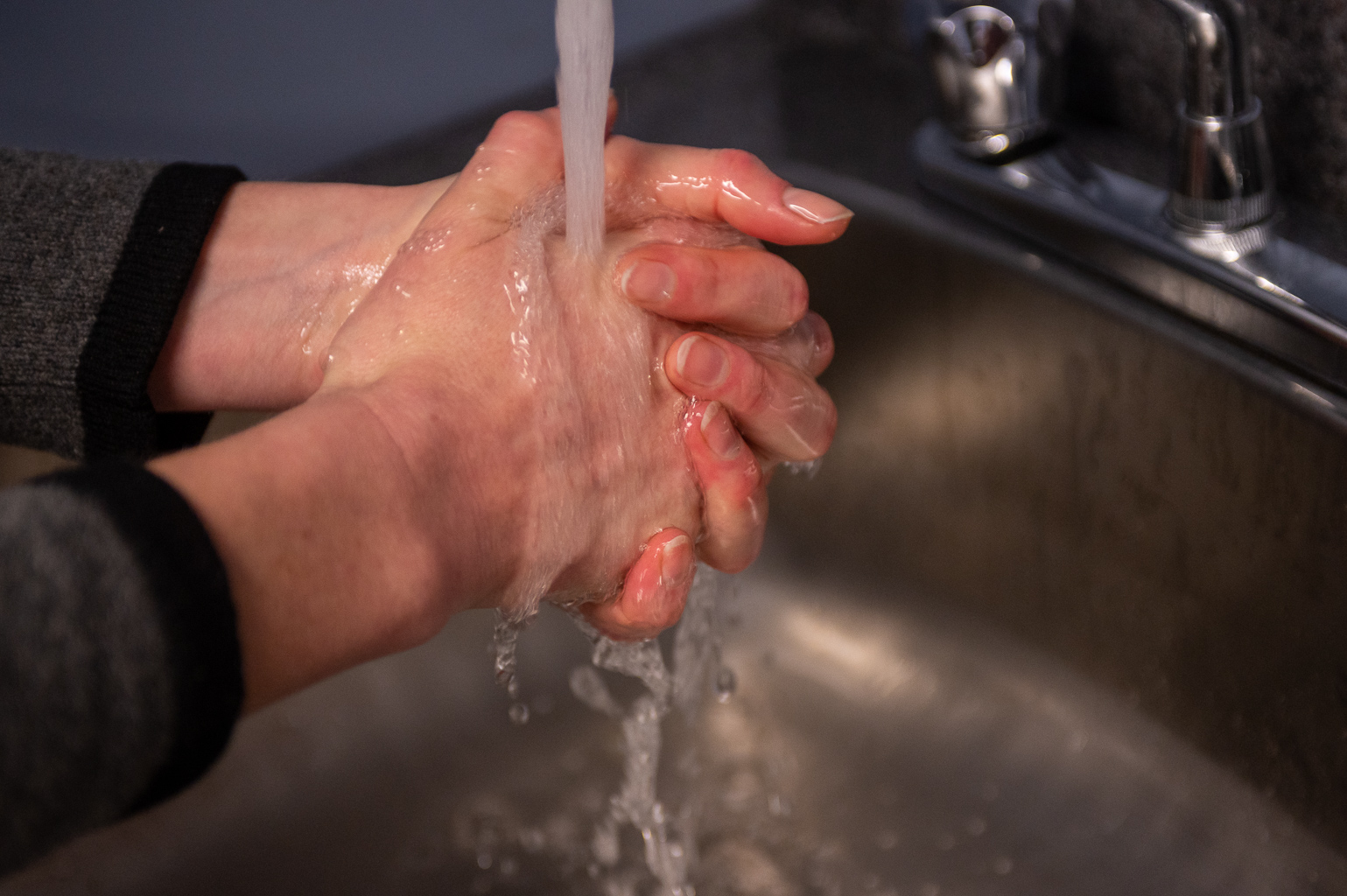
The Government of Nunavut is telling residents to protect themselves from the spread of COVID-19 with this advice: wash your hands, cover your mouth with your sleeve when you cough or sneeze, and avoid contact with others when you are not feeling well. (File photo)
Nunavut would face some special challenges if COVID-19 spreads through the territory.
Among them would be the difficulty of isolating infected residents in a territory where many live in overcrowded housing, said Dr. Anna Banerji, the director of global and Indigenous health, faculty of medicine, at the University of Toronto.
“If you have a whole bunch of kids in the household, how do you wash your hands … to prevent yourself from being sick?” asked Banerji.
“All it takes is one child to go out to school or wherever and come back and then the whole household could be sick.”
COVID-19, the coronavirus that originated in China in December, was declared to be a pandemic by the World Health Organization on Wednesday, March 11.
A pandemic is a sudden increase in the number of cases of a disease above what is normally expected, crossing international boundaries and usually affecting a large number of people.
“Pandemic is not a word to use lightly or carelessly. It is a word that, if misused, can cause unreasonable fear, or unjustified acceptance that the fight is over, leading to unnecessary suffering and death,” said WHO Director-General Tedros Adhanom during a news conference in Geneva on March 11.

COVID-19 is the first coronavirus to cause a pandemic. As of March 11, there were 118,326 confirmed cases globally and 4,292 deaths.
Earlier this week, Canada experienced its first virus-related death in British Columbia. Across the country, the number of cases has more than tripled in the past week, from 30 confirmed cases on March 4 to 93 on March 11.
Messaging from the Government of Nunavut has remained consistent: wash your hands, cover your mouth with your sleeve when you cough or sneeze, avoid contact with others when you are not feeling well, and if you feel like you have come into contact with someone that has the virus, self-isolate.
These are the same precautions issued by organizations such as the WHO, the Centers for Disease Control and Prevention and Public Health Canada.
But the Nunavut Department of Health has not publicly stated what its response plans are for COVID-19—only that “the GN has extensive plans in place—should there be any cases in our communities, to protect the health and safety of Nunavummiut.”
For Banerji, addressing such communication gaps is key: “Unknowns can cause a lot of anxiety.”

“If things are honest and straightforward and you’re getting the proper information, I think that that will help allay anxieties if and when it does come.”
Banerji is no stranger to coronaviruses. In 2003, as an infectious disease specialist, she worked to control the SARS outbreak in the south and east regions of Toronto.
Although SARS and COVID-19 are both coronaviruses, Banerji is quick to point out that there is a difference.
“This is much more widespread than SARS, it’s being spread at a much more rapid rate,” said Banerji.
“With SARS we were able to contain it by quarantine because most of the cases were related to someone who has a known case.”
Given COVID-19 is a new coronavirus that emerged roughly three months ago, there are still many unknowns surrounding it.
“I don’t think anyone knows what’s going to happen when it comes up to little communities,” said Banerji.
“It could be very severe or it may not be so severe, but I don’t think anyone really knows because it depends on the virus.”
But the GN does have a plan.
“What we’re doing in the Department of Health, and the territory as a whole, is concentrating on those things that we can do within our own authority and capabilities to be ready to intervene, should it arrive, and minimize the risk of transmission,” said Dr. Michael Patterson, Nunavut’s chief medical officer.
“There’s a number of layers of government that should be working together for emergency response, federal, territorial, municipal and all three layers have a role to play depending upon the circumstances.”
The territorial government is responsible for the delivery of health-care services throughout the territory, including medevac flights to the south for services that can’t be offered locally.
The Department of Health is also responsible for Nunavut’s community health centres, some of which have been beleaguered by nursing shortages forcing staff to work on an emergency-only basis.
“I think it could be a very big challenge for them, who are already working very hard, to have another virus that could disproportionately impact the Inuit,” said Banerji.
Patterson said the Department of Health has protocols meant to address outstanding need, should it be required.
“If a community were to be overwhelmed, we would be looking at things like bringing staff in, in what is commonly called a surge capacity, to provide assessments.”
Patterson also spoke about the department’s ability to deploy different measures depending on the circumstances, including the setting up of different health-care sites, one for residents concerned that they may have COVID-19 and the other for those needing regular care.
Another option for the Department of Health is declaring a public health emergency, which would need to be done by Nunavut’s minister of health, George Hickes, and could either be a territory-wide measure or focused on specific communities should the need arise.
But Patterson made it clear that declaring a public health emergency would only happen “if there were things that we felt we needed to do that either we couldn’t do under normal circumstances or would take so long that if we followed normal channels, it would no longer be worth doing.”
Such a declaration would make it easier for the Department of Health to respond to extreme events, allowing them to more quickly access supplies, expedite purchasing, request assistance from the federal government and potentially commandeer some resources within the communities.
But with no cases of COVID-19 in Nunavut, the Department of Health is focusing on testing, which is done with a viral swab on a routine basis.
Once used, the swab is shipped south to be tested at a lab in Winnipeg.
From the time the test is collected, on average it’s a three- or four-day waiting period for the results, said Patterson, but if there are weather delays, the timeframe may be longer.
“We’ve been lucky so far, that hasn’t happened.”
As of March 10, fewer than five tests have been conducted across the territory, with none coming back positive for the virus and all patients being able to self-isolate while awaiting the results.
Patterson said that when the Department of Health gets a call that there’s a concern, it works through it on a case by case basis, looking at factors such as house size and age and health of the residents. It also considers “what is the risk that the person has COVID-19? What are the risks to the people they’re living with? Are they able to maintain self-isolation at home?”
The Department of Health has isolation units at the Qikiqtani Regional Hospital in Iqaluit, and in Rankin Inlet and Cambridge Bay, Health Minister George Hickes told the legislature on March 2.
The current recommendation for COVID-19 isolation is the ability to close a door, said Patterson. Should the number of infected grow, those with the virus could be in a room together.
But, as Patterson notes, the more beds taken up by those requiring COVID-19 care, the fewer beds they have for others.
“We need to be careful because that starts to impact ,our ability to deliver care elsewhere,” said Patterson, who also noted that the vast majority of people with COVID-19 have mild infections that don’t require admissions to hospital.
“Our goal as much as possible is going to be to maintain treatment at home in their home community.”
Even so, it may be necessary to send people south, which could happen either because the Department of Health doesn’t have the capacity to look after all patients, or because these patients need care that can’t be delivered in the territory, said Patterson.
“There’s a small number of people who get sick enough to need an ICU.”
Patterson stressed that there’s a lot that individuals can do to help prevent the spread of the disease. That includes the following:
- Clean hands frequently by using alcohol-based hand rub or soap and water.
- When coughing and sneezing, cover your mouth and nose with a flexed elbow or tissue—then throw the tissue away immediately and wash your hands.
- Avoid close contact with anyone who has a fever and cough.
- If you have a fever, cough and difficulty breathing, seek medical care early and share your previous travel history with your health-care provider.
For more information on COVID-19, visit the Government of Nunavut, Government of Canada or WHO websites.
why has residence come back from holiday from asia and europe recently without proper screening? if this virus does not show symptoms right away, they should have not been allowed back to nunavut without being tested first down south whether or not they showed symptoms.
Mmmm, and what legal mechanism is currently in place to not “allow” a resident to return?
First, the GN should be able to test at regional centres with a turnaround time of less than 24 hours. Four days to see if someone tests positive is absurd.
.
Second, the GN should have agreements in place to bring in additional personnel and respirators, if necessary from the closest province, or from the federal government through the military. This must include doctors and nurses. Given the damage this virus could do in a small community a plan should already be in place. If not get it done like tomorrow!
.
Third, someone should be meeting every flight in every community and taking the temperature of each person to see if they have a fever. If so, they must quarantine themselves. Likewise with outgoing passengers, no sense spreading this everywhere.
.
Four, where is the GN going to set-up emergency medical treatment, or even just quarantine spaces? I would suggest if need be that school gymnasiums be used if necessary (with school being suspended as soon as there is on positive case in a community).
.
Five, what lock down procedures does the GN have if someone test positive in a community? RCMP, Bylaw, Councils need to be involved.
.
Six, get on the radio several times every day and communicate, communicate, communicate.
.
The above should get the GN started. Let’s hope someone is in charge over there.
You got it old trapper, but me thinks none of you excellent ideas will be implemented. We will still be posting posters about was your hands, while people get sick around us
Health Centres can’t get enough staff much of the time even when there is no pandemic. Once nurses start getting sick (and they will, if the virus makes it to the communities, which it almost certainly will) then things will really start to get difficult. I don’t think the staff will be available to be deployed from the provinces. They don’t have a bunch of extra nurses hanging around either, and they too will be short as nurses in the south get sick.
The news did report that the feds are preparing isolation tents for isolated FN communities, so presumably the same is being done for Nunavut.
Medical resources from other provinces? Yeah, good luck. There is no slack in the system at the best of times. Do you really think that anyone is going to share their personnel?
Also, to be blunt, why would they send people to Nunavut? Population density counts. If you could send a team of 3 nurses and equipment to say Kimirut, or the same team to an urban area it would make more sense to send them to the urban area. The same resources would be able to serve a greater number of citizens at lower cost. It is a simple numbers game. Equally, Iqaluit and Rankin would get service before the small hamlets.
Brutal logic, but the necessary logic when resources are limited.
“The Department of Health has isolation units at the Qikiqtani Regional Hospital in Iqaluit, and in Rankin Inlet and Cambridge Bay, Health Minister George Hickes told the legislature on March 2.”
That is an outright lie, unless they have secret plans and secret buildings they haven’t told the staff in Cambridge Bay about. The only place in the health center set up to keep people for several days is the Continuing Care Center, which is (a) already full, and (b) the last place you’d want to put a COVID-19 infected person as the other people there are elderly residents who are at the highest risk.
Nunavummiut go to four southern hospitals for treatment if the health centres don’t have the capacity to treat the patients, and these cities are; Ottawa, Winnipeg, Edmonton, and Yellowknife. Of the four cities, Ottawa and Edmonton recently confirmed cases of COVID-19. There’s now a good chance the virus will make it to Nunavut, but I hope it won’t make it here!
–
If the COVID-19 infections worsen, Nunavummiut may be out of luck to access these hospitals because these provinces/territories may be swamped with higher than usual patients.
–
Due to the lack of health centre’s capacity, Nunavummiut are vulnerable to this virus. It would be reassuring if the Government of Nunavut had a concrete plan to tackle this infection if it made it to our territory. Also, if airlines could be screened before they go to our communities.
Only Iqaluit has test kits! Nothing in communities presently. So of course we have no confirmed cases….
Send samples to Winnipeg? Are you serious?! There is a 5 day incubation period and that the virus can spread before symptoms occur. Testing needs to be quick and people need to be isolated from others.
There are Covid-19 test kits available that can give results in as little as 90 minutes. We do not need to wait at least 3 days (if not longer), how insane a suggestion is that?
To anyone at the Department of Health, please look: http://codiagnostics.com/
Smoke and mirrors policy from the GN. I think we will be in trouble “when” the coronavirus gets here.
There was some great suggestions mentioned above for possible fixes. Screening is a must.
OH and GN how about some real communication with the public? And that means all of Nunavut.
Please Premier:
-close all schools and daycares immediately
-suspend all non-life threatening medical travel, it will be a medical travel patient who brings covid-19 back to NU and ALL the boarding homes are full right now
-order non-essential GN workers to work from home
-order more ventilators
-work with the very silent IA’s on a joint communique to Inuit on mitigation
-ensure NU is fully stocked for the regional centres on anti-viral meds
-communicate communicate communicate
We will lose elders over this virus and it’s no longer a question of if but when
Order ventilators? Not to be a smart ass, but from where, the ventilator store? As I understand it, there are only about 20 in all three territories. This is not equipment that can be brought into service at the snap of the fingers.
It’s worrying that the only information about public health measures re COVID 19 is coming to us because Nunatsiaq News has compelled the Department of Health to provide details for this article. Health needs to provide fulsome information to the public. I second many of the concerns in the comments. Containment measures are the most important and accessible option to us to prevent our healthcare services from being overrun and to protect vulnerable people in our community – elders, people with chronic illnesses etc. We need clarity, the vague plan described in this article is not reassuring and isn’t realistic.
Nunatsiaq News has been the uncritical mouthpiece for the GN for a while now. Granted, t’was not always thus.
When will the GN close Nunavut?
It’s time to stop all passenger travel into Nunavut. Allow freight from the south to bring in food, medicine, etc.
Allow flights from community in Nunavut to carry passengers and freight.
This will protect the airline workers. They are the true providers of essential services to Nunavut.
We need 100,000 kilograms of food and medicine each day from the south. It all comes by air through the regional centers. We have to protect and maintain that supplyline.
Caught a fever yesterday that set is very quickly. I was worried so I called the Health Center in Rankin Inlet asking if I should be tested. Nurse on call laughed at me several times through our conversation. Not very professional is it?