


Orange Shirt Day moves indoors in rainy Iqaluit
Community leaders vow to heal but never to forget traumatic residential school legacy
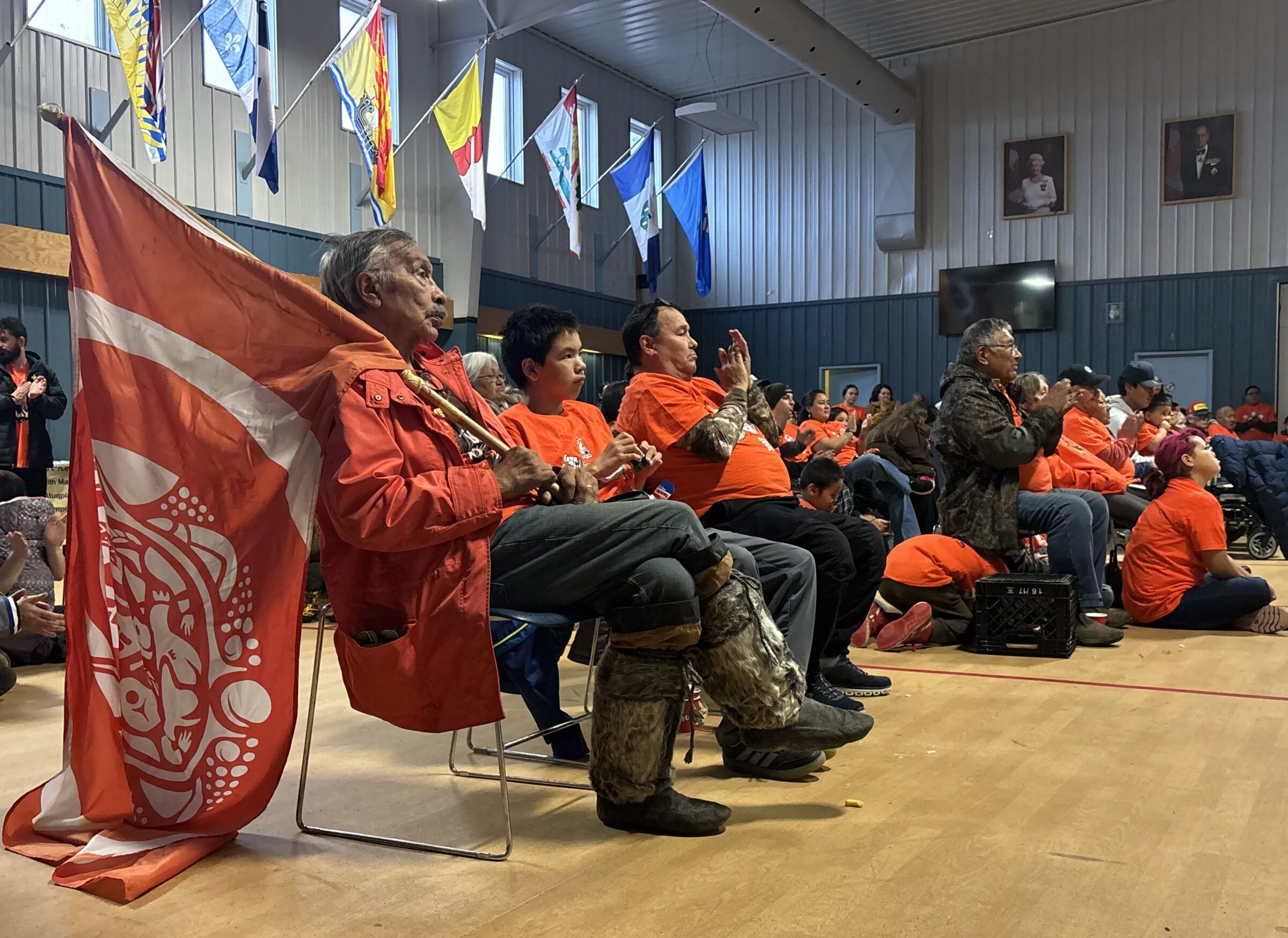
Residential school survivor Jack Anawak holds the Survivors’ Flag during the sixth annual National Day for Truth and Reconciliation gathering in Iqaluit on Wednesday, hosted by the Qikiqtani Inuit Association. The event was held indoors due to rainy weather. (Photo by Daron Letts)

Hundreds of Iqalummiut gathered inside the cadet hall for the sixth annual National Day for Truth and Reconciliation. It was a testament to the resolve of Indigenous Peoples who Canada’s residential school system tried to separate from their culture, language and traditions.
“We are still here,” said Gloria Uluqsi, the president of Nunavut Tunngavik Inc., the territory’s Inuit rights-holding organization.
Uluqsi seemed to hold back tears as she spoke from the podium, alternating between Inuktitut and English.
“We have endured so much,” she said. “Our families experienced hurt and loss. Inuit were separated from their families, their language, their culture and their way of life.”
Also known as Orange Shirt Day, the event remembers the experience of the estimated 150,000 Inuit, First Nations, and Métis children who attended 139 residential schools across Canada from the 1880s until as late as the 1990s.
“There’s elders, there’s youngsters — everybody from all walks of life,” said Eva Michael, communication specialist for event host Qikiqtani Inuit Association, as she observed more than 250 people pour into the building shortly after noon.
The crowd soon swelled to more than 300, most clad in orange, a bit after 1 p.m. when association president Olayuk Akesuk spoke from the podium.
“It is important for us to make sure that we don’t forget this important day so that this is remembered for a long time and also that it is recognized throughout Canada,”Akesuk said.
Mayor Solomon Awa, a former QIA president, attended the event with family.

Iqaluit Mayor Solomon Awa holds his two-year-old grandson Nash Sagiatook during the National Day for Truth and Reconciliation gathering in the cadet hall Wednesday. (Photo by Daron Letts)
Although Awa avoided residential school, having grown up on the land and at public school in Pond Inlet, he reflected on the experience of his siblings who attended residential schools in Iqaluit, Chesterfield Inlet and Churchill, Man.
“I’m very, very proud of the people who are supporting their family, their siblings, their parents, their grandparents,” he said of the day’s gathering. “They’re here for healing.”
Health Department staff handed out 50 bound copies of the Final Report of the Truth and Reconciliation Commission of Canada, with mental health resources slipped into the pages like bookmarks.

Published in 2015, the document describes the institutions as “an education system in name only for much of its existence.”
“Residential schools were created for the purpose of separating Aboriginal children from their families, in order to minimize and weaken cultural linkages,” with the purpose of “indoctrinating” generations of Indigenous youth into “Euro-Christian Canadian society,” it states.
Former Nunavut politician Jack Anawak — a survivor of the Sir Joseph Bernier residential school run by Oblate priests and Grey Nuns in Chesterfield Inlet — sat in the front row during the ceremony, holding the orange Survivors’ Flag.
Anawak helped design the flag — a symbol of survivors’ resilience — alongside other Indigenous representatives working with the National Centre for Truth and Reconciliation in 2021.
The flag’s imagery, which includes an inukshuk, represents Indigenous groups across Canada.
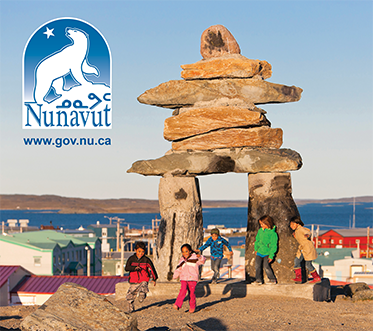
“For thousands of years, Inuit used inuksuit as markers for survival and the North Star for navigation,” Anawak said, when the flag was first unveiled. “Their inclusion in this design carries this meaning — that our culture withstood colonial onslaught and our traditional ways will continue to guide us.”
Anawak typically waved the flag during downtown marches held during past years’ outdoor events.
Meanwhile in Ottawa, the Survivors’ Flag was raised during a ceremony on Parliament Hill Wednesday morning, as a light drizzle fell on the capital.
For anyone struggling on this day, the Nunavut Kamatsiaqtut Help Line offers telephone support at 1-800-265-3333.
I cannot think of a more hellish, cruel thing to do than take away peoples children and
cause so much tragedy.
Similar situations happened in Britain and Ireland !
Far less mainstream than what happened to indigenous children, but still attrocious and worthy of attention is what happened in Quebec:
Search the Quebec Baby Scoop. It isn’t talked about much, but roughly half a million kids between the 1940s and 1970s were targeted for removal from their home, because the catholic church deemed their births to be “illegitimate”—meaning that they were born from unmarried parents or single mothers. They were then placed in foster care or orphanages. Look at the Duplesis Orphanage tragedy. This affected a lot of Quebec families and many are still reeling from these impacts.
Crazy what happens when you let a church run a state.