


PQ’s Sonia Caron takes Ungava as her party wins minority government
PQ leader pledges another sovereignty referendum in 1st term
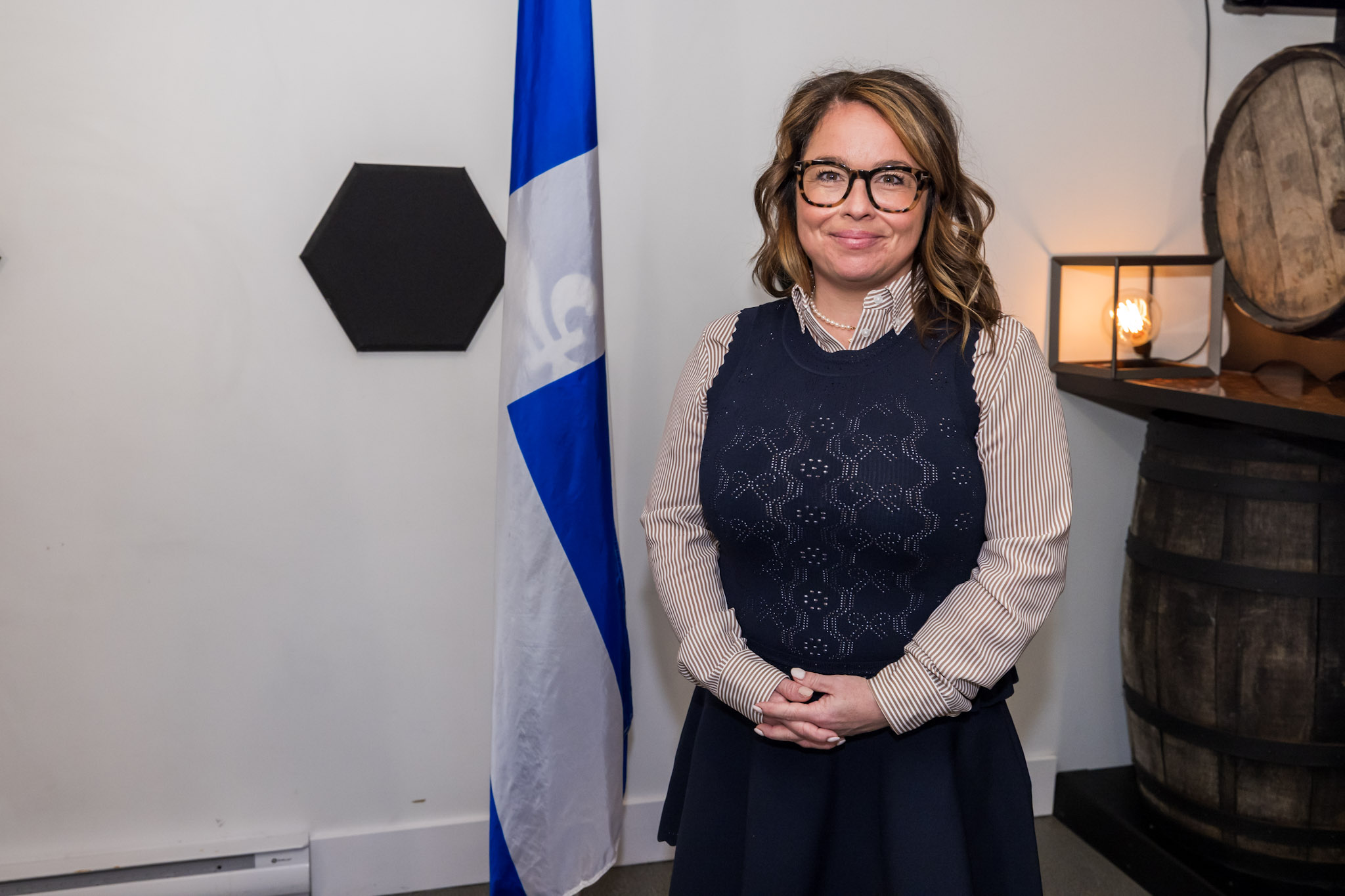
Parti Québécois candidate Sonia Caron, the director of a trades training program, will be the next member of Quebec’s national assembly for the Ungava riding after taking 39.5 per cent of ballots cast in Monday’s provincial election. Her party appears to have won a minority government, based on results posted on Élections Québec’s website. (Photo courtesy of the Parti Québécois)
Nunavimmiut will be represented by Parti Québécois candidate Sonia Caron, who was elected Monday in Quebec’s geographically largest riding.
The PQ won a minority government in Monday’s provincial election, taking the largest number of seats in Quebec’s national assembly.
In Ungava, the massive riding that includes Nunavik and other parts of northern Quebec, Caron got 3,312 votes — 39.5 per cent of ballots cast, according to Élections Québec’s website.
Caron, originally from Chibougamau, is the director of professional development at the Centre de services scolaire de la Baie-James, which oversees trades programs in northern Quebec. She described herself in an interview last week as a lifelong supporter of the PQ.
She had a 25-year career in education before making the jump to politics this year after she was approached by several parties to be their candidate.
Caron told Nunatsiaq News she got into politics because the lack of front-line health services and the need for clean drinking water in many remote communities need urgent attention.
“I told myself, ‘We have to do something,’ because our region is undergoing major upheavals, and public services are constantly deteriorating,” Caron said in an interview before the election.

Liberal Sandrine Rious finished second in the five-way race, taking 2,308 votes, or 27.5 per cent of ballots. Conservative Marc Damant got 1,447 votes (17.3 per cent) while the Coalition Avenir Québec’s Amélie Béchard received 863 votes (10.3 per cent) and Québec solidaire’s Antoine Côté got 452 votes (5.4 per cent).
There was no incumbent seeking re-election in Ungava. Denis Lamothe, who represented the riding since 2018, as a Coalition Avenir Québec MNA, did not run for a third term. He was elected in 2018 and re-elected in 2022.
Monday’s voter turnout in Ungava was 27.7 per cent with 8,557 of 30,849 registered voters casting ballots.
Across Quebec, voter turnout stood at a much higher 66.9 per cent, with 4.3 million of the province’s 6.5 million voters casting ballots.
Led by Paul St-Pierre Plamondon, who is poised to become premier, the PQ won 59 seats in the 127-seat assembly. To secure a majority government, a party needed to win 64 seats.
Historically, the PQ has been Quebec’s separatist party. During the campaign, Plamondon said a PQ government would hold a third sovereignty referendum during its first term — but only after U.S. President Donald Trump’s term ends in 2029. (Quebecers voted in sovereignty referendums in 1980 and 1995, choosing both times to remain in Canada.)

The provincial Liberals finished Monday in second place with 40 seats, followed by the Quebec Conservative party’s 19, and Québec solidaire’s nine.
The PQ win ended eight years of rule by the province’s Coalition Avenir Québec’s party, which did not win any seats in the assembly.
François Legault had led the Coalition party’s government from 2018 until April of this year, when he resigned as party leader and premier.
Legault’s departure made way for Christine Frechette to take over as premier earlier this year. She also lost her seat in the election.
No!
I will not accept her votes, when she was not fully understanding that one of the 14 community was called Ungava, Inukjuak is not on Ungava, it is at Hudson coast.
Go back to learning Ungava and Hudson coast.
I will continue using Anglaphone as my second language too! I raised in Inuttitut and English, nothing will change it.
The riding was designed, and the boundaries were designed to ensure that a white francophone is elected every single time, and never someone who actually represents the region. Gross gerrymandering.
I also agree that Nunavik deserves its own riding. Perhaps 20 years ago KRG made a strong presentation to the Quebec Electoral Representation Commission and the Government of Quebec itself. KRG’s argument was that Nunavik had a very distinctive culture and identity. The eventual response was that Nunavik was too small (in population) to be given it’s own riding.
But Quebec’s response was very unfair since they had already given one riding to the Magdalen Islands which had a smaller population.
It’s time our politicians dust off the documents from the prior attempt to get a riding and go after what is fit and proper for Nunavik.
Yes time for Quebec to get out of Nunavik, this could possibly bring taxes down too .
High Taxes is what is screwing everybody up.
maybe not in my life time but next life this could be a possibility .