


Qikiqtarjuaq becomes ‘hot spot’ for marine biologists
Research centre opened in February, co-managed by university and Qikiqtani Inuit Association

Qikiqtarjuaq Research Station has been operational since February. (Photo by Arty Sarkisian)

Six years ago when marine biologist Gabrièle Deslongchamps was doing water research in Qikiqtarjuaq, she had to filter the water while sitting in the living room of a bed and breakfast where she was staying.
There was nowhere else indoors where she could do that work.
“It was a very different experience in 2019 to try to do science in the North,” said Deslongchamps, who is now the science co-ordinator of the new Qikiqtarjuaq Research Centre which opened this past February.
The centre is co-owned and managed by Laval University and Qikiqtani Inuit Association. Under an agreement they reached in 2021, after 15 years full ownership will go to the association, which is mandated to represent rights of Qikiqtani Inuit.
The station is open for any scientists to use; beds cost $250 a night.
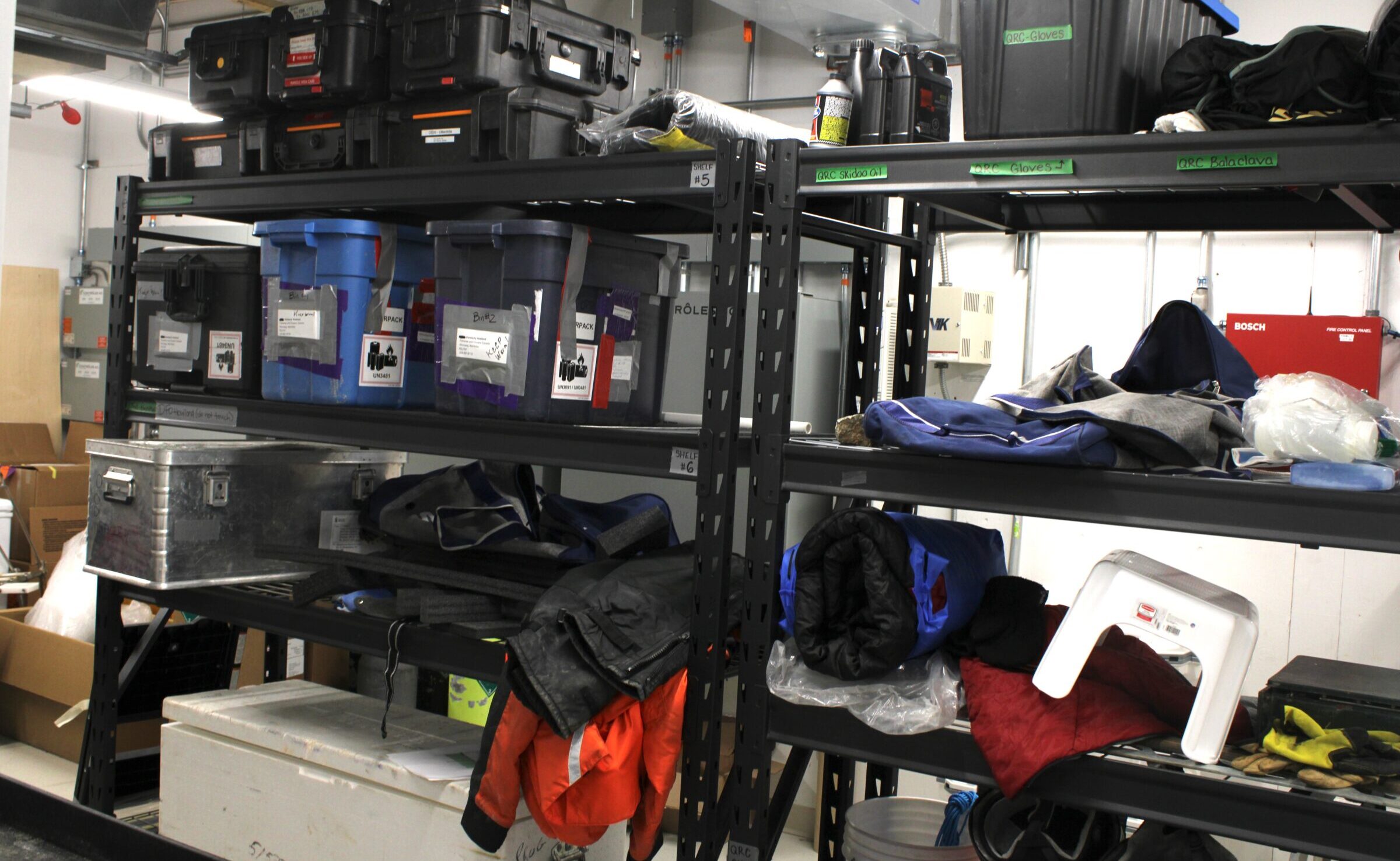
It includes four bedrooms with bunk beds to accommodate up to 16 scientists; two laboratories for biologists, chemists and physicists; and common areas. It also has a storage room with equipment for divers conducting year-round underwater research in the area.
When Deslongchamps was interviewed for this story in early November, the centre was empty but only because researchers from SmartICE — a group monitoring ice thickness in the Arctic — couldn’t make it to the community due to poor weather.

Most times there are about 10 scientists there from organizations or government agencies like the federal Department of Fisheries, Laval’s Centre for Northern Studies, or researchers from Takuvik International Research Laboratory, which works through Laval University.
“The idea is to offer a platform for all scientists to do work in, because there’s a lot of interesting stuff going on in the region,” Deslongchamps said.
Because of the deep sea water around Qikiqtarjuaq and its underwater currents, it’s a nice “hot spot” for biologists to study climate change and the Arctic marine ecosystem, she said.
The station opened its doors in February after roughly a year of construction.
“A lot of scientists were already working in this area, so that was part of the idea to come to build a new research station,” Deslongchamps said.
She didn’t have the exact price tag, but when plans for the station were announced in 2021 along with a still unbuilt Pond Inlet station, the two facilities received a $17.5-million grant from the Quebec government and the Canada Foundation for Innovation, which was created by the federal government.

Along with environmental research, the station’s work is set to support construction of the long-awaited Qikiqtarjauq port that the Nunavut government and Nunavut Tunngavik Inc. include on their list of “nation-building” projects.
“I have researchers that contacted me about that already,” Deslongchamps said.
“So yeah, we’re gonna have research projects going on about that.”
 Qikiqtarjuaq Research Station's common area is a place researchers can gather during their trips there. (Photo by Arty Sarkisian)




(0) Comments