

RCMP surveillance of Indigenous leaders was ‘completely wrong’: Tagak Curley
Longtime Nunavut leader calls for apology, compensation after CBC report spotlights investigations into ‘native extremism’
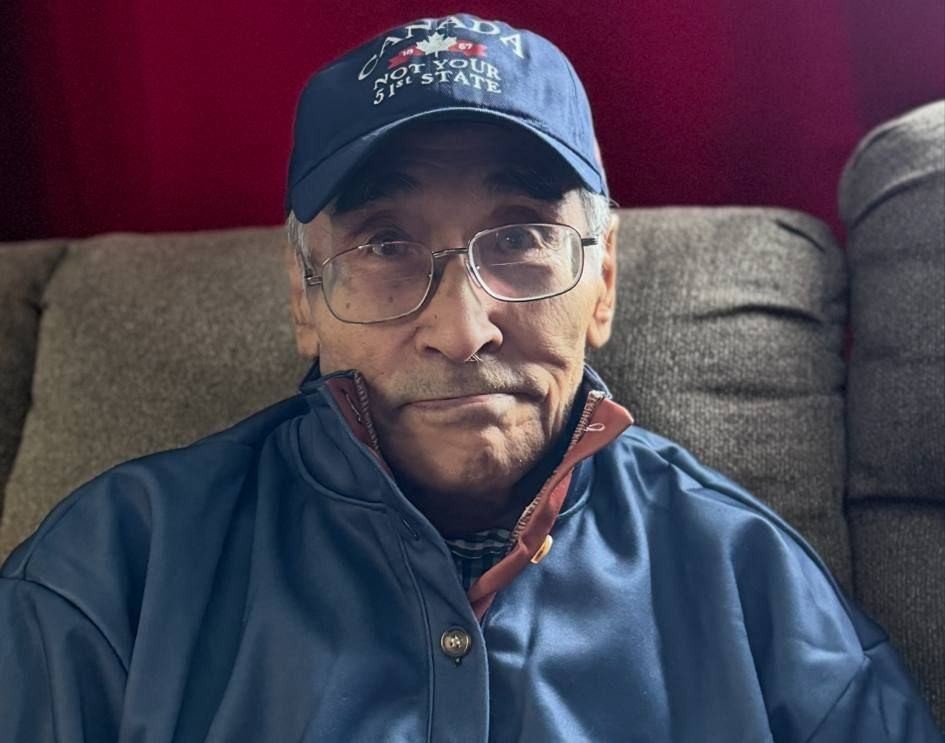
Tagak Curley says Indigenous leaders who were spied on by the RCMP in the 1970s are owed an apology and perhaps compensation. Curley, the founding president of what’s now called Inuit Tapiriit Kanatami, said being surveilled was like being “wrongfully accused for a crime we didn’t commit.” (Photo courtesy of Tagak Curley)

Longtime Nunavut leader Tagak Curley wants an apology and perhaps compensation from the RCMP for its surveillance of Indigenous leaders — including him — in the 1970s.
Curley is the founding president of Inuit Tapirisat of Canada, a national Inuit rights organization formed in 1971 and now known as Inuit Tapiriit Kanatami. He says he and other Inuit leaders knew the RCMP was watching them.
“That was wrong, completely wrong,” Curley said Monday in a phone interview.
“We’re not troublemakers, we’re not involved in the criminal strategy or anything … We are Canadians, we were trying to get our people the right to participate in our society and make the best representation for our people — Inuit people — to engage in [the] Canadian system.”
The work of the RCMP’s Native Extremism Section — which probed the activities of Indigenous leaders and activists across Canada in the 1970s — was the subject of a CBC Indigenous news investigation last week.
Surveillance actions extended to the North, including watching over Inuit leaders, according to documents the federal government has since published online.
Described as a need to monitor the individuals and groups for their potential to commit violence, the surveillance program collected intelligence mainly using staff from the Department of Indian Affairs but also sometimes from within the Indigenous groups themselves.

RCMP archive documents point to what it describes as “extremism” within the Red Power and American Indian movements in the United States during the 1960s and 1970s. They also highlight fears of communist activity and influence that was common during the Cold War era.
Curley, whose name appears in some of the documents, said he was “very conscious” of RCMP surveillance, especially at airports.
“We just [advised] our staff at all times when they’re travelling, that they’ll be careful, that they’ll be aware that there may be surveillance,” he said.
“I was very well aware of it because that was going on, and it was confirmed 10 years later when I became an MLA.”
As a member of the Northwest Territories legislature for about eight years in the 1980s, Curley said he and his colleagues used their time on the committee of the whole to press RCMP and territorial ministers on money spent carrying out surveillance on Indigenous leaders.
“They could not deny it,” he said.

In fact, Curley is on record in Hansard documents from 2013, referring to his crusade against RCMP surveillance decades prior.
“The RCMP is a federal agency, but the money that they’re using is under our jurisdiction as MLAs. So I asked the question: had any amount of money out of that money ever been used for surveillance of First Nations and Inuit leaders in the N.W.T. at that time?” said Curley during an April 18, 2013, committee meeting.
“It was an absolutely dynamite kind of thing. It went all over Canada. It did help, though. The only remedy for us at that time was to expose it so they can be clamped down.”
In a statement last week, RCMP Commissioner Mike Duheme expressed his “sincere regret” following “recent reporting concerning surveillance activities involving Indigenous groups during the 1960s and 1970s.”
He said the “RCMP today is not the same organization it was decades ago,” and that he’s committed to meeting with Indigenous leaders “to listen, to reflect, and to discuss pathways towards healing and stronger relationships.”

Prime Minister Mark Carney, speaking to reporters last week, said the RCMP owes an apology.
He called the surveillance activities a “reprehensible practice” that “never should have happened.”
Curley agreed an apology is due but said it may be “a little late” because some of the people targeted by RCMP surveillance have since died.
He suggested those who were targets be offered “compensation,” though he didn’t say how much he was thinking.
“It’s like being accused, wrongfully accused, for a crime we didn’t commit,” Curley said, stating he and other leaders were treated as if they were “non-Canadians.”
“We were just as dedicated to being a Canadian, building our future for our next generation.”
Exactly what justification would there be for providing monetary compensation? If I walk into a store and the security guard watches me, I don’t expect the store to compensate me because I was monitored.
From the sounds of it (there may be more to the story), the RCMP were monitoring certain people, but not hindering their business in any way, and not wrongfully arresting them. So again, what would be the reason for providing any sort of compensation?
I think they are using your system for compensation.
Being reached by police is torture! It drives you to a state of over conscientiousness that isn’t normal. Hyper vigilance sets in due to the traumatic stress! It’s not fair and it’s not fun! They’ll liable anyone an poi just to give themselves an excuse to harrass. They should investigate themselves first!
Yes much more to it..
He is oe of 100s of law abiding, Indigenous political leaders, social justice advocates survielled in the RCMP’s “Native Extremism Program” which ran for a whooping 14 years from 1968-1982.
-extensive physical surveillance, wire taps, folowing while traveling, banking information monitoring etc for some (all with no probable cause or ties to any crimes etc) ..
-Documents of spying on 30 different Indigenous organizations..including the Union of BC Indian Chiefs Assembly of 1st Nations
proven tactics if not just observing but trying to disrupt
No matter what happens. And how long ago it happened.
The first ask for those involved is money. Who knows perhaps. The surveillance was justifiable.
Explain the possible justification!
Well, for starters it was the 70’s and it was different time. Canada was right in the middle of the Cold War and anything socialist was heavily distrusted and Canada worried about foreign manipulation. First Nations don’t like labels, however the socialist label fits, like it or not. I’ll add, any group with socialist leanings would have been watching in this period. For example Pierre Trudeau and Tommy Douglas’s socialist leanings caused them to be under surveillance too.
Foreign manipulation in Canada has always and continues to be a top worry for Canada. Were First Nations organizations in the 70’s organized well enough to prevent foreign manipulation or for that matter, would awareness of the manipulation even exist? The RCMP would say no.
Don’t forget Wounded Knee and other US based militant style actions were strong in the 70’s and RCMP feared they were moving north or Canadians were looking for help from them. And, I bet that is true,
So, First Nations get to join the illustrious group of our former and one of our most loved (and hated) PM”s, the father of Canadian healthcare and of course our beloved Margaret Atwood. Pretty good company.
Bluntly, it would be naive to think the surveillance has stopped IMO.
I m , not a leader , but , will , i be getting compensation too, could sure use some gas money.
No. It was not wrong.
so in a so called free society, indigenous people fighting for their rights to be recognized and protect at the time monitoring and spying on them for the government who fought against indigenous people was not wrong?
The RCMP were watching everyone in those days, particularly anyone who was “different”.
They were watching the students. They were watchin the labour leaders. It was reported that they were even watching Justin Trudeau’s mother, and bring incense to her to try to mask the smell of her then-criminal cannabis.
Do you really think they’ve stopped?
@ Everyone
So three wrongs make a right?
Not sure what you’re getting at.
We are , so used to hand outs or in this case ” compensation ” that , it is expected .
Grievance and compensation are practically an industry here. As the major payouts have already been made expect more creative, even ludicrous demands, like this one, in the future.
so the rcmp keeping tabs on sikh extremists in bc is also wrong? how about the FLQ in quebec where the british trade ambassador was kidnapped. poor poor Tagak.
Ocha may have been different. There are many other examples. Of protests by indigenous people .That has caused economic harm.
They have a right to protest. The same as any other Canadien.
.
Millions of Canadians have been surveilled, some justly, others not so much, by the RCMP and other agencies over the years. As a representative Canadian I hope Tagak’s concerns extend to all of them and not just himself or other Inuit.