


Rideau Hall Foundation awards $4M in youth program funding, supports Inuit-led initiatives
Arctic Rose Foundation, Ilisaqsivik Society each receive $150,000 in education, mentorship funding
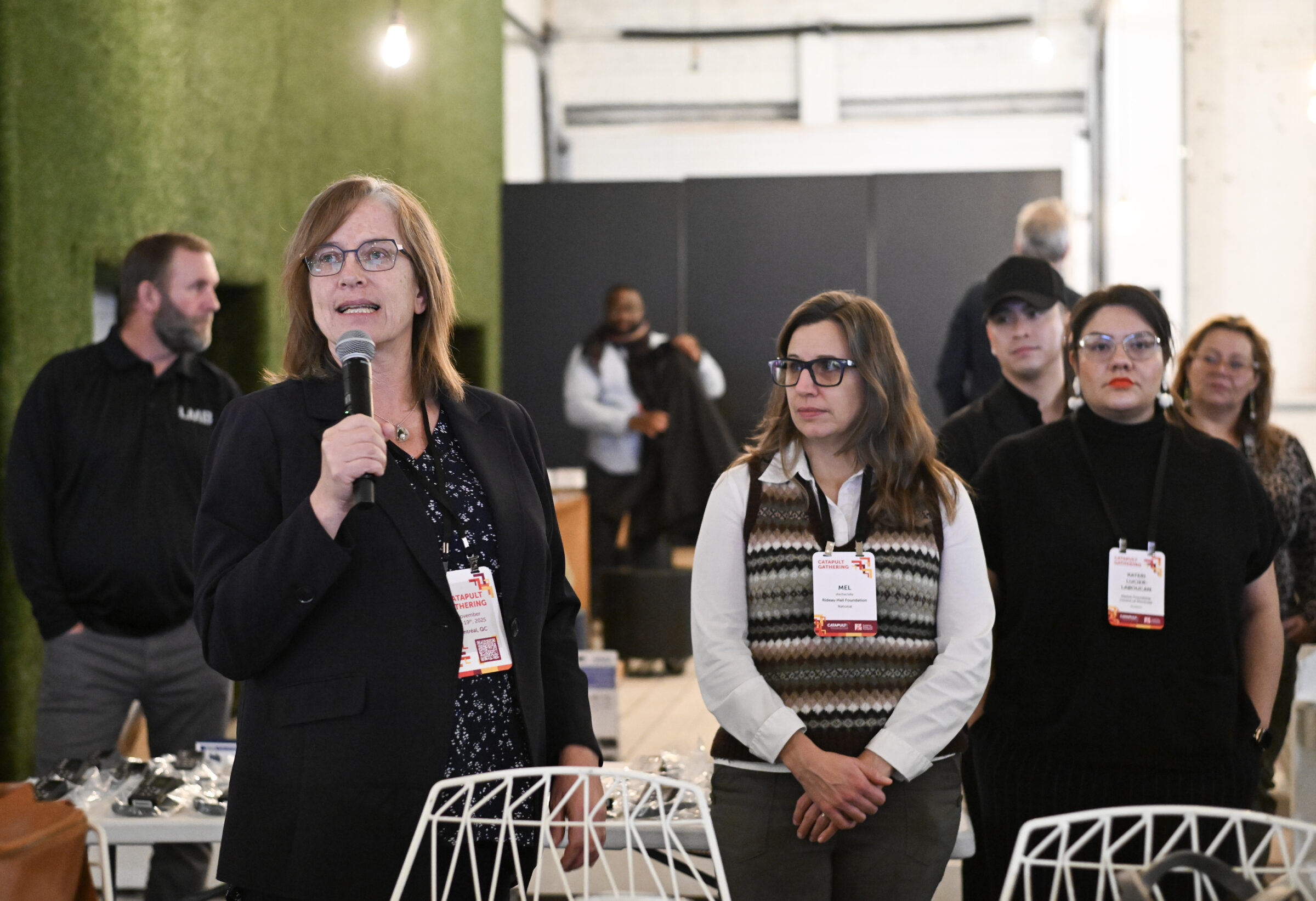
Ulrike Komaksiutiksak, executive director of the Arctic Rose Foundation, speaks at a Nov. 17 reception in Montreal celebrating the newest cohort of the Rideau Hall Foundation’s Catapult Canada program. Arctic Rose and Ilisaqsivik Society each received $150,000 as part of the 32 grants, totalling over $4 million for youth-serving organizations across Canada. (Photo courtesy of Rideau Hall Foundation)

The Rideau Hall Foundation has announced more than $4 million for 32 youth-serving organizations across Canada, including two Inuit-led non-profit organizations: the Arctic Rose Foundation and the Clyde River-based Ilisaqsivik Society.

Arctic Rose Foundation executive director Ulrike Komaksiutiksak, left, sits with Montreal-based dancer Simik Komaksiutiksak, centre, one of several artists who works with the foundation. Komaksiutiksak teaches dance lessons to students in grades 5 to 12 through the foundation’s Messy Book after-school program. (Photo courtesy of Rideau Hall Foundation)
The grants, part of the Rideau Hall Foundation’s Catapult Canada initiative, aim to expand access to learning opportunities for over 16,000 young people.
Since its launch in 2021, Catapult Canada has supported more than 122 projects, totalling almost $22 million for education, training, and mentorship.
“This year, the open call received over 750 applications, well beyond our expectations,” said Carrie Hage, lead on the Catapult program.
The Arctic Rose Foundation, founded in 2012 by Inuk musician Susan Aglukark, runs the Messy Book program which is an arts-based after-school initiative for youth in grades 5 through 12. It combines art, music, movement, and digital storytelling to explore Inuit culture and history.
The Messy Book program received $150,000 to span 18 months.

This is the second year Arctic Rose has received funding from Catapult Canada. It previously used funding to put together an Indigenous-based evaluation framework for the program, as well as to build digital storytelling tools for youth leaders in the program.
In the past, the Messy Book program has operated in Rankin Inlet, Arviat, Cambridge Bay, Sanikiluaq, Whale Cove, Chesterfield Inlet and Arctic Bay. It also operates in communities in the Northwest Territories and northern Ontario, Ulrike Komaksiutiksak, Arctic Rose’s executive director, said in an interview.
More than 30 Inuit and First Nations artists are signed on as mentors and each Messy Book program creates part-time positions for youths, while engaging up to 20 young people per site, Komaksiutiksak said.
The program also provides leadership training for high school students who become community artist liaison and mentor, or CALM, workers.
“They go through everything from basic mental health training to learning how to plan, organize and coordinate Messy Book in the partner site or school,” Aglukark said.
The Catapult Canada funding will also support the youth-led storytelling component of Messy Book, Komaksiutiksak said, to help visually present its after-school programs to parents, territorial representatives, or school boards.

“The great thing about Arctic Rose is creation and it’s the youth that are going to drive this. They’re going to take pictures, they’ll help create storyboards, and we will be talking to the youth about how they want to capture their stories and provide them some training with content creators, videographers,” she said.
The Ittaq Heritage and Research Centre, a division of the Ilisaqsivik Society in Clyde River, which runs Angunasuktiit, a land-based hunting program, also received $150,000.
“There’s strong demonstration of non-traditional pathways to learning,” Hage said about why Ilisaqsivik Society and Arctic Rose Foundation were selected.
“For Ilisaqsivik, their program is land-based and their hunting program has grown significantly and really reflects that distinct approach,” she said, adding that Ilisaqsivik is the first Nunavut-based non-profit Catapult Canada has supported.
A representative from the Ilisaqsivik Society was unavailable to comment on the funding announcement.

(0) Comments