

Society urges Nunavut Elders to complete census
Census underway since May 4, and Pairijiit Tigummiaqtikkut wants Nunavut Elders to participate
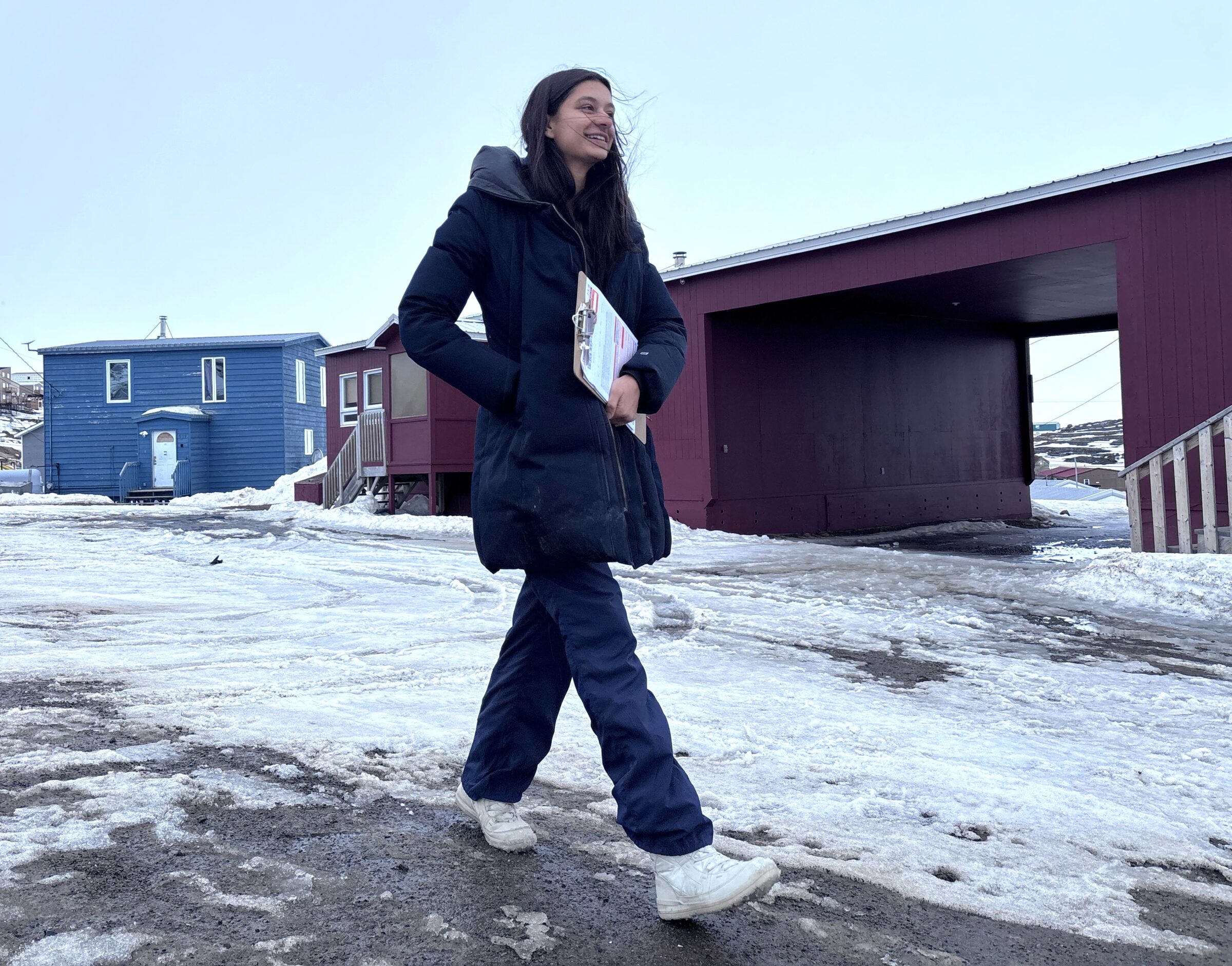
Census enumerator Kaya Scrivens of Ottawa visits residences on Suputi Street in Iqaluit on Wednesday evening. By federal law, every household must complete a 2026 Census of Population questionnaire. Answers are collected under the authority of the Statistics Act and kept strictly confidential. (Photo by Daron Letts)
The Iqaluit Elders Society is urging Nunavut elders and their families to complete the 2026 census, which began collecting data from Canadians on Monday.
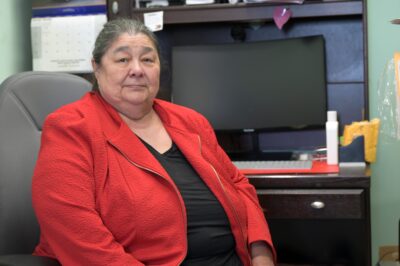
Monica Ell-Kanayuk, executive director of Pairijiit Tigummiaqtikkut, is urging elders to complete the Census. (Photo by Mosha Folger)
Previous censuses do not accurately reflect the number of elders in Nunavut, which affects funding available to the territory, Pairijiit Tigummiaqtikkut said in a news release.
“We have so much apathy out there, mistrust as well,” the society’s executive director Monica Ell-Kanayuk said in an interview. “Let’s go beyond that and say ‘I’m worth something. I need to be counted.’”
Nunavut elders were undercounted by anywhere from 23 to 61 per cent, according to Pairijiit’s press release, published in late April ahead of the official start of the census.
The statement indicates that the 2021 census identified 1,665 people over the age of 65 in Nunavut. But Nunavut Housing Corp.’s 2024 Annual Report showed that at least 2,052 people over that same age live in Nunavut.
Pairijiit also learned through an access to information request that, this year, 2,682 people over 65 have records with Nunavut Health Care.
Anne Crawford, legal counsel for Pairijiit, says she wants every elder to participate.
“I don’t think people know how big a difference it makes,” she said. “If we don’t have a record that there are unilingual people out there, then we don’t need Inuktitut services. So, the chunk of people you’re missing is that chunk of people that have the biggest needs.”
If elders are undercounted, she says, funding and services for them are more likely to be cut.
In an email, Nunavut Tunngavik Inc. spokesperson Brodie Larocque echoed the society’s sentiments.
“Federal funding is allocated for Nunavut health and social programs partly based on population estimates, so it’s important to know how many Elders there are,” he wrote.
Crawford is not surprised that Pairijiit’s research contrasts the census.
“We knew they were missing people,” she said. “Once [the census gets] to 75 or 76 [years old], they say ‘nobody,’ and we know people who are that age.”
Ell-Kanayuk, a former Iqaluit MLA and broadcaster who is herself an elder, mentioned the challenges the census poses for Inuit. She said a woman at the Iqaluit Elders Centre told her the federal employees were aggressive.
“One elder told me that ‘you’re going to have to pay a fine if you don’t do your census.’ That’s not how you start a conversation,” Ell-Kanayuk said. “I had surveyors come to my house, knocking at my door, and they spoke English only. I really wanted to have someone who speaks my language, and that was not available. So, I preferred to take their piece of paper and do it online. But not all Elders can do that.”
Though the census must be filled out in English or French, there are translations of the long-form questions available in South Baffin Inuktitut and in Nunavimmiutitut.
The census helpline (1-833-314-3652) can assist those who don’t speak English or French.
“And if you’re a relative that speaks English and want to help your unilingual elder,” she said, “help them make that call,” Ell-Kanayuk said.
I completed mine in person and they still trying to come to my place , 5 times now!, should I get a restraining order?lol super annoying
The GN gets about $50,000 in transfer payments for each person in Nunavut, every year.
The census is once every 5 years.
Each completed census form is not worth a $100 gift voucher.
No, each completed census form is worth about $250,000 to the GN.
The form is a pain. But what would you do if that money were to go directly to you for filling out that form?
The proper words to describe the GN would make this comment unprintable.
Tmrw being mothers’ day I had a idea to promote by villages/hamlets to schedule a Mothers’ Day walk. A little fresh air and exercise in the name of Mothers past and present. Recreation managers it has been a long winter, try something new maybe 🙂
I have had like four different group of people come to my door claiming that they are census people since January
It would be nice that they wear the employee census badge and let it show
It feels like we are just letting anyone come in our home
Also
The census or government of Canada should advertise locally that people will be coming