


Southern wildfires might affect northern air quality, Health Department says
Lack of formal monitoring means people need to be aware of bad air warning signs
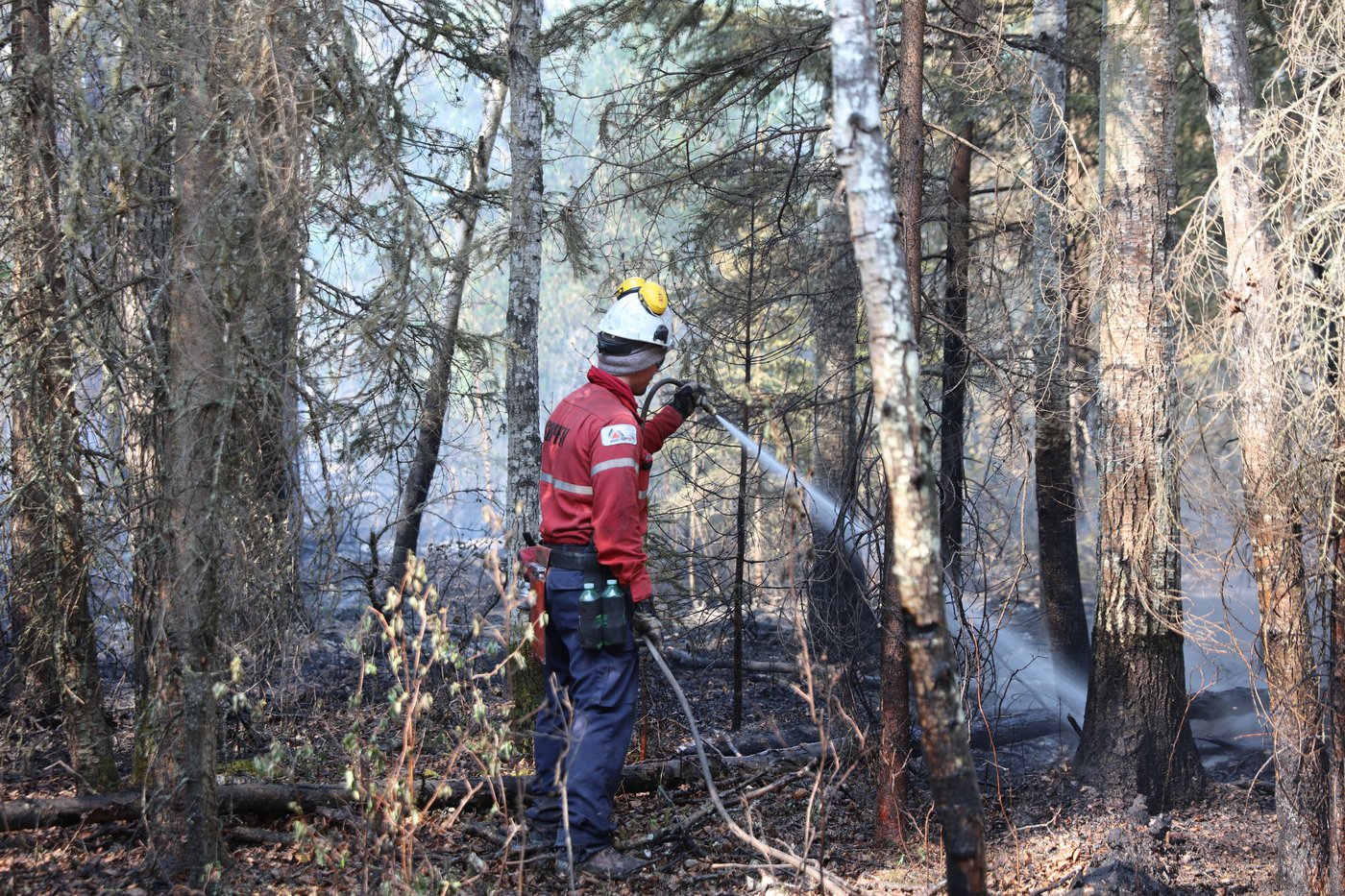
Numerous municipalities across Canada continue to feel the effects of ongoing forest fires, similar to this Sturgeon Lake Complex wildfire in Alberta, in 2023. (Photo by Scott Hayes, Local Journalism Initiative Reporter, special to Nunatsiaq News)

Wildfires burning in the Prairie provinces might be affecting air quality across Nunavut and people should take precautions, Health Department officials say.
“Depending on wind and weather conditions, wildfire smoke can travel thousands of kilometres which means that even without active fires within the territory, air quality can still be impacted,” said Chelsea Halvorson, a spokesperson for the Department of Health.
“This is a common occurrence during the summer months, and Nunavummiut are encouraged to remain aware of local conditions and take precautions as needed.”
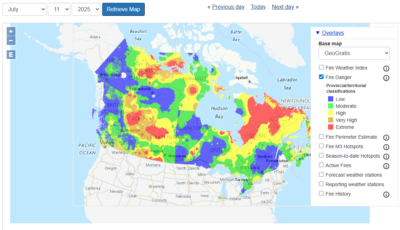
This map shows the fire risk across Canada on Friday. (Map courtesy of the Canadian Wildland Fire Information System)
She said the air quality index provided by the federal Environment and Natural Resources Department suggests the fires’ impact on air quality in Iqaluit is low risk and it’s safe for outdoor activities.
“However, due to limited formal air quality monitoring across Nunavut, localized conditions may vary,” she said. “Communities may experience smoke and reduced air quality even if there are no official (air quality index) readings in place.”
That makes it important for Nunavummiut to remain aware of air quality indicators, such as visible smoke or the smell of smoke, in their communities.

If wildfire smoke is detected in a community, residents can reduce exposure by avoiding outdoor exercise and strenuous activities, and staying inside with windows and doors closed.
They can also use fans or air purifiers, avoid burning candles or anything that can add to indoor air pollution, and limit the use of exhaust fans when not cooking.
Winnipeg remained under an air quality advisory Friday, meaning smoke was causing or expected to cause poor air quality and reduced visibility.
People most likely to be affected by wildfire smoke include those aged 65 and older, pregnant women, infants and young children, people with an existing illness or chronic health condition, and those who work outdoors.
They should avoid strenuous activities outside and seek medical attention if experiencing symptoms, according to an advisory posted to the Department of Environment and Natural Resources website.
Under Winnipeg’s current heavy smoke conditions, everyone’s health is at risk regardless of their age or health status.

Saskatchewan also has air quality advisories in effect due to five forest fires and grass fires that have yet to be contained. Alberta currently has three wildfires that pose a threat to public safety, communities or critical infrastructure.
I have found that FireSmoke.ca is the most useful site to see where the wildfire smoke is coming from and where it is going. This site draws from datasets all over Canada, and the numerical modelling is done at UBC. The smoke-forecast maps step through time, hourly, 48 hours forward into the future. All public, all completely free for everyone.
On a practical everyday level (and as an asthmatic myself due to occupational exposure in my teenage years many decades ago), I have long felt that centralized HEPA filtration (minimum MERV 16) with powerful direct-drive blowers driven by high-efficiency EC motors should be made standard in all buildings (irrespective of construction date). Such filtration would remove pollution (e.g. from wildfire smoke and general dust) as well as airborne pathogens (both bacteria and viruses), all in one stage. And all with a minimum of electricity usage.
Air quality has to be renegotiated in 150 year old Treaties 🤑