


Two cousins and a buddy lead pack in Toonik Tyme snowmobile race
Slideshow: Perry Akavak wins annual trek from Iqaluit to Kimmirut and back

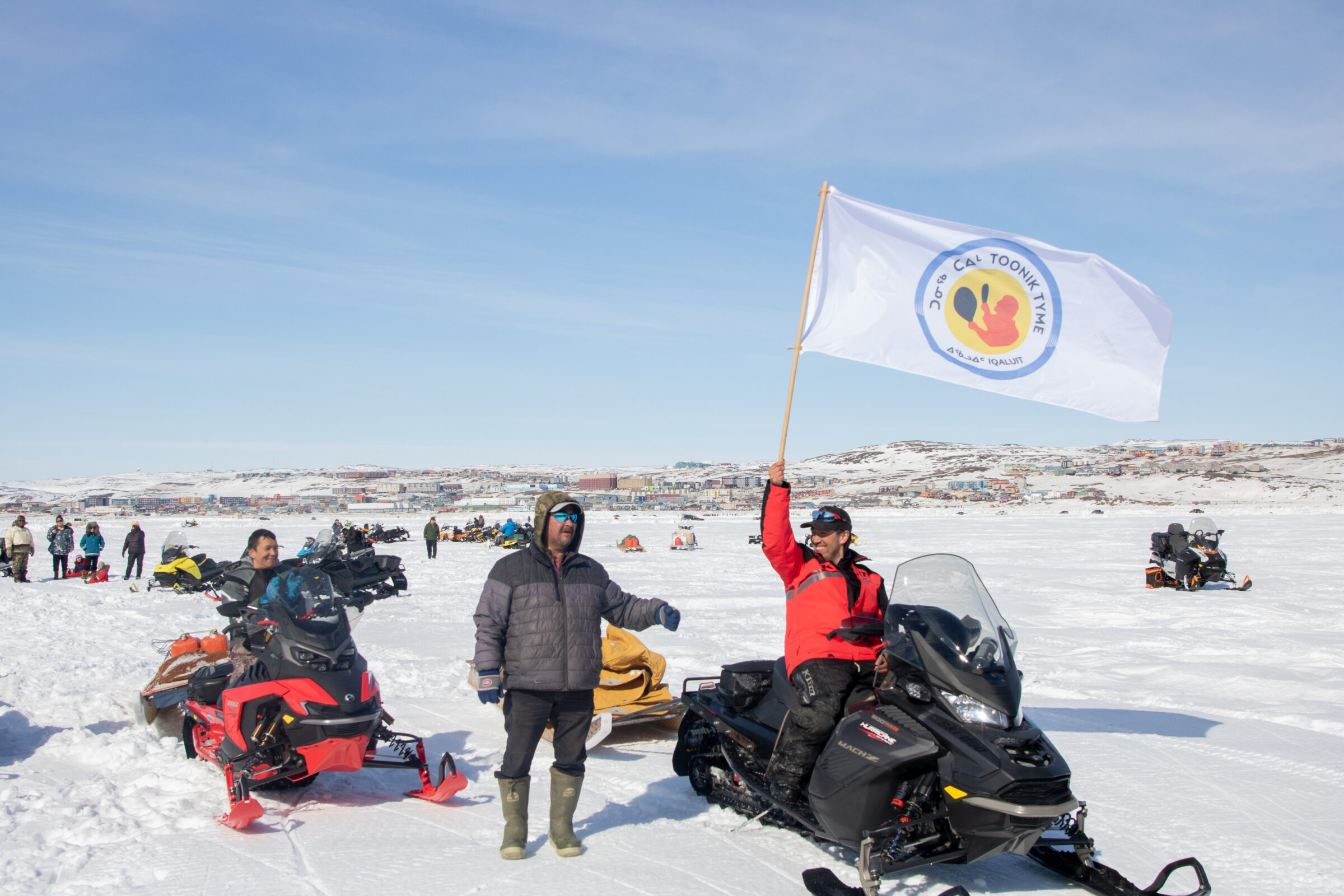
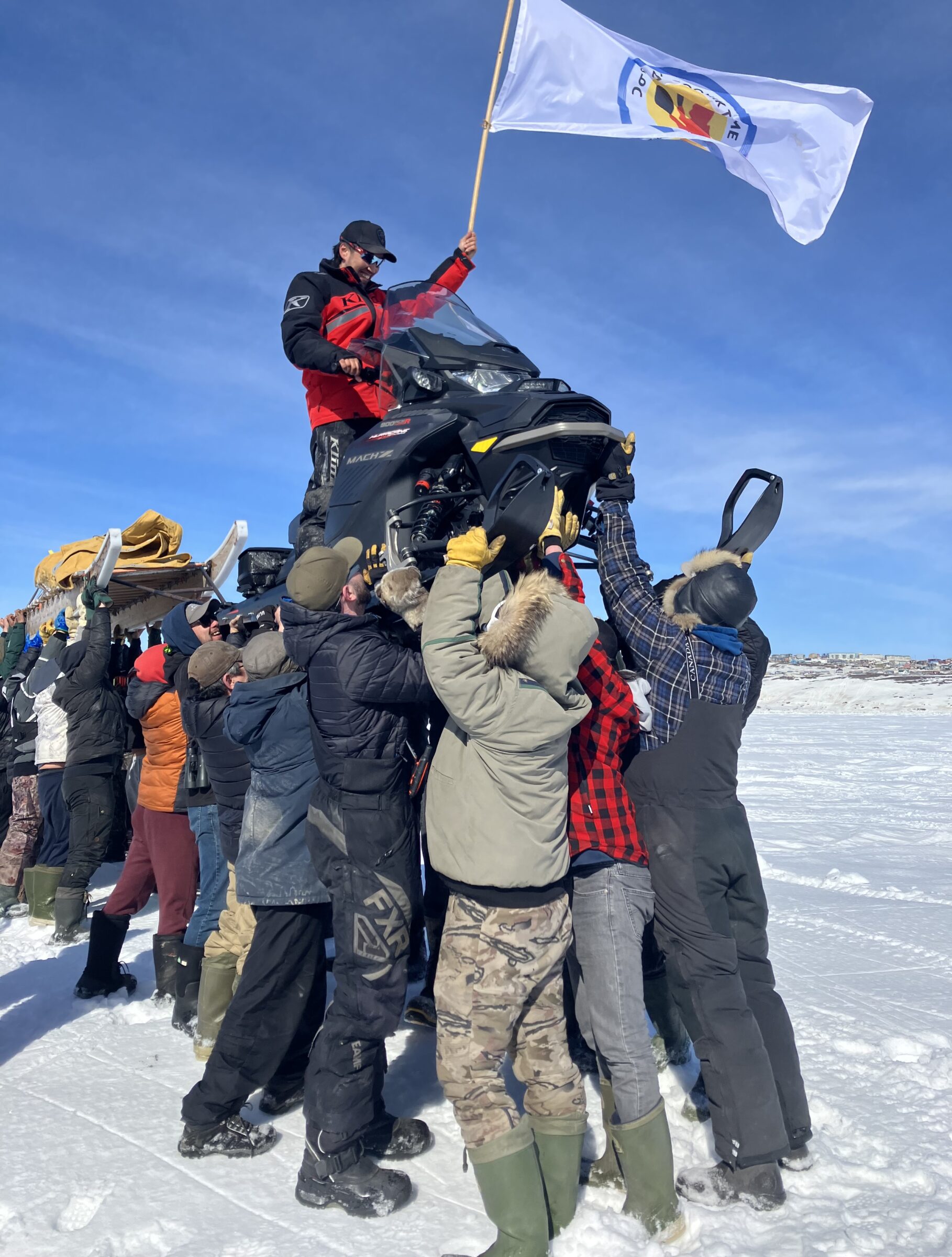
Perry Akavak, who lives in Pangnirtung, sits atop his snowmobile April 14 as spectators hoist it and his qamutik into the air. Akavak won Toonik Tyme’s annual race from Iqaluit to Kimmirut and back. (Photo by Jeff Pelletier)
There was a friends-and-family finish at the Toonik Tyme snowmobile race April 14, where two cousins finished in first and second place, followed by their buddy in third.
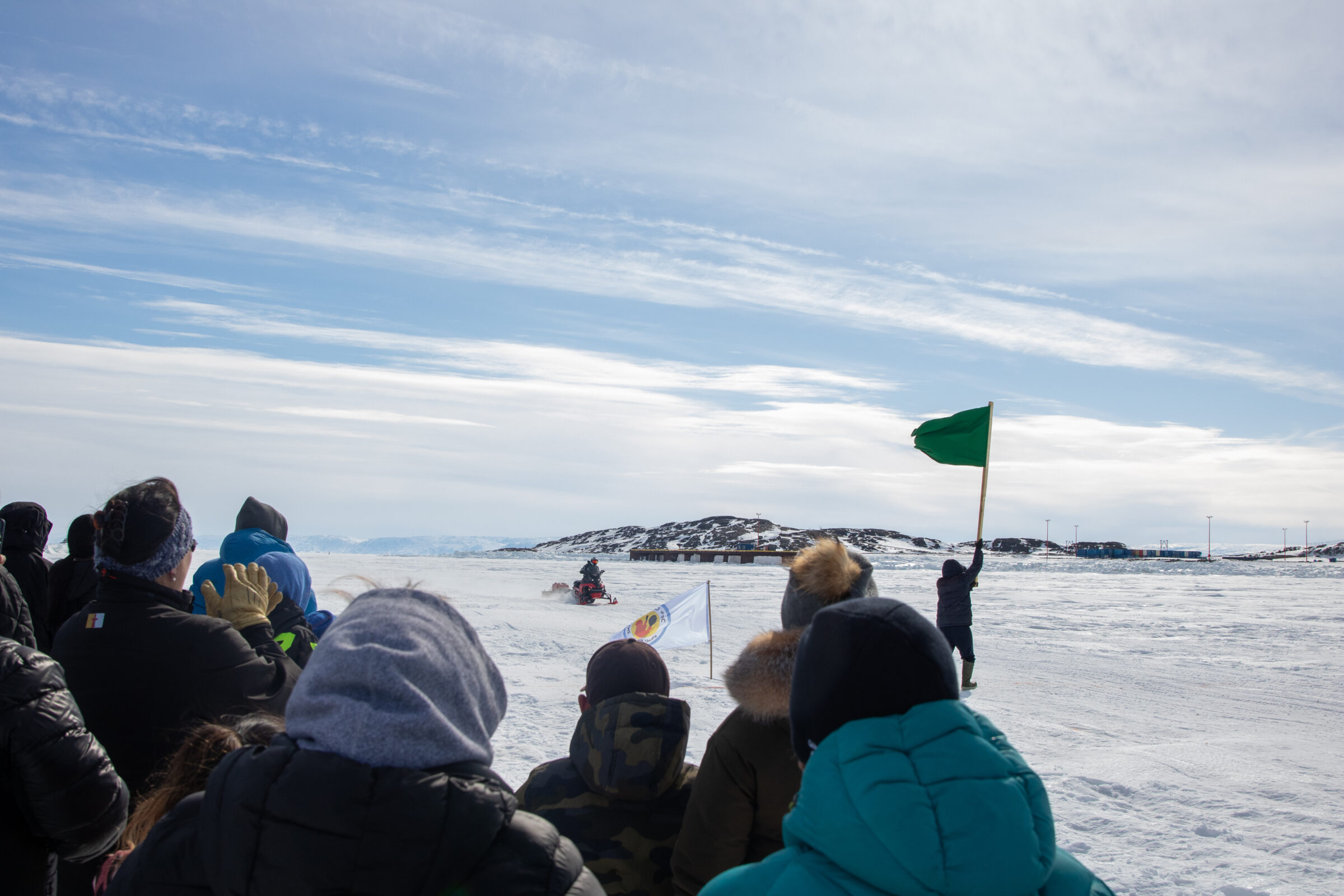
Perry Akavak from Pangnirtung won the festival’s annual 240-kilometre Iqaluit-Kimmirut race, roaring across the finish line after about four hours and six minutes with a fully-loaded qamutik in tow.
“My qamutik kept flipping a couple of times,” a breathless Akavak said moments after winning the race. He said he was too tired to say much else.
But he earned the race’s prize — $10,000 — for his efforts. The second-place prize was $5,000, and $2,500 for third.
Akavak pulled a bottle of orange juice from a pack on his snowmobile and chugged it back while he waited for other racers to cross the finish line on the sea ice in front of Iqaluit’s marina.
A few minutes later he was standing on top of his snowmobile, talking into a cellphone.
“Hi, Dad. I made it one piece,” he was overheard saying. “I’m alive … I’m OK.”

His cousin Davidee Nowyook came in a few minutes behind Akavak.
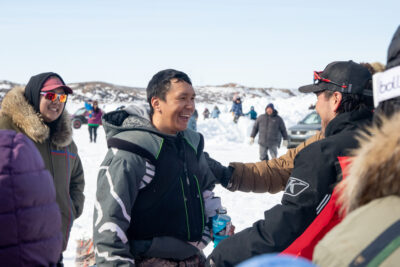
Davidee Nowyook smiles as he accepts congratulations from spectators after he finished in second place in Toonik Tyme’s snowmobile race from Iqaluit to Kimmirut and back on April 14. (Photo by Jeff Pelletier)
“He’s fast,” Akavak said, watching Nowyook’s finish. “He went by me going over.”
But Nowyook said afterward, “I was being cautious the whole race.”
Gary Eeseemaile, from Iqaluit, who is a friend of Akavak, finished in third place.
It was the second time Akavak has won the race, said his aunt Mary Hanson-Akavak, one of a handful of family members cheering at the finish line. He won before in 2017.
“All of us are proud,” Hanson-Akavak said.
This year’s race drew a record number of racers — 19 — from Iqaluit, Kimmirut, Pangnirtung and one from Grise Fiord.
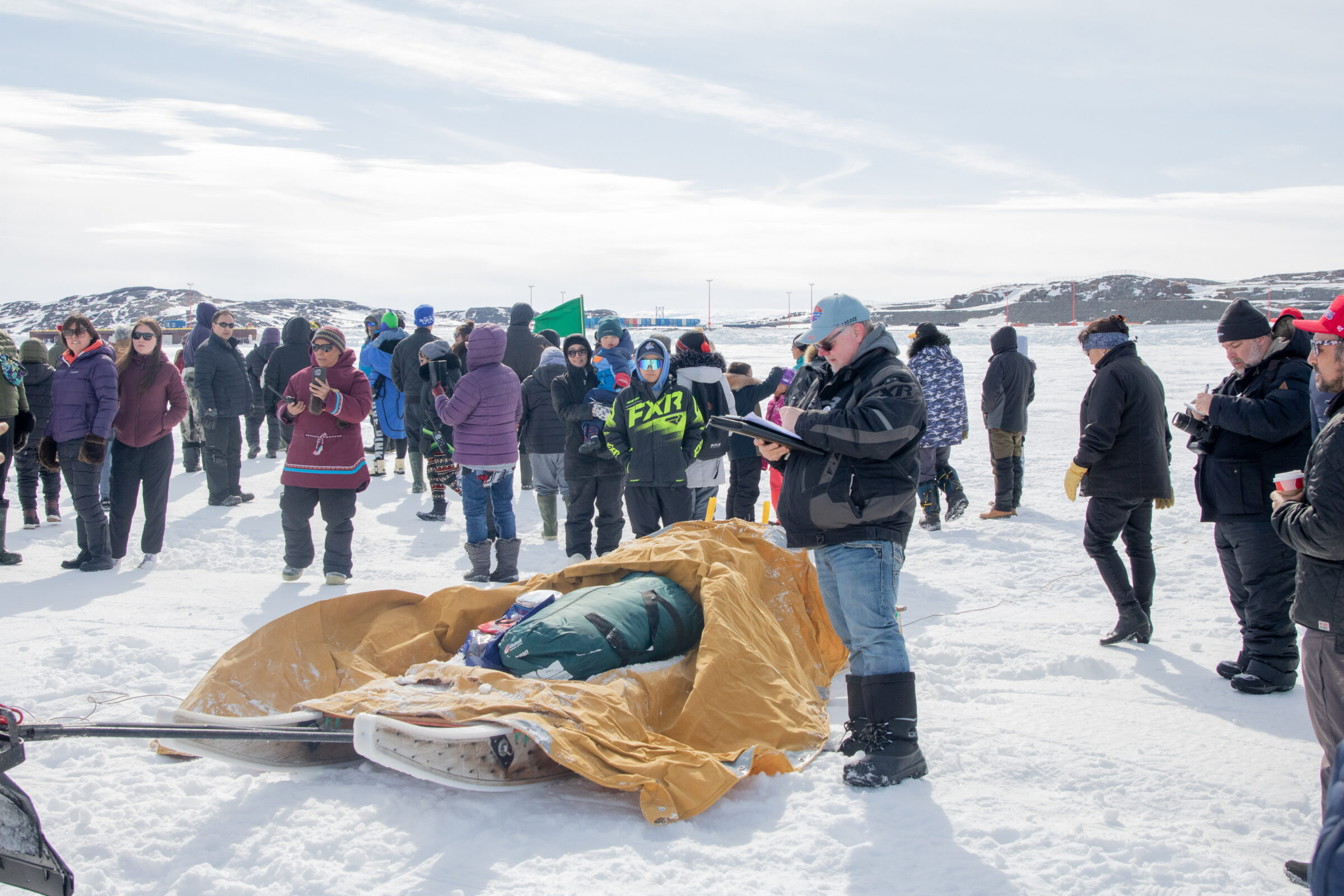
The race, held on the last day of Toonik Tyme, Iqaluit’s spring festival, has snowmobilers pull a qamutik loaded up with hunting gear.
“It’s to simulate the tradition of going out on the land, hunting,” said Stephen Johnson, a volunteer with 123Go!, the festival’s organizing committee.

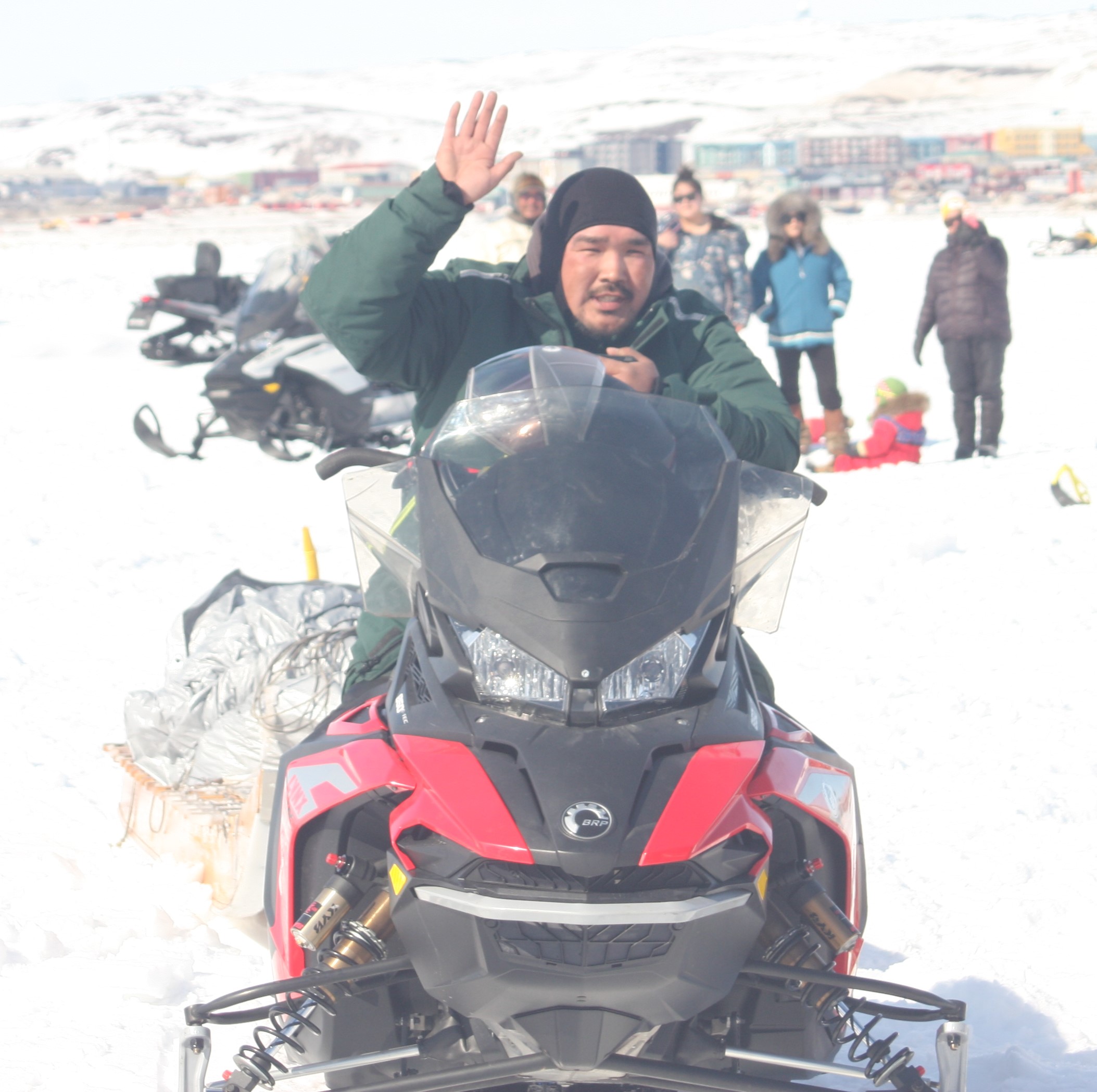
Gary Eeseemaile waves to the crowd after finishing third in the Toonik Tyme snowmobile race from Iqaluit to Kimmirut and back on April 14. (Photo by Corey Larocque)

For example, racers have to carry equipment including a Coleman stove, matches or a lighter, enough food to make six meals, a sleeping bag, a cooking pot and a rifle. It all has to be wrapped up in a tarp and tied down to the qamutik.
“This isn’t like a snowmobile race you’d see in any [other] town in Canada,” Johnson said.
Racers have to finish the race with all the equipment they started with. It can come back banged up, but it all has to come back or the racer is disqualified.
Last year’s winner, Billy Kilabuk from Pangnirtung, ran out of gas on the way back from Kimmirut, Johnson said, after getting updates over a radio from along the route. He was the first to arrive in Kimmirut and had been leading the pack most of the way before running out of fuel.
Racers start with a full tank of gas and are allowed jerry cans with 20 gallons of fuel. If they run out, their race is over, Johnson said.
A lot of things can affect fuel consumption, including the snowmobile itself as well as how the racer drives it. Even the way gear is packed on the qamutik can make a difference in how quickly racers go through fuel.
Winning the 240-kilometre round-trip race in about four hours means Akavak was travelling an average of about 60 kilometres an hour. But Johnson said it’s not uncommon for racers to get up to 180 kilometres an hour in straight stretches.
“These guys take this race super-serious,” he said, adding he has heard from racers: “If you can’t hold 120 kilometres an hour consistency, don’t even bother.”
Refuelling, taking breaks to let an overheated engine cool down, and stopping to adjust the qamutik’s load are some of the factors racers have to contend with that eat into their times.
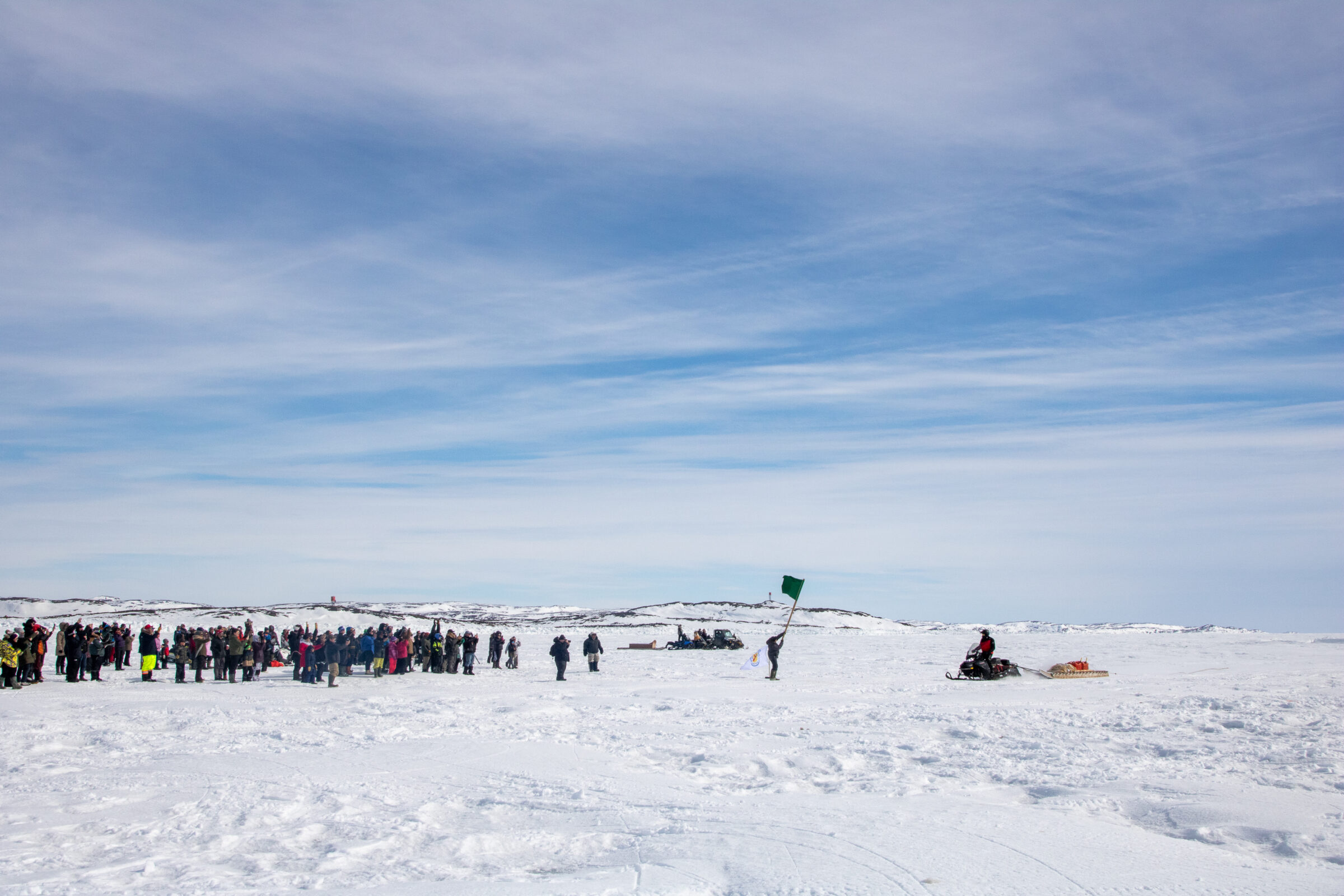
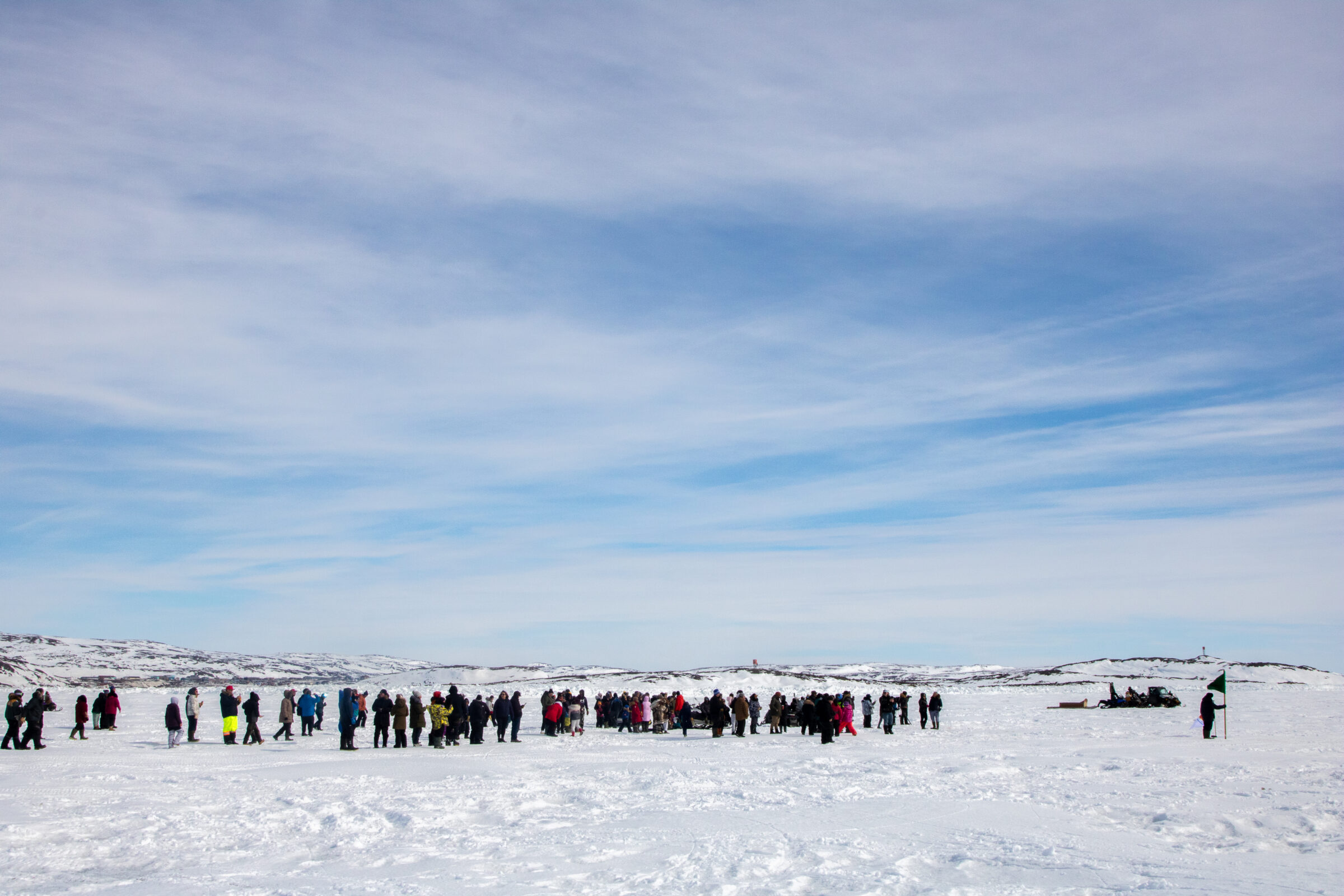 Hundreds of spectators gather on the sea ice in Iqaluit April 14 to see competitors in the annual Toonik Tyme snowmobile race cross the finish line. (Photo by Jeff Pelletier)








I always found it a bit sad how these spring festivals are mostly just snowmobile races. Whoever has the fastest most expensive snowmobile usually wins.
Would be nice to see more traditional games and feats requiring human strength and endurance. Things you actually need to mentally and physically train for.
Do you volunteer?
If not , shaaadup
At Just a Thought, so you think racing is easy, take it up and try this race.
you will see it is both mentally and physically demanding where you do have to train for.
Igloo building. Chiseling through ice. How many more activities would allow more people to join in spring games? Is this snowmobile race sponsored by the event organizers? Or is it the snowmobile racing committee?
There is merit to these snowmobile races, even if they are premised on today’s fast-paced technology. If you read to the first words the contestant relayed to his father, it conveys being grateful to be alive and not having been injured during the race. This is one heck of a race to be in, given the sea ice conditions and the deep gorges in between Iqaluit and Kimmirut. One has to be courageous to try, with a lot of practise out on the land to understand long distance trails. It requires knowing how to become adept at reigning in reckleckness and agility. In real life, racers face the dangers and uncertainties of hunting brought about my sea ice and choppy ocean conditions, or many other myriad of weather-related incidents that tests the strength, endurance and preseverance of drivers; exhaustion, snowblindness, cold, wet, freezing conditions or mental stress of making sure one or loved ones are always safe during lengthy or dangerous trips. Recklessness really helps being able to respond very quickly to any given circumstance while out on the land. Snowmobiles may not be traditional, but they sure help Inuit adapt to develop their survival skills and mental resilience through modern ways. I myself do not watch these races, because they remind me of the actual deaths I’ve seen of hunters falling through ice leads, melting sea ice, or falling off steep rocky cliffs, qamutiit hitting drivers etc. It’s too nerve-wracking for me to watch, but the sheer relief of knowing the drivers are alive is very understandable.