


‘Unacceptable’ for officer who killed Clyde River man to avoid inquest: Coroner
Judge orders adjournment at request of Abraham Natanine’s family
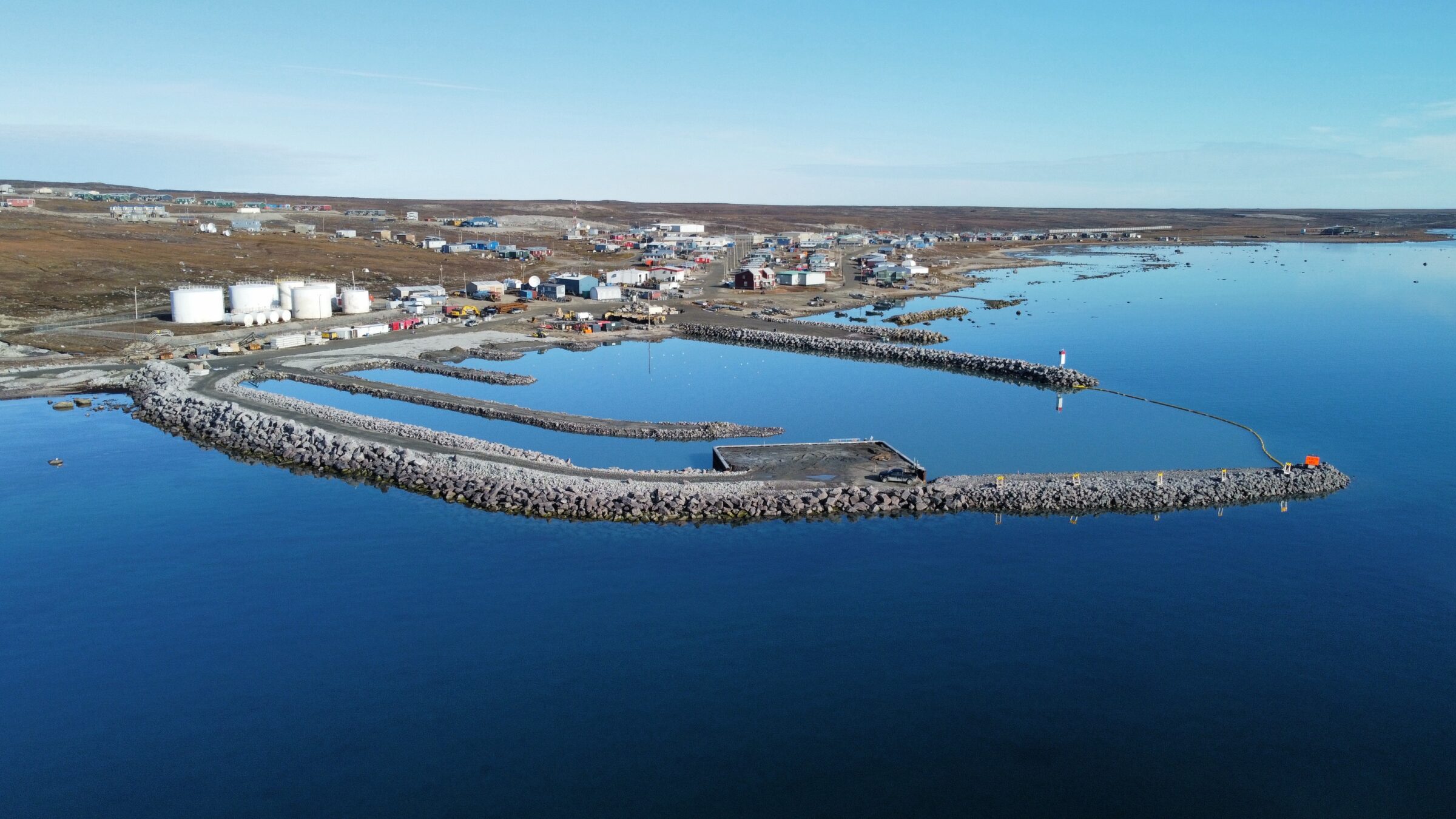
An inquest into the 2020 death of Abraham Natanine has been adjourned because one of the three officers involved in the incident has not confirmed he will participate. (File photo)
This story was updated on Tuesday, Oct. 20, 2026, at 1:45 p.m. ET.
A public inquest into an RCMP officer’s fatal shooting of a Clyde River man in 2020 has been adjourned because the officer who fired the fatal shot in the incident has not confirmed he will participate.
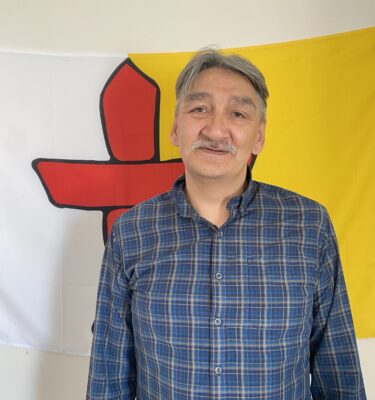
Jerry Natanine wants the officer who killed his son Abraham Natatine to answer questions about the May 2020 incident that led to Abraham’s death. (Photo courtesy of Clara Noah)
Abraham Natanine was 31 when he died on May 6, 2020, after Cpl. Bryan Vaughan, shot him. The shooting happened after officers responded to a disturbance at a home at around 11 p.m. the evening prior.
In 2021, Ottawa police investigated and concluded there were no grounds for charges. The police investigation also concluded Vaughan fired the fatal shot, said Andrew Morrison, the lawyer representing the Natanine family.
Nunavut law requires a public inquest into deaths involving an on-duty police officer. The inquest into Natanine’s death was scheduled to start on Oct. 5 and end on Oct. 9.
“I take their investigation at face value, but I still want to ask questions to the officer that was involved in the shooting,” said Jerry Natanine, Abraham’s father, in an interview.
Morrison asked a judge on Sept. 28 to adjourn the inquest after Nunavut Chief Coroner Marianna Cervantes informed him it would go ahead despite Vaughan’s presence being unconfirmed.
Cervantes announced on Sept. 29 that the inquest would be adjourned.
The purpose of the inquest is to shine a light on what happened that night, which Morrison said can’t happen without each officer’s participation.
Cervantes declined to comment on the reason, when reached by Nunatsiaq News.
The Nunavut Coroner’s Act gives the chief coroner power to summon witnesses for inquests.
“The RCMP officer that was involved in the shooting hasn’t been summoned,” said Jerry Natanine.

“Summoning RCMP officers that are involved in shootings, that’s the norm. That’s normal for coroners inquests. It’s been done before in Nunavut.”
Natanine’s family wants to question Vaughan over discrepancies about what occurred on the day Abraham Natanine was killed, including Abraham’s words and conduct, the alleged weapon and the number of shots fired.
“Questions also remain about the officers’ actions after the shooting,” says the request for adjournment Morrison filed with the court.
The two other officers who were present when Natanine was shot had confirmed their attendance as of Sept. 18, according to court documents.
Nunatsiaq News reached out to Matthew Scott, the lawyer representing the involved RCMP officers. He declined to comment, redirecting requests for comment to RCMP.

Nunavut RCMP will participate in the inquest if called upon to provide evidence, said Sgt. George Henrie, spokesperson for Nunavut RCMP, although he said he had no information he could share about the participation of officers involved.
“Our family is not seeking to prevent the inquest from occurring,” Jerry Natanine said in an affidavit. “We seek a short adjournment so that reasonable steps can be taken to secure the meaningful participation of a witness whom the chief coroner has already described as central.”
Court documents also note RCMP’s reasons for Vaughan to not attend, which include concerns about his mental health and prior threats from community members. Vaughan is no longer employed with the RCMP, so he cannot be compelled by RCMP to attend, say the court documents.
“It is not acceptable for Cpl. Vaughan to avoid taking part in the inquest,” Cervantes noted in a Sept. 18 letter to RCMP’s counsel.
“Unless the RCMP provide adequate reasoning and evidence that Cpl. Vaughan cannot attend, initiating contempt proceedings is available under sec. 46 of the Coroner’s Act.”
Cervantes has offered various accommodations, such as a single-day attendance, a support person, and an advance hearing to set ground rules.
Natanine’s father also said does not believe enough evidence was brought forward to assess the validity of Vaughan’s mental health concerns, and suggested the inquest could be good for Vaughan, too.
“This can be a good closure, for the family, for all of us, and for the RCMP officer himself too,” he said. “If the officer is having issues psychologically, I would imagine he would want closure from this as well.”
Correction: This story has been updated to correct who adjourned the inquest.
If he is no longer employed by the RCMP, there is nothing the RCMP can do to secure his attendance unless the coroner gives them a subpoena to serve on him, I think it’s unfair to be blaming the RCMP about this at this stage.
He took a man’s life and you think he’s allowed to just walk away because he’s protected by rules that clearly need to change?
Following the incident, the Nunavut RCMP ordered an independent external investigation into the incident.
“There are no reasonable grounds to believe that any officer committed a criminal offence in connection with his death,” said an OPS news release issued April 9.
The OPS, which has an agreement with the Government of Nunavut and the territory’s RCMP division, was called on to conduct the investigation.
As part of the investigation, the OPS officers travelled to Clyde River and interviewed 10 civilians and three RCMP witnesses.
————-
A group of independent professionals have already decided this.
The problem is Nunavut has the highest violent crime rate in North America. If anything, the rules you complain of, need to be tougher.
That is not at all what MIGA said.
It’s a short statement. Read it again, but this time, with your.eyes open.
Well done Andrew. Everything should be tried to get the subject officer to attend. How come remote testimony hasn’t been mentioned?
The article says there were no grounds for charges. And there were no charges laid. Case closed!
The families in these cases, who feel strongly that the evidence supports negligence, can just sue the RCMP. Criminal charges are one thing, but the civil standard of a balance of probabilities is another. Many people or police officers may not be charged or even acquitted of criminal charges but can still held liable for wrongful death and battery. This happens in Canada all the time and the RCMP settle, but I think one of the more famous examples is OJ Simpson.
I am pretty sure you have confused OJ with Bart. Easy mistake to make.
“After O.J. Simpson’s 1995 trial, which was a criminal case, the victims’ families sued Simpson for wrongful death. The civil trial began in October 1996. Simpson was found responsible for the deaths of Nicole Brown Simpson and Ronald Goldman, and their families were awarded $33.5 million in damages.”
https://www.britannica.com/event/O-J-Simpson-trial
This is a public inquiry, that is legislated to take place. This isn’t to lay blame or charge anyone. Public inquiries happen to find truth in events and then perhaps to find solutions/recommendations to prevent issues from arising in the future. Contrary to Kenn Harper’s statement, this isn’t about a case being closed. In Canada, public inquiries will not lead to further criminal cases, in fact most of all Canadian public inquiries are non binding. Though there are powers to subpoena individuals and oaths from truth telling, again they are simply to get to a truth, factual idea of events that took place, to then recommend and maybe(maybe because non binding) have recommendations to shape public policy in the future. It helps to get to this truth with everyone involved in the incident to participate.
Because you say so? Questions still need answering and it is not wrong to pursue answers to those questions. Maybe nothing illegal happened, but perhaps changes need to come as far as procedures and protocol go. If more support is needed for the police in communities, an inquiry can help sort that out. If something happened that the family is not aware of, this is how they will find out.
Case closed, yes, but the story hasn’t been told. If you were the family, community, even the RCMP, you’d be satisfied with a closed investigation and someone saying, in effect “We got it. Everything’s good, “ and leaving it at that? Where is your empathy for the family, community and future officers being sent in?
The incident was 6 1/2 years ago. The family wants to ask about “discrepancies” from their version to the written reports ….. 6 1/2 years ago.
Nothing significant will come from this. It’s been too long.
The inquiry for the abuses that took place at Mt. Cashel orphanage in Newfoundland had at least a 14 year gap. Many, many things were brought to light. Yes, 6.5 years is longer than it should take, but it doesn’t mean nothing will come of it and it is better than nothing. Even if no useful details come out of it (though I don’t think that would be the case), it could spark recommendations regarding these situations and inquires so that these long gaps of time don’t happen.
Shrugging and saying it’s been too long and nothing will come of it is lazy.
So why hasn’t the Coroner issued a summons?
Regardless of whether or not he is still with the RCMP, the Coroner can issue a summons. Why haven’t they?
A coroners authority ends at the border. They don’t have the authority.
The GN, aka the coroner, have a contract for policing services with the RCMP. They pay the RCMP a lot of money. They could leverage this to make it happen. They can also likely do interjurisdictional subpoena but the RCMP should be forcing this guy to show up.
The article says he no longer works for the RCMP and as a result, they cannot compel him to attend.
If a judge summoned him and the GN did not pay for all his expenses in advance, he has every right to refuse.
You likely know what I am thinking so I won’t say it.
Thanks for pointing out he is not employed by the RCMP, you’re right there.
.
His expenses to appear by video conference would be under $500.00. The guy is all over social media and would be easy to track down for being served.
.
I don’t put a lot of value in coroner’s inquests. The family does not seem to have a lot of time to litigate before they run out of time on the statute of limitations.
The fact that “somebody” in Nunavut has the power to subpoena him, in no way changes the fact, the inquiry doesn’t have the authority to. Nor can they ask someone to do it for them.