


Video game helps Inuit youth learn mental wellness strategies
Goal is to release ‘Virtual Qaggiq’ for download to mobile devices in 2027
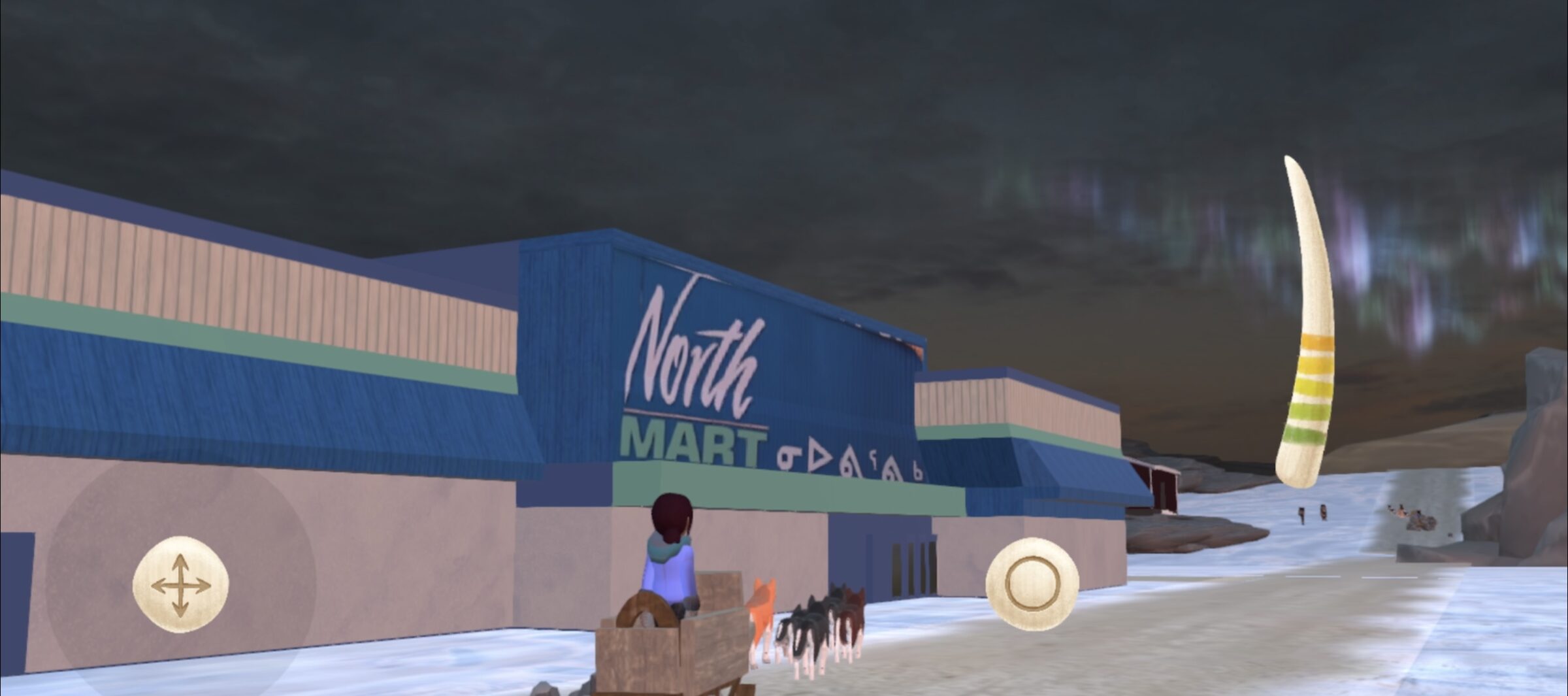
A screenshot from “Virtual Qaggiq” shows a quest in which the game’s protagonist, Alaasua, delivers ice to a Northmart. Developed by York University researchers with Inuit youth and cultural advisers, the mobile video game uses seven quests to teach mental wellness strategies through Inuit cultural activities. (Image courtesy of Virtual Qaggiq project)

When Letia Kalluk wrote her song Maana for a contest in the Northwest Territories, she did not know it would eventually be featured in a game that aims to improve the mental wellness of Inuit youth.
In Virtual Qaggiq, billed as the first Inuit-designed video game for mobile devices, the Inuktitut song plays alongside videos of elders.
“The lyrics go something like, ‘A wise man told me that you’re still young. You have a lot to live for. You haven’t seen the whole world yet,’” said Kalluk, who is from Arctic Bay, in an interview.
“It’s really good for [youth] to hear music in their own language. It’s been very fulfilling for me as an artist to contribute to that.”
York University researchers, Inuit youth and cultural advisers started developing the game in 2022.
It follows Alaasua, the main character, through seven quests that pair Inuit cultural activities with mental wellness strategies, said project co-ordinator Yogita Singh.
In one quest, mythical creatures tempt Alaasua to drink spoiled water while she gathers fresh water and ice. Players learn to resist the temptation and manage stress without turning to substance use, Singh said.

The soundtrack includes a rap track by Kinngait artist Iola Oshoweetok, a drumming instrumental by Kimmirut artist Leo Temela, and throat-singing tracks by Yellowknife duo Tiffany Kuliktana Ayalik and Kayley Inuksuk Mackay, also known as Piqsiq.
The game’s testing phase took place from October 2025 to July, with 276 Inuit youth from 21 communities in Nunavut and 16 other communities across Canada taking part, Singh said.
Participants completed a 39-question wellness questionnaire before and after playing, with in-person workshops held in Arctic Bay, Kinngait, Pangnirtung, Iqaluit, Baker Lake and Ottawa.
Others tested the game from home, Singh said.
“Youth felt they had learned strategies to help themselves cope better with negative thoughts, make themselves feel better and feel more comfortable asking for help, for example, when they feel a bad mood coming on,” said Yvonne Bohr, the project’s principal investigator at York University.
“Usually, it takes a while for lessons to sink in, but the fact that there were changes even right afterward is very encouraging,” she added.

Researchers also found no negative changes in participants’ wellness after playing the game.
Kalluk said she helped translate 12 interviews with elders from Arctic Bay, Kinngait, Baker Lake and Pangnirtung, which can be accessed by players in the digital qaggiq, or traditional meeting space within the game.
“There are a few videos that talk about fishing, going out hunting, as well as mental health aspects. An elder’s point of view is very important, and it’s important to have these kinds of resources readily available for youth,” said Kalluk.
The team is working to make the game available on iPads and is in discussion with the territorial Education Department about using it in schools.
Singh said the hope is to make Virtual Qaggiq available in early 2027 on iPhone and Android devices.

“It makes me feel very proud as an Inuk to be part of something like this, something so groundbreaking for our youth in Nunavut,” Kalluk said.
(0) Comments