


What you need to know about hydroelectricity and the Iqaluit hydro plant
Nunavut is 1 of 2 Canadian jurisdictions that doesn’t currently produce this type of energy
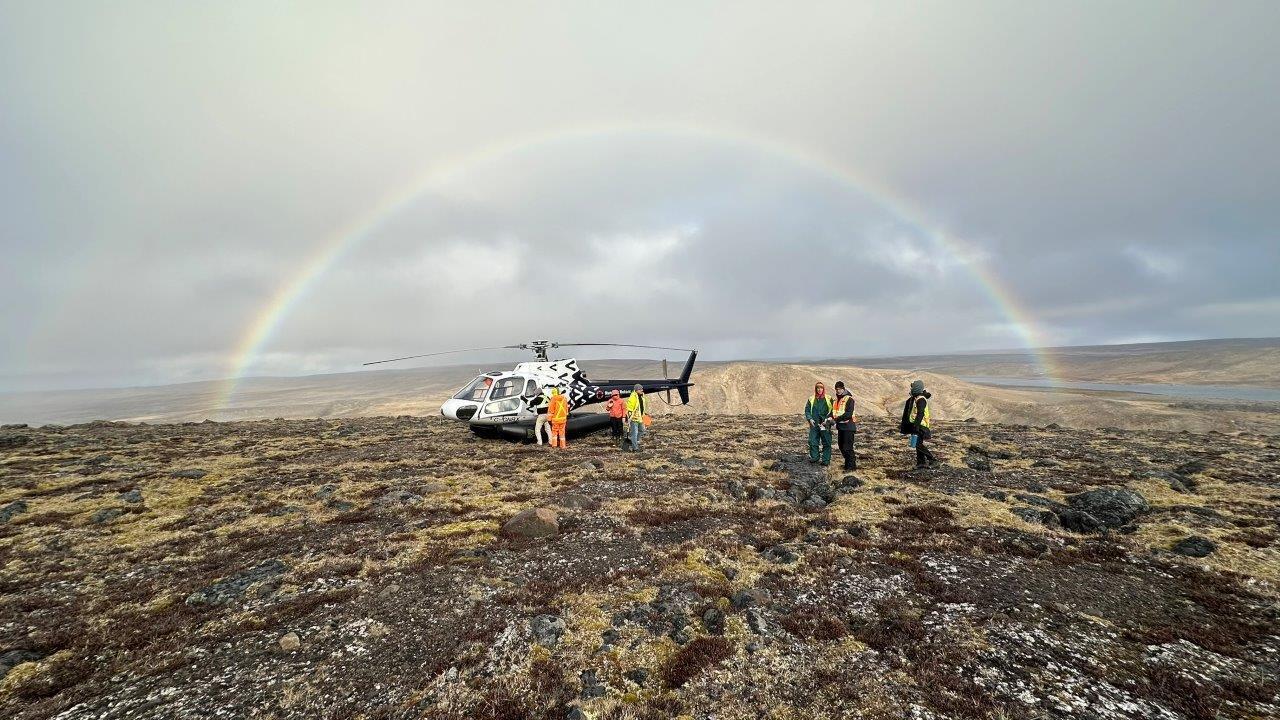
Proposed hydro project with a 50-metre-high dam and a powerhouse will be built along the Kuugaluk River, about 60 kilometres northeast of Iqaluit. (Photo courtesy of Nunavut Nukkiksautiit Corp.)

It’s official: Iqaluit’s $500-million hydroelectricity plant is a “major project.”

Nunavut Nukkiksautiit Corp.’s plan for a hydroelectricity plant near Iqaluit includes a dam and powerhouse and could replace diesel currently used to generate electricity. (Image courtesy of Nunavut Nukkiksautiit Corp.)
The Nunavut government and Nunavut Tunngavik Inc. identified it on their March “nation-building” wish list for the federal government.
On Thursday, Prime Minister Mark Carney and Crown-Indigenous Relations Minister Rebecca Alty announced the plant will be Nunavut’s first project to be referred to the Major Projects Office, which is set to speed up federal permitting.
That could see the plant operating by 2030.
That’s three years sooner than originally expected.
It will include a 50-metre-high dam and a powerhouse built along the Kuugaluk River, about 60 kilometres northeast of Iqaluit. It’s estimated the plant could generate 15 megawatts of electricity for about 100 years.

Now that the hydroelectricity plant is a step closer to eventually being completed, here’s what you need to know about the project and hydroelectricity itself.
What’s hydroelectricity?
It a renewable energy source that uses the force of moving or falling water to generate electricity.
Wouldn’t water freeze in winter?
Yes, but it doesn’t freeze to the full depth of the river, allowing the water to flow — and energy to be generated — all year around, the Iqaluit project plan says.
Who is building the Iqaluit power plant?

Nunavut Nukkiksautiit Corp. is a subsidiary of Qikiqtaaluk Corp., which is a business arm of Qikiqtani Inuit Association, the organization mandated to represent the rights of Qikiqtani Inuit.
The corporation inherited the project from Qulliq Energy Corp., the Nunavut government’s energy agency, in 2022.
Who will pay for it?
The federal government is expected to pick up most of the estimated $500-million price tag. It has already invested $26 million.
Some funding options include the $1-billion Arctic Infrastructure Fund that was introduced in the 2025 federal budget last week, or a loan from the Canada Infrastructure Bank.

What’s Iqaluit using now to generate electricity?
Like the rest of Nunavut, Iqaluit relies on imported diesel fuel. The city requires 15 million litres of diesel fuel per year for the 10 to 11 megawatts of electricity currently required.
The rest of the territory needs roughly 40 million litres of diesel a year for electricity.
Do other provinces and territories use hydroelectricity?
Yes. Nunavut is one of only two jurisdictions in Canada that doesn’t produce hydroelectricity along with Prince Edward Island, which generates 99 per cent of its own electricity through wind. But the majority of P.E.I.’s energy consumption (69 per cent) is imported from New Brunswick, which uses a mix of nuclear, diesel and hydroelectricity.
Overall, 60 per cent of Canada’s electricity is generated by hydro power with Manitoba, Quebec, and Newfoundland and Labrador typically generating over 85 per cent of their electricity from hydro, according to Canada Energy Regulator.
What about the other northern territories?
In 2021, Yukon generated 72 per cent of its electricity though hydro and the Northwest Territories 36 per cent.
What will happen to Iqaluit’s diesel power plant once the city moves to hydroelectricity?
That would be up to Qulliq Energy Corp., says Harry Flaherty, CEO of Nunavut Nukkiksautiit Corp.
But the power plant could remain in place in case of emergency or to be available when the hydro plant is down for maintenance, according to the Nukkiksautiit project plan.

Hydroelectricity uses the power of moving water to generate electricity. (Illustration courtesy of Nunavut Nukkiksautiit Corp.)
The questions you need to ask about the Iqaluit Hydroelectric project.
1) What scope of work is included in the $500M estimate?
2) When was the estimate generated and what timeframe was used for construction schedule and cost escalation?
3) What is the target reliability of the power supplied to the community? (In 2023-2024, QEC reported a 99.96 percent reliability rate across the territory, using diesel generation.) QEC’s decision to maintain back up power generation requirements would be based on the reliability of the Hydro plant and transmission line infrastructure.
4) What is the overall cost of power production from hydro over diesel over say 50 years?
Every body is a ” expert ”
All forms of power generation have some degree of environmental impacts. It would be helpful to know what the environmental impacts of hydroelectric power have been found to be elsewhere in Canada. Would any possible negative impacts of this proposed project impact on fish and water quality in Frobisher Bay, or would they impact fish and water quality in Cumberland Sound. If the latter, should people in Iqaluit care?
See I told you so trolls and keyboard warriors at it already about the fish,this has been going on for 20 years about hydro power in Iqaluit, provinces will be lined up to take this 500million,
Asking questions about this does not make one a troll. Hydroelectric dams in Canada have increased mercury levels in the environment by converting mercury in flooded soil and vegetation into highly toxic methylmercury, which then biomagnifies up the food chain. This process has lead to elevated mercury levels in fish, affecting the health of wildlife and humans, particularly Indigenous communities that rely on traditional diets. While the increase is often temporary, lasting years to decades depending on the reservoir, its effects have been a major concern, prompting research and management strategies by entities like Hydro-Québec. You may not be concerned by this, but hopefully NIRB will properly assess the level of risk from this.
The NIRB relies on Proponents to produce (and pay for) the environmental impact assessments and then invite people who can’t be bothered to either read these assessments or do a google search on similar projects to ask the same questions like these over and over again so that the NIRB can say, ‘welp. too much uncertainty from the public’ and tell the Minister no so that the NIRB continues to get more money for further assessments instead of doing the **hard** work of monitoring
Solar and wind are the lowest-cost, quickest-to-deploy, and most scalable clean-energy technologies. While investment
continues to flow into hydropower with its long lead times, high deployment costs, significant
methane emissions, declining water availability and ecologically damaging effects?
Henvey Inlet First Nation’s wind installation in northern Ontario is a stellar example to follow for smart, lucrative and effective projects, especially in remote areas with energy storage systems!
Hydro-Québec’s studies on methane emissions and methylmercury contamination in fish are misleading, not independent, and have consistently downplayed the environmental effects.
It’s easy to see why hydro companies would downplay the impact of mercury poisoning as a result of damming rivers. They have a vested interest in these projects going ahead, regardless of their impact. However, mercury poisoning changes lives, particularly for those who are dependent on fish as a source of sustenance.
Who is responsible for overseeing this and looking out for the interests and health of the communities downstream? Is there not a watchdog? Are the politicians not responsible (read liable) for the healthcare of people?
I wonder what impact burning 15 million litres of fuel each year has???
Coleson Cove Generating Station (NB) burns about 5M barrels/a = 800M Litres /a
QEC burns about 2% of this volume in Iqaluit.
Hydropower is well documented for its significant and ongoing adverse environmental effects resulting from its impoundments, diversions, and peaking operations. The resulting collateral damage has been well documented for decades, including the loss and serious decline of migratory fish species, declining biodiversity, impaired water quality, and elevated mercury concentrations in fish tissue.
Since 2019, the IPCC has recognized the significant GHG emissions, including methane, coming from hydro reservoirs and advised countries to include these emissions in their Annual GHG Inventories. Canada does claim GHG emissions from 57 reservoirs, but it is delinquent for not reporting on all its hydro reservoirs. It also only accounts for small portions of each of those reservoirs.
Hydro proponents claim their dams will last 100 years or more, meaning they will emit methane into the atmosphere daily until the dam is removed. The methane from these reservoirs can reach levels comparable to those from a gas-fired facility. You can turn off a gas-fired facility, but you can’t stop methane coming off a reservoir until the dam is removed.
Yes, hydropower in Canada accounts for 60% of our electricity mix, and that’s precisely why it stubbornly refuses to acknowledge its massive negative environmental effects.
How do we prepare for this as homeowners? Will we gave to pay to become compatible with the new system? Will this reduce my monthly fuel payments or will we pay more?
They say $500 million
Is that just for the hydro project
How about the road to get there how much will it cost how long will it take to build a road to where they want the hydro project
The diamond people who got a claim not to far from Iqaluit tryed to make a road there but it cost to much that’s how the town of Iqaluit end up with a road to nowhere
They’ll have to build a road all the way out there to construct this thing, right? A 60km road from the city is gonna be awesome for going on long car drives, camping, and maybe seeing some wildlife 🙂
Experience with other projects indicates there’s zero chance of this project coming in at less than a billion in 2025 dollars, and much more is likely.
Amortization of a billion dollars at 5 percent interest over 30 years will cost some combination of users and taxpayers $65 million annually. That compares with the cost of about $20 million annually for diesel currently consumed by the newly upgraded power plant. Who then will pay the additional $45 million for the project’s financing?
For many reasons reliance on hydro is the arctic is not risk-free. Some years ago the Con mine’s hydro plant serving Yellowknife failed in winter. Fortunately this was not the city’s only source of electricity.
How come we can never get the exact location, can we get the latitude and longitude of the project location? It’s always 60km NE of iqaluit but that’s just too vague.
64 11’12.1” N
68 01’14.4” W
Which is not 60 km. Just under 55 km
Federal means 500 million dollars of CANADIAN taxpayer money is being used. All of Canada is paying for this “Inuit project”. No talk of the colonialists here I notice.