


Youth leaders in Nunavik making their mark
A peek into where Nunavik’s future leadership might come from

With people between the ages of 15 and 35 making up about half of Nunavik’s Inuit population, there’s a lot of room for the region’s youth to take leadership roles. Tiivi Tullaugak, left, Olivia Ikey, centre, and Tukai Agualk are three who have shown leadership potential already and are leading change in their communities. (Photo courtesy of Jade Duchesneau Bernier/Kativik Ilisarniliriniq; Olivia Ikey, Tivi Tillaugak)
Youth make up one of the biggest groups in Nunavik. About 50 per cent of the region’s Inuit population is between the ages of 15 and 35, according to the 2021 census.
And despite their young age, late millennials and Gen Z Nunavik Inuit are showing leadership and impacting their homeland’s day-to-day political and social life.
As part of the Qarjuit Youth Council, Nunavik youth are represented at Inuit Tapiriit Kanatami’s National Inuit Youth Council and at the annual “Force Jeunesse” events at the National Assembly of Quebec, voicing Inuit concerns on the provincial level.
The Youth Council also provides a $150,000 grant to support youth-led projects. It has previously funded initiatives such as throat singing courses in Puvirnituq, a cultural trip to Toronto for Quaqtaq students, and a dogsledding tour in Inukjuak.
There are also programs like “YES Nunavik,” funded by the Kativik Regional Government that offer information and resources for young job-hunting Nunavimmiut.
Here are some Nunavik youth who have demonstrated leadership, made a difference and are continuing their work to lead change in their community.

Tiivi Tullaugak, 18
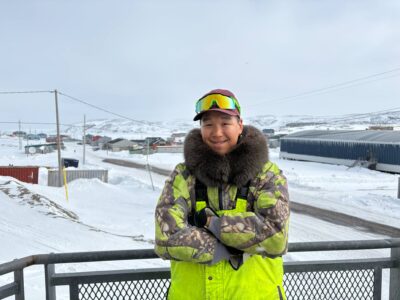
Tiivi Tullaugak (Courtesy of Tiivi Tullaugak)
When Tiivi Tullaugak woke up on the morning of April 28, he was shaking with excitement. For the first time in his life, the Ivujivik resident was about to vote in a federal election.
But he learned that the election workers were running late, and soon it became obvious that the polls wouldn’t be opening in the community.
Tullaugak was once again shaking, now with disappointment and anger. He was denied his constitutional right, he said.
Soon after Liberal Mandy Gull-Masty was confirmed as the riding’s new member of Parliament, Tullaugak submitted a formal complaint to Elections Canada.

He never got a response, but to him it was important to “stand up” for his community, he said.
To Tullaugak, the story served as an example of how Nunavik Inuit are often neglected by different levels of government.
Yet, Tullaugak says he hopes one day to become part of Nunavik’s governance, whether with the Government of Canada, the Government of Quebec or Makivvik Corp., the Inuit rights-holding organization in Nunavik.
“I just want to work to help my community,” he said.

Olivia Ikey, 36
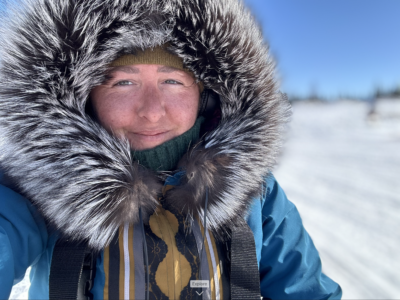
Olivia Ikey (Photo courtesy of Olivia Ikey)
Olivia Ikey has worked in politics for years. She was the vice president of Qarjuit Youth Council, and she worked on Inuit advisory committees and participated in self-determination task forces.
“I was living extravagantly in fancy hotels, having mocktails in two-bedroom hotel rooms while my community was suffering,” she said.
“I am a leader, but I switched to the arts. I’m going to enact change through art.”
A writer and an Inuit knowledge consultant in Quebec, Ikey is a long-time advocate for the return of traditional Inuit names.
Names are more than just a bunch of letters on a driver’s licence – it’s a connection to the Inuit culture that governments have long tried to take away from them, she said.
Ikey is now working on a documentary about the return of Inuit names, called Inuguinq, which can be translated from Inuktitut as “creating a whole and capable human being,” she said.
Tukai Augiak, 20

Tukai-Augiak (ourtesy of Kativik Ilisarniliriniq_Jade Duchesneau Bernier)
Tukai Augiak is a person of international experience. As a high school student in Kuujjuaq and later a graduate of Nunavik Sivunitsavut, he spent time in Montreal, Nova Scotia and the Gaspé Peninsula.
Now, he is embarking on a new journey as an international relations student in the Forward College’s bachelor’s program, which will take him to Portugal, France and Germany, where he will live as part of his studies.
Once his studies are complete, Augiak wants to come back home to Nunavik to help his community battle issues like alcoholism and other “byproducts of colonialism.”
“I want to show that we have the strength to be able to do whatever we put our minds to,” he said.
This article is part of Nunatsiaq News’ commemoration of the 50th anniversary of the signing of the James Bay and Northern Quebec Agreement in 1975.

This project has been made possible in part by the Government of Canada.
Its not famous to encourage these youth to continue with a fully educational life, rather than having qualifications lesser than counterparts in Quebec and canada. People are arguing that its more about an over all measure rather than just a degree of sorts. Well, i understand that to a point and theres still less qualified workers from Nunavik in that position. These less educated nunavik grads are not qualified to work outside of Nunavik and will not benefit from support that comes only with proper education. You can like that or disagree, but fact is you are accepting less as by the standards, thats it. Real fundamental and research base are essential to growth, and if you have less or no qualifications, full employment in the systems are not possible. Ok, what are we supposed to do , create our own separate system of qualifications that work only for nunavik? I don’t think it going to work.