


Group to consult in Iqaluit on residential school archive centre
National centre at University of Manitoba holds vast storehouse of historical material
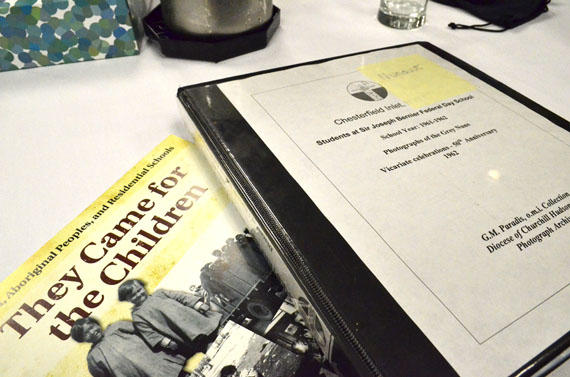
A binder full of photographs from the Joseph Bernier school in Chesterfield Inlet covering the 1961-1962 school year that was on display at the Delta Hotel in Ottawa during the Truth and Reconciliation Commission’s closing events this past May and June. The National Centre for Truth and Reconciliation at the University of Manitoba will hold millions of documents, records and photos related to the history of residential schools. (PHOTO BY JIM BELL)
People from the National Centre for Truth and Reconciliation, an archival institution housed at the University of Manitoba, will visit Iqaluit Sept. 29 to ask for opinions on how their collection should be managed and presented.
“We want to hear your thoughts. Together, we will build your centre in a good way,” the NCTR said in a public announcement.
In 2013, the Truth and Reconciliation Commission chose the University of Manitoba as a base for storing a huge collection of archival materials related to the history of Aboriginal residential schools in Canada.
The collection includes the TRC’s own research collection: thousands of hours of survivor statements, the TRC’s own reports and publications, and video footage from various TRC hearings and public events.
In addition, there are millions of records from federal government departments and Library and Archives Canada, including residential school admission records, school histories, administration records, photos and maps, plans, and drawings.
Various churches have contributed student records, photos, school newsletters, cemetery records, religious records and administrative records.
The materials fall into three categories to protect the privacy of people who made intimate and sensitive admissions about abuse at residential school: public records, redacted records and restricted records.
Meanwhile, the NCTR is digitizing records and putting public and redacted records online “as time and resources permit,” the organization says.
Jennifer Watkins, the director of Inuit Values and Practices at the Nunavik Regional Board of Health and Social Services in Kuujjuaq, is a member of the centre’s governing circle.
The Sept. 29 sessions in Iqaluit will take place at the Nunavut Arctic College campus, room 124.
The morning session, from 9 p.m. until noon, will be devoted to the thoughts of survivors.
The afternoon session, from 1 p.m. until 4 p.m., will be devoted to inter-generational participants.

(0) Comments