


Algonquin College launches new Indigenous studies programs
Algonquin College’s Ottawa campus launches a one-year certificate and two-year diploma in Indigenous studies
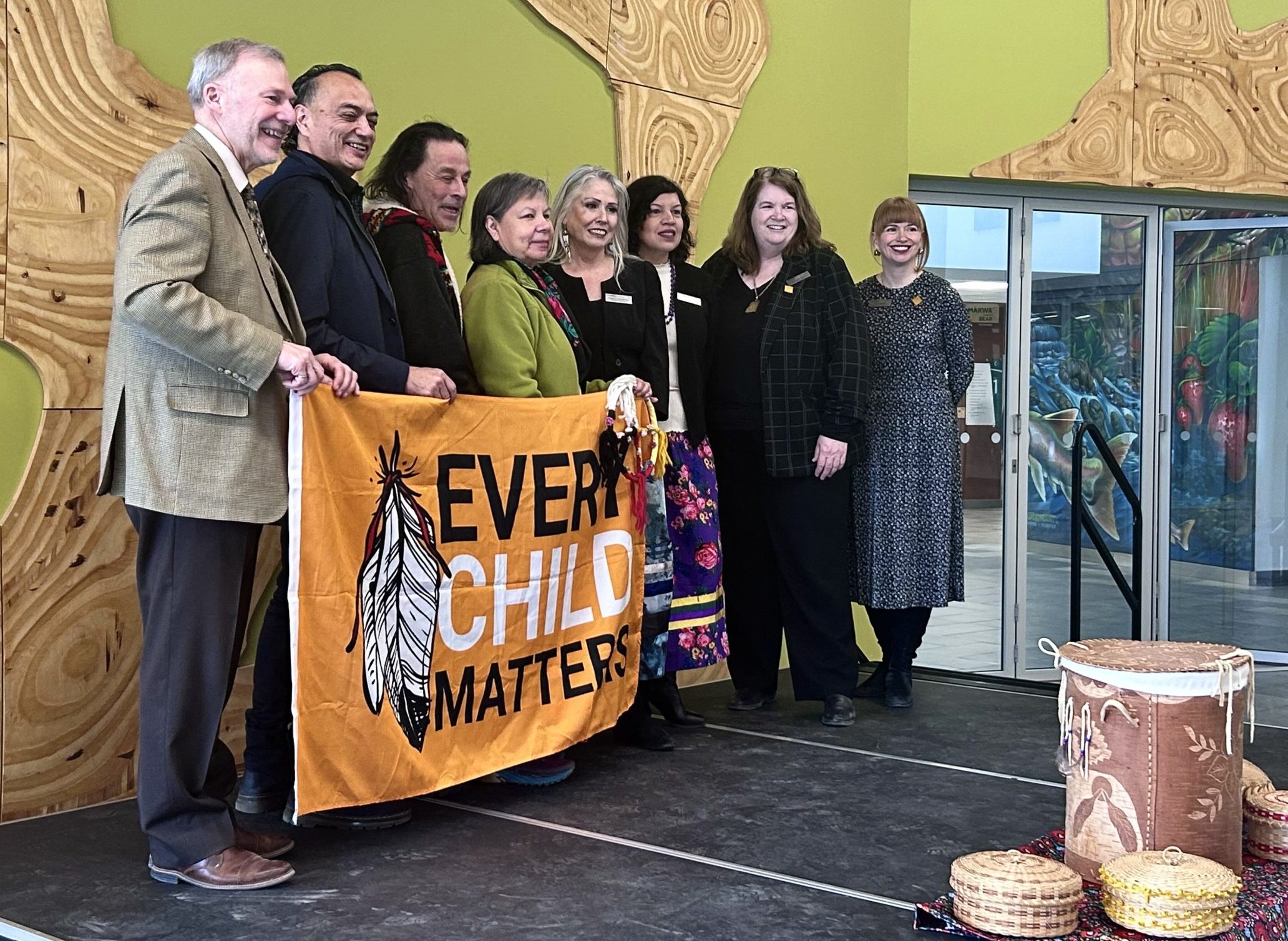
(From left to right): Algonquin College President Claude Brulé, Kitigan Zibi Anishinabeg council member Douglas Odjick, Tony Quedent and Shirley Commanda, Indigenous Studies program coordinator Marina Westbrook, Faculty of Arts, Media and Design dean Heather Ryall, and Indigenous Studies chairperson Tracy Norris on stage at the March 31 launch of the Ottawa campus’ Indigenous studies diploma and certificate program for the fall semester. (Photo by Nehaa Bimal)

Algonquin College is launching two new Indigenous studies programs aimed at equipping Indigenous students with cultural knowledge, giving them leadership skills or setting them on the path to further studies.
The college in Ottawa announced Monday the new programs will begin this fall.
“These new programs offer pathways into other academic programs at Algonquin College, bridge opportunities to degree programs at Ontario universities and build transferable skills that support an array of businesses and organizations implementing the Truth and Reconciliation Commission’s Calls to Action,” college president Claude Brulé said.
Brulé made the announcement Monday in the Nawapon meeting space — the Algonquin term for the college’s learning common area — at the college’s Ottawa campus.
The new offerings include a one-year Indigenous studies foundation – Inuit, Métis, and First Nations certificate and a two-year Indigenous studies diploma. These programs replace the previous Aboriginal studies program.
Brulé noted that the Ontario college system has not previously offered diploma programs specifically designed for Indigenous youth.
The diploma program will prepare graduates for careers in social services, advocacy, governance, education, community development, and business, he said.
The two-year Indigenous studies diploma will offer courses covering topics such as Indigenous health and wellness, governance, languages, legal traditions, land-based learning, and environmental stewardship.
The program also includes a final-year research seminar where students will create culminating projects in creative arts, multimedia presentations, performances, or written and spoken expression.
Graduates from the one-year Indigenous studies foundations certificate, which shares many of the same electives, may enter the diploma program in its second year, receiving credit for their first-year studies.
Tuition fees for the Indigenous Studies diploma are estimated at $4,120.75 for the total duration of the program, while the Indigenous Studies Foundation – Inuit, Métis, and First Nations certificate tuition is approximately $4,060.44. These estimates are based on the college’s online tuition and fees estimator.
Marina Westbrook, professor and program director of Indigenous studies at Algonquin College, said the curriculum was developed to ensure that the courses reflect Indigenous ways of knowing.
“These programs feature subjects and learning approaches that reflect Indigenous pedagogy and indigenization of curriculum that meets what students need and want in 2025 and beyond,” said Westbrook.
Both programs have placed a strong emphasis on arts and cultural expression, with courses on Indigenous music, dance, and theatre, she said.
The event also marked National Indigenous Languages Day, with both programs offering foundational Indigenous language courses.
“Language is a human right, and students will justify the urgency of protecting Indigenous languages around the world,” Westbrook said.
The diploma program will allow students to learn or strengthen their fluency in Indigenous languages such as Inuktitut or Algonquin, Westbrook said.
There are currently 12 faculty members in the college’s Indigenous studies program, with efforts underway to “double” that number, Westbrook said.
The programs will primarily be delivered in person, though online options remain available for students who are unable to be on campus.
Applications for the new Indigenous Studies programs are now open for the September intake.
Can’t find an exception to the rule:
“If a program has “Studies” in its description it is both wasteful and pretentious”
Who are you quoting, S, yourself?
This is a great news! Maybe the RCMP Cadets that will be transferred to Nunavut could also take this course, there has been many talks of RCMP Cadets not having a awareness of the Arctic once they get into the force, This would be a great introduction for them Officers before they get up to the North!
Does that mean the N.S. thing in Ottawa is no longer needed?
Good idea.
No?
That would save the tax paying citizens funds and use it for productive stuff.
Question is…
Would applicants from Nunavut “high school” be able to pass basic entrance exams?