

UN food rights envoy available at webcast event in Iqaluit
Olivier De Schutter webinar March 4, 11:30 a.m. to 1:30 p.m. at Astro Theatre
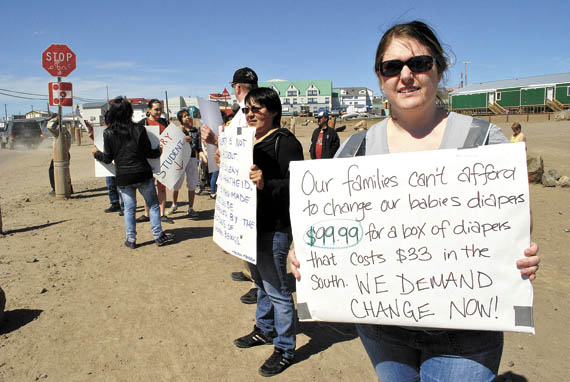
Food price protestors stand across the street from Iqaluit’s Northmart store last August. (FILE PHOTO)
Iqaluit residents interested in a recent report on food security by Olivier De Schutter, the United Nations’ special rapporteur on the right to food, may listen to De Schutter via the internet March 4, from 11:30 a.m. to 1:30 p.m. at the Astro Theatre in Iqaluit.
De Schutter will also bring his findings to the UN Human Rights Council on March 4.
Nunavut Tunngavik Inc. will host a live interactive webinar at the Astro, where De Schutter will discuss his findings and answer questions from communities across Canada.
De Schutter visited Canada May 6 to May 12, 2012.
His report, which was released last December, said that aboriginal populations living off reserves “confront increased food insecurity in comparison to the average Canada household.”
De Schutter said he was “disconcerted by the deep and severe food insecurity” that he found.

There are programs, he said, but “they fall short, however of what the urgency of the situation requires.”
Among his recommendations: more scrutiny of Nutrition North to make sure the subsidy aimed at offsetting the high cost of nutritional food in the North is passed to consumers.
De Schutter said Nurtrition North seems to be “implemented without an inclusive and transparent process” and that “more needs to be done to improve the effectiveness of Nutrition North.
De Schutter also said Canada needs a national food strategy “for the realization of the right to food,” which he said is a human right.
His recommendations include improving access to country foods and increasing social assistance and minimum wage levels so that all Canadians can afford to eat well.
Researchers who worked on the 2007 Qanuippitali health survey in Nunavut said the percentage of Nunavummiut who experience a lack of food during the year is seven times higher than the national average, their survey found.
Of 1,038 randomly selected households, seven in 10 ran short of food and four in 10 experienced a “severe” lack of food over the course of a year.
Six in 10 households had hunters in their families and shared country food.
But many households had no regular source of country food and were obliged to rely on friends and family for country food supplies.
Lack of money stopped them from buying store-bought food, the survey found.
Data from the 2006 Canada census found that 39 per cent of Nunavut children experienced food insecurity because their family ran out of food or money to buy food at least once during the year.

Thirty per cent of Inuit children nationwide experienced hunger at some point during 2006.
After his tour and consultations with a variety of groups, including Inuit Tapiriit Kanatami, De Schutter called for a “structural approach to tackling the socio-economic and cultural barriers” that keep people from eating well.
De Schutter said in his May 16 “end of mission” statement that “Canada is in need of a national right to food strategy.”
“Many aboriginal communities expressed concerns regarding federal government policies that have disrupted and, in some cases, devastated the traditional practices of indigenous people, including through removing control over land and natural resources,” he said.
After its presentation to the council March 4, De Schutter’s final report will form part of Canada’s official international human rights record.
(0) Comments