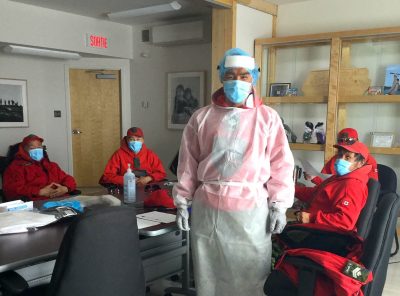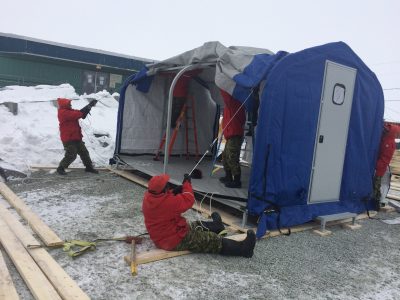
Canadian Rangers are seen recently setting up tents in Inukjuak to help health-care workers conduct COVID-19 screening and testing apart from other health services, to help prevent the spread of the disease. Each of Nunavik’s communities is receiving two such tents, according to the Nunavik Regional Board of Health and Social Services. (Photo courtesy of the NRBHSS/Facebook)
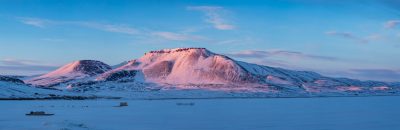
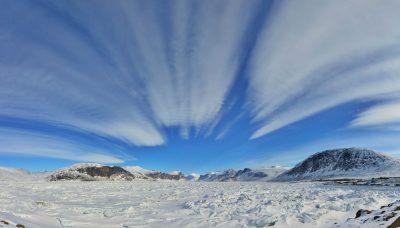
Wispy high clouds line the vivid blue skies over Pangnirtung and its fiord, and Mount Duval, on April 6. (Photo by David Kilabuk)
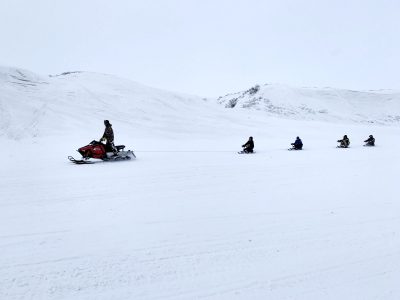
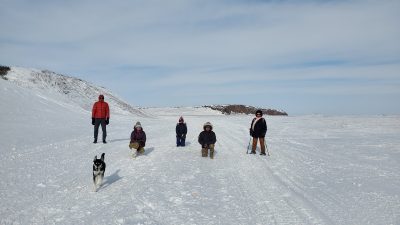
Tajko Redden took this photo of a snowmobiler towing passengers on sleds, each socially distanced from the others, when he was out walking on the Coppermine River near Kugluktuk on April 15. (Photo by T. Redden)
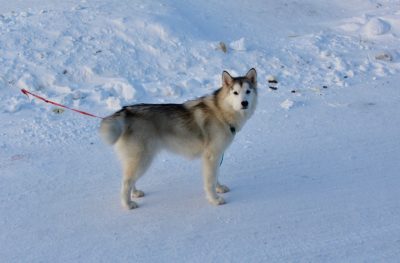
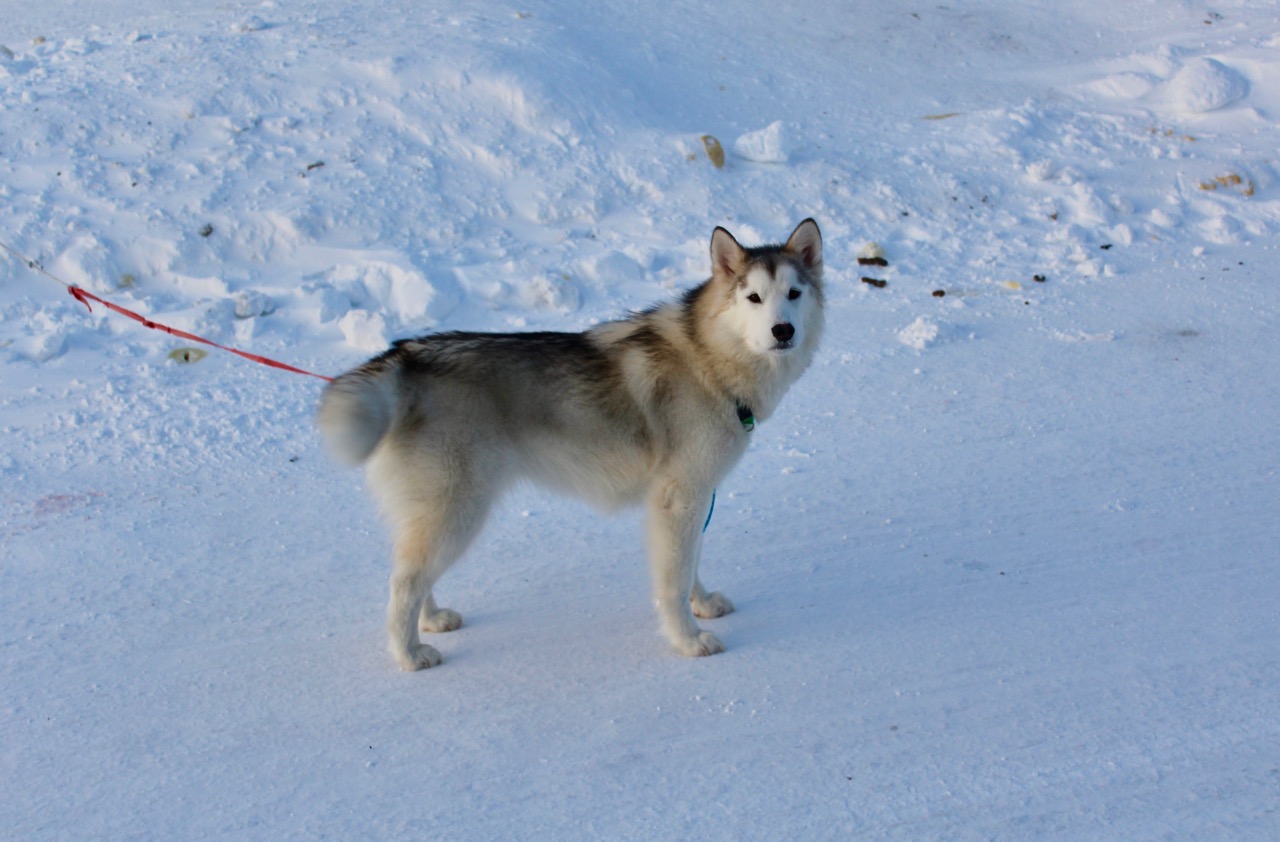
A dog hangs out on a sunny evening in Resolute Bay on March 15. (Photo by Emma Tranter)
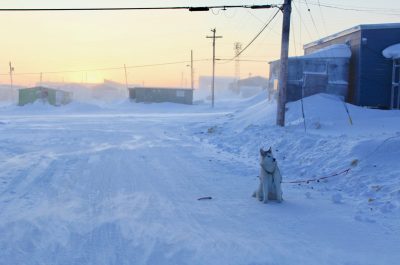
A dog hangs out on a windy evening in Resolute Bay while the sun sets in the background. (Photo by Emma Tranter)
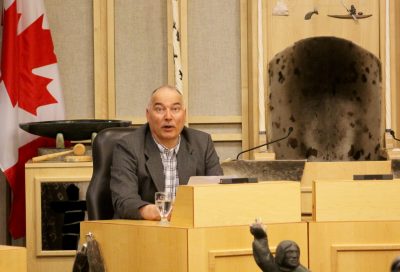
Speaking at a news conference earlier today, deputy premier David Akeeagok tells reporters that all Nunavut Arctic College campuses and facilities are closed until the fall. “Students with families can remain in Nunavut Arctic College’s family residence. The Nunavut Arctic College program heads and instructors will be in touch with their students directly about if and how their program will continue,” he said. The Government of Nunavut has also launched a new self-assessment tool for COVID-19 in Inuktitut, Inuinnaqtun, English and French. You can access the tool at nu.thrive.health/covid19. “The purpose of this self-assessment tool is to provide Nunavummiut with real-time information and recommendations based on self-reported symptoms or recent travel history,” said Dr. Michael Patterson, Nunavut’s chief public health officer. (Photo by Emma Tranter)
nu.thrive.health/covid19. “The purpose of this self-assessment tool is to provide Nunavummiut with real-time information and recommendations based on self-reported symptoms or recent travel history,” said Dr. Michael Patterson, Nunavut’s chief public health officer. (Photo by Emma Tranter)">
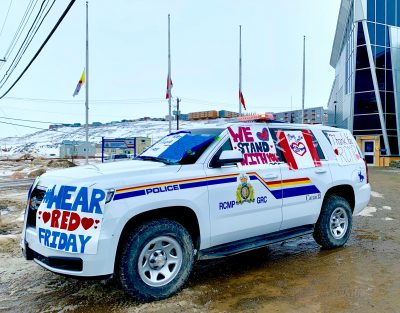
An Iqaluit RCMP vehicle decorated with messages of support for Nova Scotia and for police officers flashes its lights outside the Iqaluit RCMP headquarters on Friday, April 24. The National Police Federation asked Canadians to take part in a National Day of Mourning on Friday and wear red as a tribute to the victims of the mass shooting that left at least 22 people dead in the province last weekend. A virtual vigil for the victims will air tonight at 6 p.m. eastern time. Vigils are also being held across the country. (Photo by Emma Tranter)
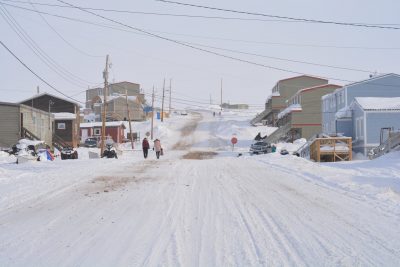
This group took a social distancing hike about one kilometre outside Kugluktuk along the mighty Coppermine River on Easter Sunday. (Photo by Olivier Forbes-Bouillon)
Allen Gordon spotted these ptarmigans hanging out on a snowbank in Kuujjuaq on Tuesday, April 21. (Photo by Allen Gordon)
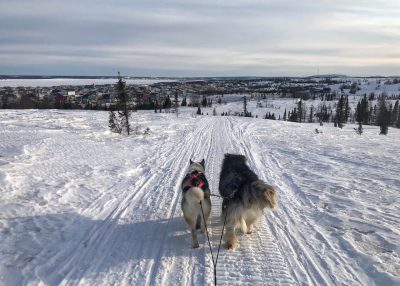
Isabelle Dubois took this photo while on a dogsled trip with her two huskies, Sarila (left) and Balto Jr., outside Kuujjuaq on Monday, April 13. She says she’s been enjoying these trips this spring, “either alone or with my daughter, all the while respecting our social distancing measures with others.” (Photo by Isabelle Dubois)
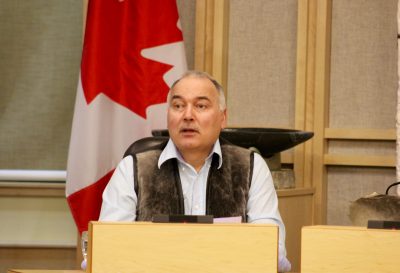
Through the Nunavut Development Corp., the Government of Nunavut is funding seamstresses to make 5,000 masks for elders, residents with underlying health conditions and non-medical first responders like firefighters. “At least 500 have been set aside immediately for our air travellers to comply with Transport Canada’s new requirements for travellers,” Premier Joe Savikataaq said at a news conference on Wednesday, April 22. The masks will be made of cotton and will be washable, reusable and made according to national standards and guidelines. The masks are not meant to replace other preventive measures like social distancing and hand washing, Savikataaq said. How-to instructions are also being developed so people can sew their own masks. There are still no confirmed cases of COVID-19 in Nunavut. (File photo)
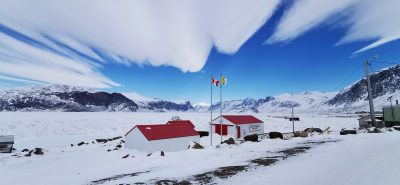
David Kilabuk used a wide-angle lens on his phone to capture this image in 2020 of land, sea ice and sky looking toward Auyuittuq National Park from Pangnirtung, with the Hudson’s Bay Co. buildings in the foreground. (File photo by David Kilabuk, special to Nunatsiaq News)
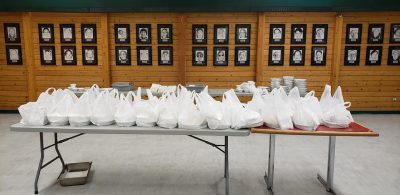
Meal bags await people in the Luke Novoligak Community Hall in Cambridge Bay, where the municipality now prepares 150 meals from Monday to Friday as part of its “Food for the Soul” program. For the program, Cambridge Bay’s department of healthy living hired two chefs who found themselves unemployed due to COVID-19 closures. They now work in the hall’s commercial kitchen, where, with help from municipal workers, they produce 150 packaged dinners, which include a main course, salad and dessert. These are delivered by volunteers to elders and people in isolation in this western Nunavut community of about 1,800. Cambridge Bay pays for the program with $90,000 from the Government of Nunavut and Nunavut Tunngavik Inc. “We’re going to run it until the money runs out, and we’re also pumping up the food bank so people on the weekends can get stuff from the food bank and make their own meal. Everyone gets a meal a day,” said Cambridge Bay SAO Marla Limousin. (Photo courtesy of the Municipality of Cambridge Bay)
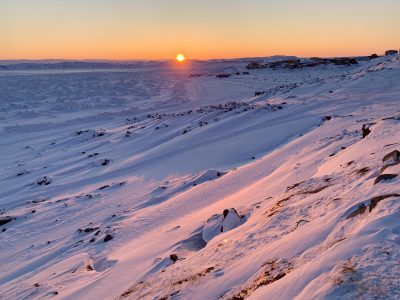
As spring approaches, the days grow longer in Nunavut. This sunset is seen from the Apex trail in Iqaluit on March 29 around 7 p.m. (Photo by Emma Tranter)
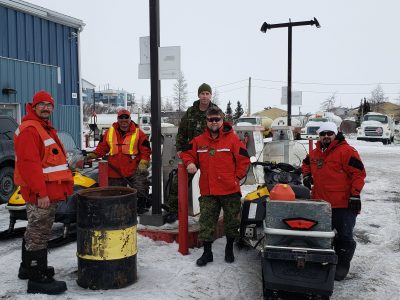
Kuujjuaq’s Canadian Ranger patrol prepares to head out around town to help out during the COVID-19 pandemic. From left: Master Cpl. Angma, warrant officer McElligot, Master Cpl. Hubloo, Sgt. Berthe, Cpl. Epoo. (Photo courtesy of the Department of National Defence)

Speaking at a news conference on Monday, April 20, Nunavut Premier Joe Savikataaq announced $2 million for the territory’s hamlets to help cover expenses incurred as a result of the COVID-19 pandemic. The money will go toward things like materials and supplies, additional janitorial and custodial staff, COVID-19-related signage, information and translation, lost revenue from facility closures, increased bylaw and patrol officers and increased residential water delivery and garbage pickup. “This funding will help them ensure that they are able to make sacrifices in other areas.” Municipalities can contact their CGS regional community development office for more information, Savikataaq said. In response to Transport Canada’s recent announcement that all airline passengers are now required to wear masks, Savikataaq also said the Government of Nunavut is working with airlines to ensure all “passengers have access to masks so they can fly safely.” There are still no confirmed cases of COVID-19 in Nunavut. To date, 453 people in the territory have been tested for COVID-19, with 201 negative results and 252 awaiting results. (File photo)
Resolute Bay has four presumptive cases of COVID-19. Until now, it was one of the few communities in Nunavut where the virus had not been detected. (File photo by Emma Tranter)
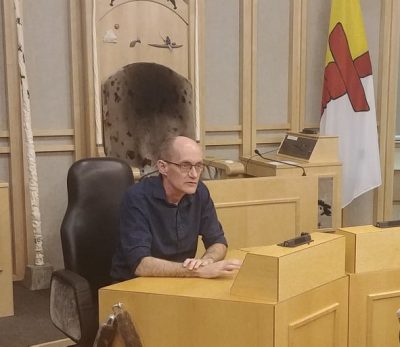
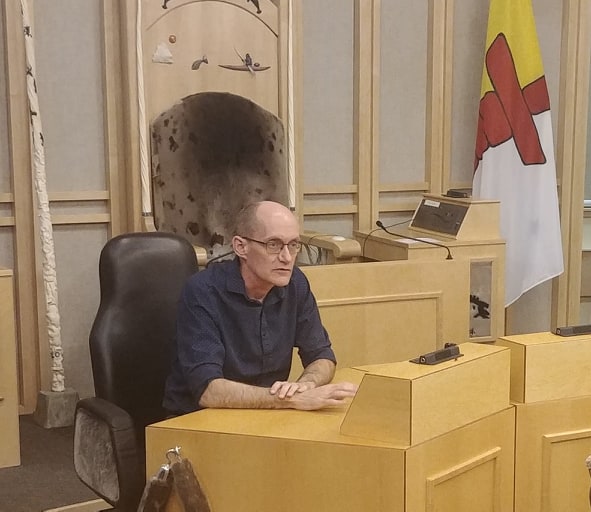
Hezakiah Oshutapik, mayor of Pangnirtung and former member of Nunavut’s legislative assembly, passed away suddenly over the weekend, according to a note of condolence from the assembly’s Speaker, MLA Paul Quassa. Oshutapik, who was 63, made numerous contributions to his community, including his role with the Canadian Rangers. He’s pictured here on York Sound, near the mouth of Frobisher Bay, in 2014, as part of the Canadian Forces annual mock disaster exercise under Operation Nanook. Oshutapik was a master corporal of the 1st Canadian Ranger Patrol Group. “On behalf of all members of the legislative assembly, we extend our condolences to his family and the community,” wrote Quassa. (Photo courtesy of Joint Task Force North)
“Social distancing at its finest,” writes Shawn Jeffrey Burke, who took this shot at a friend’s cabin outside of Iqaluit last weekend. (Photo courtesy of Shawn Jeffrey Burke)
Nunavut classrooms will remain closed for the rest of the school year because of the COVID-19 pandemic, Education Minister David Joanasie announced on Friday, April 17. The cancellation of classes makes it even more important for Nunavut teachers to return to schools by April 21, to create support packages for students, Joanasie said. Teachers will check in weekly with families to provide support by phone, email, text or “other online portals,” he said. Teachers will do end-of-year assessments, including report cards, based on work completed before schools closed on March 17, said Joanasie. Final exams for high school students are cancelled and students’ grades will be based on course work done before schools closed. School work done at home for the rest of the year is for “continuity of learning and literacy,” Joanasie said. (Photo by Meagan Deuling)
Betsy Mae Gordon and her partner Sandy Kooktook made this rainbow heart together with their children, Lucianna, three, and her little brother, Samuili, two, on April 1, as part of the Northern Village of Kuujjuaq’s recreation department’s “Let’s Rec up this Isolation” initiative, which provides a new challenge or activities to do each day from home during the COVID-19 pandemic. (Photo by Betsy Mae Gordon)
George Kauki with Kuujjuaq’s Pinguatitsijingiit Recreation Committee delivers bingo cards to a household for a free community bingo game broadcast over the radio on Easter Monday. Prizes included a 75-inch TV, a helicopter ride, a generator, a flat-bed trailer, 45 gallons of gas and more. Kauki also arrived bearing gifts, like sleds, for children. (Photo courtesy of Isabelle Dubois)
Last week’s full moon was photographed in all its splendour by Clare Kines in Arctic Bay. (Photo by C. Kines)
Travis Kines took this photo of Arctic Bay at around 10:30 p.m. on April 6 from the top of King George V Mountain. (Photo by T. Kines)