Saralynn Gadbois paints a rainbow on the window of her home in Kuujjuaq. Throughout Quebec, you see can similar rainbows, saying, “Everything will be alright” or “Ça va bien aller,” drawn by children who are not in school due to COVID-19 restrictions. This rainbow is “for everyone in this world fighting the virus,” Saralynn said. (Photo courtesy of Ina Gadbois)
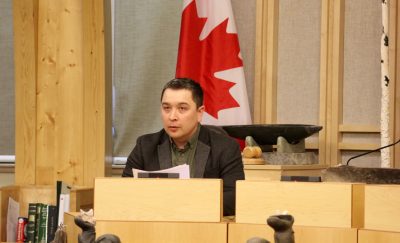
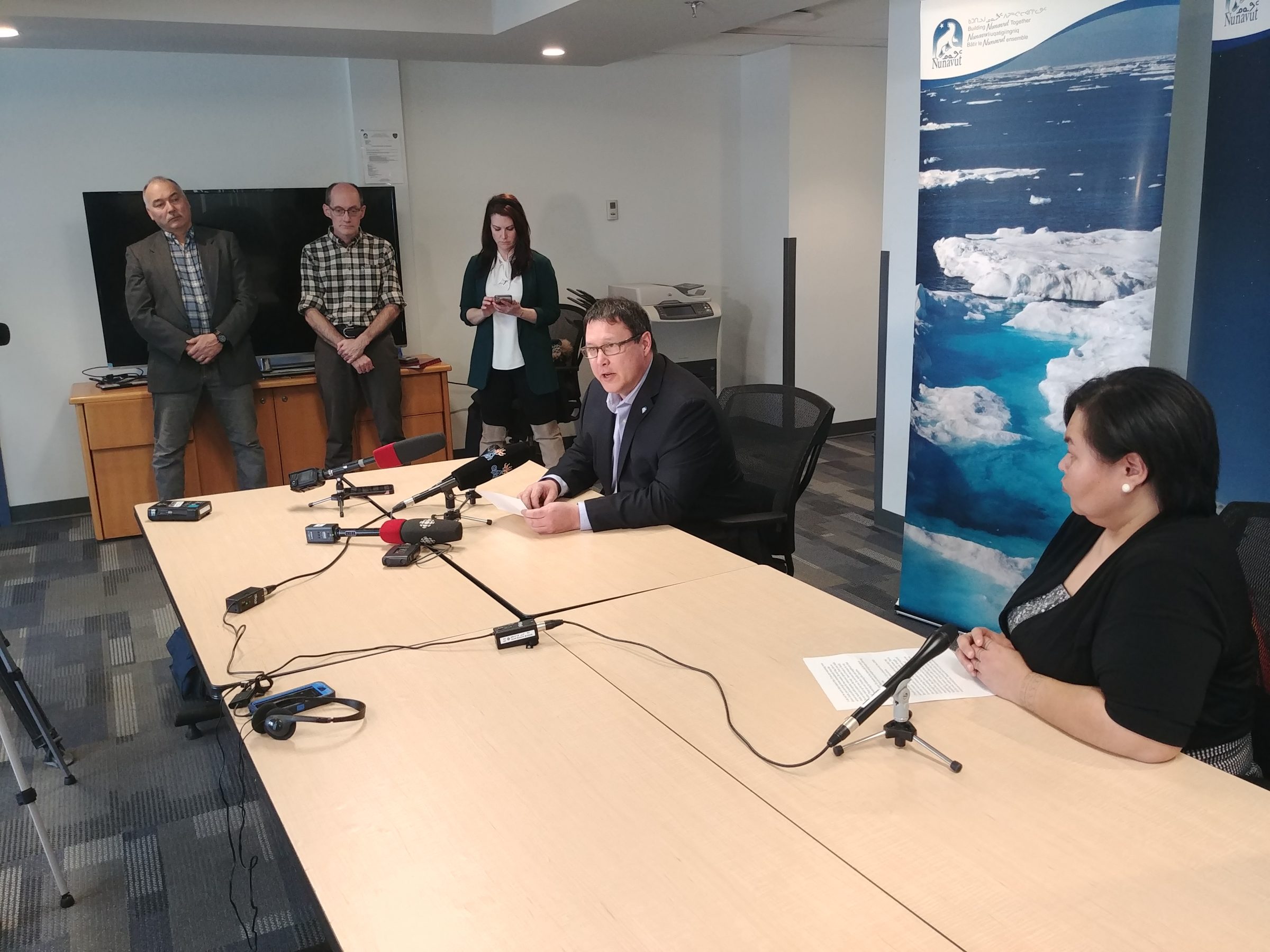
Nunavut’s schools and daycares will stay closed at least until April 20 to help prevent the spread of COVID-19, Education Minister David Joanasie announced at a daily COVID-19 news conference today. The government originally planned to leave schools shut until April 7. Joanasie said the closure would be reassessed on April 20. The Department of Education has also launched a learn-at-home website, angirrami.com. “This website offers free access to some of the same educational resources used in our schools,” Joanasie said. The website offers e-books, audio-books and videos, Joanasie said. Links to the department’s Inuktut-language learning apps will also be available on the website. New resources will be regularly added. (Photo by Emma Tranter)
 angirrami.com
. “This website offers free access to some of the same educational resources used in our schools,” Joanasie said. The website offers e-books, audio-books and videos, Joanasie said. Links to the department’s Inuktut-language learning apps will also be available on the website. New resources will be regularly added. (Photo by Emma Tranter)">
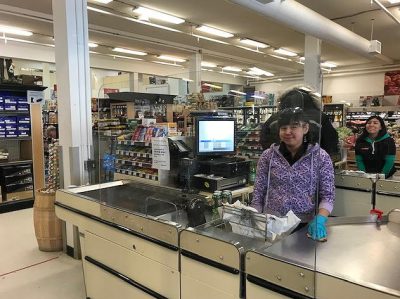
Arctic Ventures in Iqaluit has installed plexiglass shields at its registers to help protect its workers from COVID-19. “For the safety of the community and our hardworking staff we’ve taken safety to the next level!” the store said in a social media posting. (Photo courtesy of Arctic Ventures)
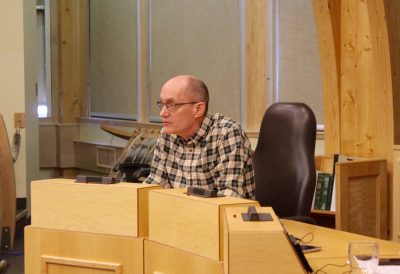
Nunavut’s chief medical officer, Michael Patterson, asks out-of-territory residents who must self-isolate in southern Canada before returning home to be patient and calm when dealing with government officials and hotel workers. “There is no excuse for violent or cruel behaviour,” Patterson said at a news conference on Monday, March 30. The Government of Nunavut is also putting in place a mandatory self-isolation order, under Nunavut’s Public Health Act, for people with symptoms who are considered under investigation, effective tomorrow, March 31. (Photo by Emma Tranter)
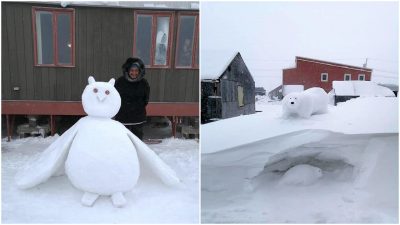
Here are two terrific snow sculptures from Arviat, where the hamlet organized a community-wide competition this past weekend to get everyone out of their houses, while respecting COVID-19 social distancing measures. The large owl was created by Thomas Aniksak (also in the photo), and Angie Curley built the polar bear over a seal hole. (Photo courtesy of the Hamlet of Arviat)
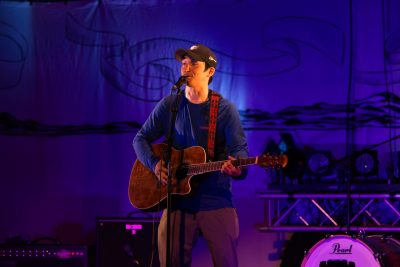
The Alianait Arts Festival may have cancelled two pre-festival concerts and delayed its festival due to the COVID-19 pandemic, but a few shows will still go on—online. Organizers now say they will present a virtual concert and workshop series, in partnership with Nunavut’s Department of Economic Development and Transportation. The first show will air tonight, on Friday, March 27, at 7 p.m. EST, featuring Lazarus Qattalik. You can tune in on the Alianait Arts Festival Facebook page at www.facebook.com/alianait. (Photo courtesy of Alianait)
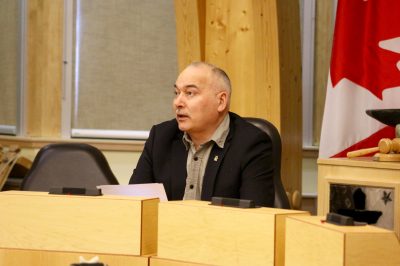
There are still no confirmed cases of COVID-19 in Nunavut, Premier Joe Savikataaq said at a news conference on Thursday, March 26. Savikataaq reminded all Nunavummiut to continue practising social distancing and self-isolation. Those wishing to return to the territory from other jurisdictions in Canada must isolate for 14 days in one of four designated hotels in the south, while critical employees can apply to return right away. Anyone wishing to return must contact CPHOTravelRequests@gov.nu.ca to make travel and isolation arrangements. As of today, 161 people have applied to return to Nunavut as critical workers, while 145 people have applied to return as residents. Health Minister George Hickes also urged Nunavummiut to be patient with civil servants helping them get home. (Photo by Emma Tranter)
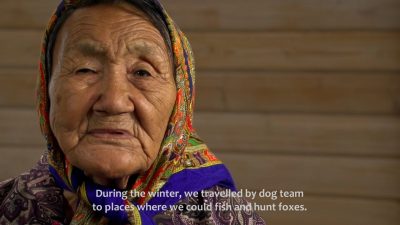
A mini-documentary about Canada’s forcible relocation of the Ahiarmiut from their homelands in the mid-1950s is now available on YouTube. The Ahiarmiut: Out-of-the-Way Dwellers is produced by Friends of Canadian Broadcasting as part of their Tell Our Stories project. The film tells the story of the Ahiarmiut in the words of Ayaaq (Mary) Anowtalik and David Serkoak. It’s directed by Louise Abbott, who previously directed Nunaaluk: A Forgotten Story, a half-hour documentary about the forced relocation of Inuit in northern Quebec. (Screen shot)
 is now available on YouTube
. The Ahiarmiut: Out-of-the-Way Dwellers is produced by Friends of Canadian Broadcasting as part of their Tell Our Stories project. The film tells the story of the Ahiarmiut in the words of Ayaaq (Mary) Anowtalik and David Serkoak. It’s directed by Louise Abbott, who previously directed
Nunaaluk: A Forgotten Story, a half-hour documentary about the forced relocation of Inuit in northern Quebec. (Screen shot)">
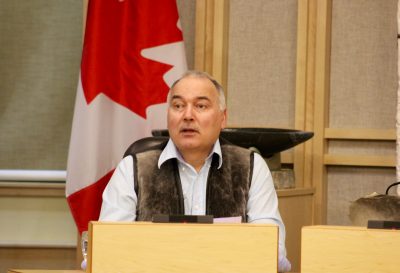
Nunavut Premier Joe Savikataaq speaks at a COVID-19 news conference on Wednesday, March 25. As of today, 166 people in Nunavut have been tested for COVID-19 and 116 people are under investigation and self-isolating, Savikataaq said. There are still no confirmed cases of COVID-19 in the territory. This morning, federal Indigenous Services Minister Marc Miller also announced $45 million in funding for Inuit communities during the pandemic. Savikataaq said Nunavut will receive $22 million of that funding, and he will meet with Nunavut Tunngavik Inc. president Aluki Kotierk this afternoon to discuss how it will be distributed. (Photo by Emma Tranter)
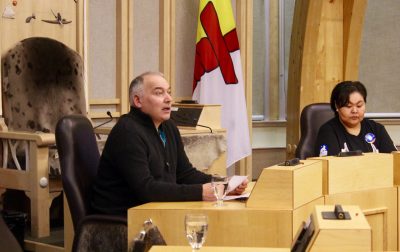
Premier Joe Savikataaq speaks at a press conference on March 24 in Nunavut’s legislative assembly. As of today, there are still no confirmed cases of COVID-19 in the territory. Starting tonight at 11:59 p.m., only residents and critical workers will be allowed into the territory. All public gatherings are banned. Nunavummiut returning to the territory must stay in isolation for 14 days in Ottawa, Winnipeg, Yellowknife or Edmonton, and can contact CPHOTravelRequests@gov.nu.ca for more information. Nunavut students returning to the territory must also stay in isolation for 14 days in either Ottawa or Winnipeg before returning and can contact fans@gov.nu.ca for direction. (Photo by Emma Tranter)
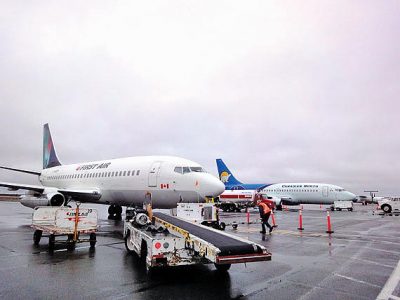
Dr. Michael Patterson, Nunavut’s chief public health officer, today banned most travel into Nunavut to protect the territory from the COVID-19 pandemic. “Although there are still no confirmed cases on COVID-19 in the territory, we are taking extraordinary measures to limit travel, in an effort to slow its possible spread,” he said in a news release. As of Wednesday, March 25, only Nunavut residents and critical workers will be allowed into the territory. Nunavut residents seeking to fly home must first isolate themselves for 14 days in either Ottawa, Winnipeg, Edmonton or Yellowknife. If they display no symptoms at that point they will be allowed to return home. This includes medical travel patients. The Government of Nunavut says it will help provide accommodation, food and necessities to travellers during their isolation periods. As well, all public gatherings in the territory are now banned. More to come. (File photo)
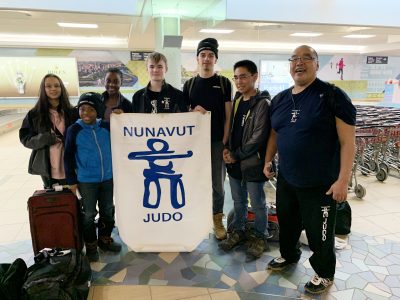
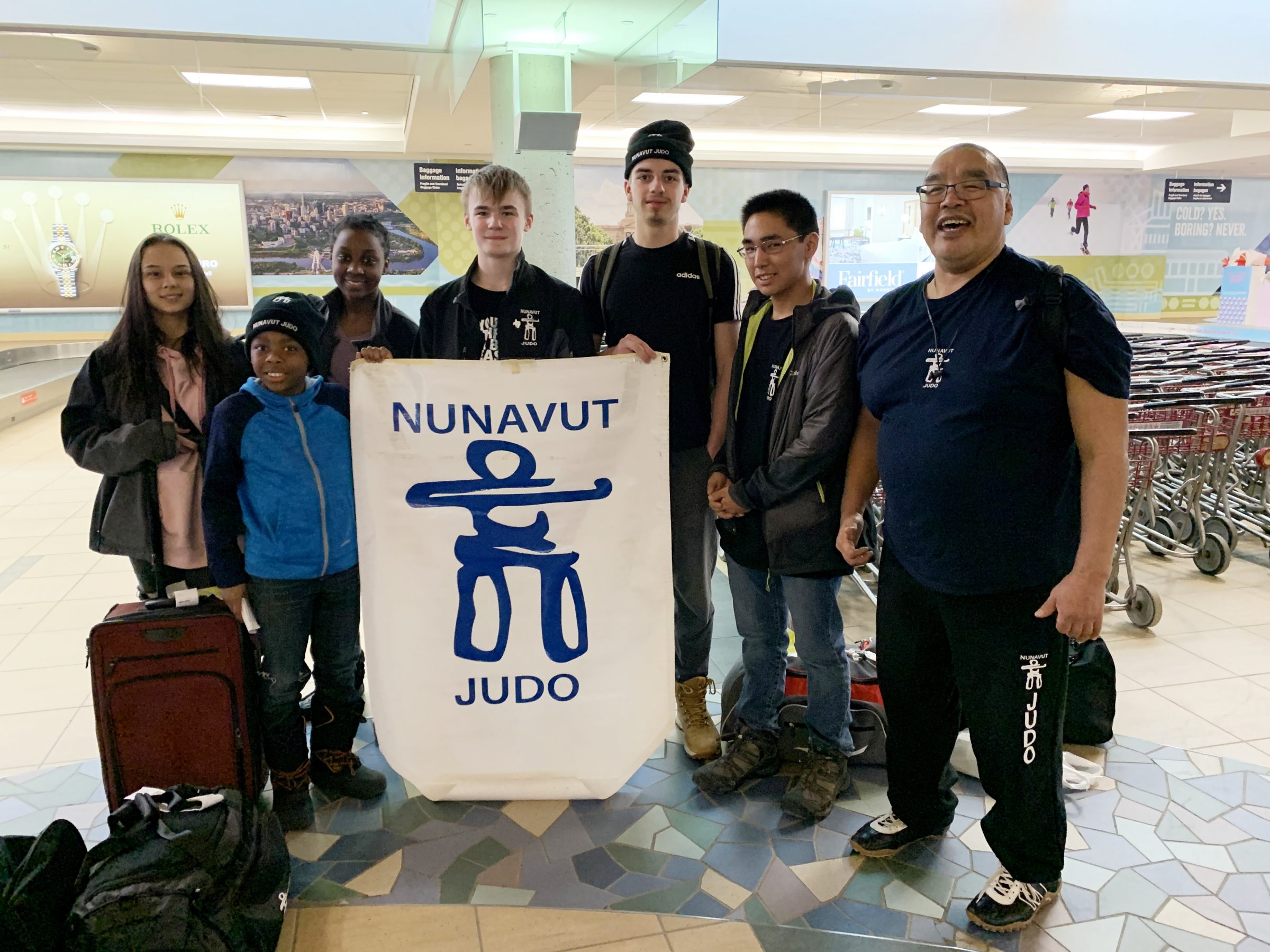
Members of Judo Nunavut returned home earlier this month from the Edmonton International Judo Competition, held on March 6 to March 8, with one gold and two silver medals. The judokas, seen here with Judo Nunavut president Robert Tookoome at far right, are, from left: Leetia Stokes, Azrial Tagnigou Petnkeu (gold), Kirsten Sessua Kuengou (silver), Jullien Gissing (silver), Yuri Harvard and Rocco Cannel. “The team did great considering limited competition exposure and lack of opponents to practice with,” said Tookoome. “All other clubs had an advantage as they have more resources and can compete year-round within their region.” (Photo courtesy of Judo Nunavut)
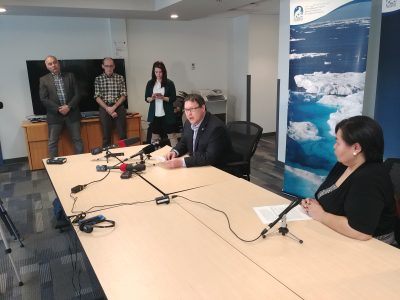
Nunavut’s minister of health, George Hickes, is urging residents to practise social distancing to help prevent the spread of the new coronavirus. “We can’t stand in line like we used to, give each other space. It’s time to stop thinking like consumers, and start thinking like citizens,” Hickes said at the territory’s daily COVID-19 update on Friday, March 20. While there are no confirmed cases of COVID-19 in Nunavut, to help prevent the spread of the disease all bars have been closed and restaurants are serving only takeout. All Nunavut Arctic College campuses and learning centres are also closed, and Government of Nunavut employees are working at home, unless they provide essential services. (Photo by Meagan Deuling)
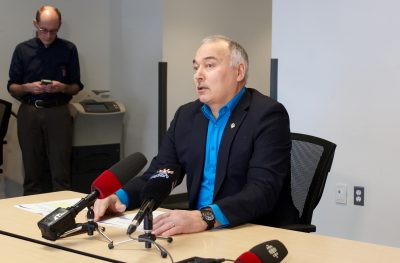
Nunavut’s hunters and trappers organizations will each receive $25,000 to support community-organized harvesting to help with food insecurity during the COVID-19 pandemic, Nunavut Premier Joe Savikataaq announced at a daily press conference on Thursday, March 19. Licensed daycares in the territory will also receive a total of $531,000 to support workers who are losing money due to daycare closures, Savikataaq said. As of today, there are still no confirmed cases of COVID-19 in the territory. See more later on Nunatsiaq.com (Photo by Emma Tranter)
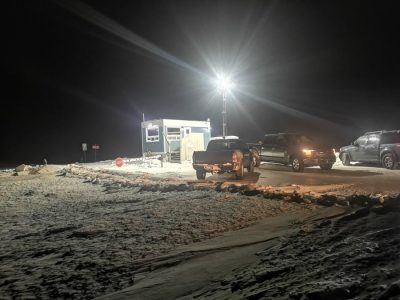
On Wednesday evening, workers from Rankin Inlet idle in trucks at the checkpoint leading to the Agnico Eagle Mines Ltd. Meliadine gold mine, about 20 kilometres from Rankin Inlet, to prevent newly arrived staff from Quebec from getting to the site. Agnico Eagle, which operates three gold mines in Nunavut, has said it will keep Nunavut workers on site as it increases its response to COVID-19. Read more on Nunatsiaq News. (Photo by Noel Kaludjak/Twitter)
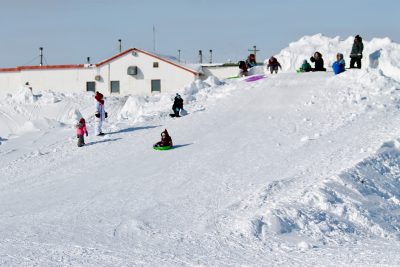
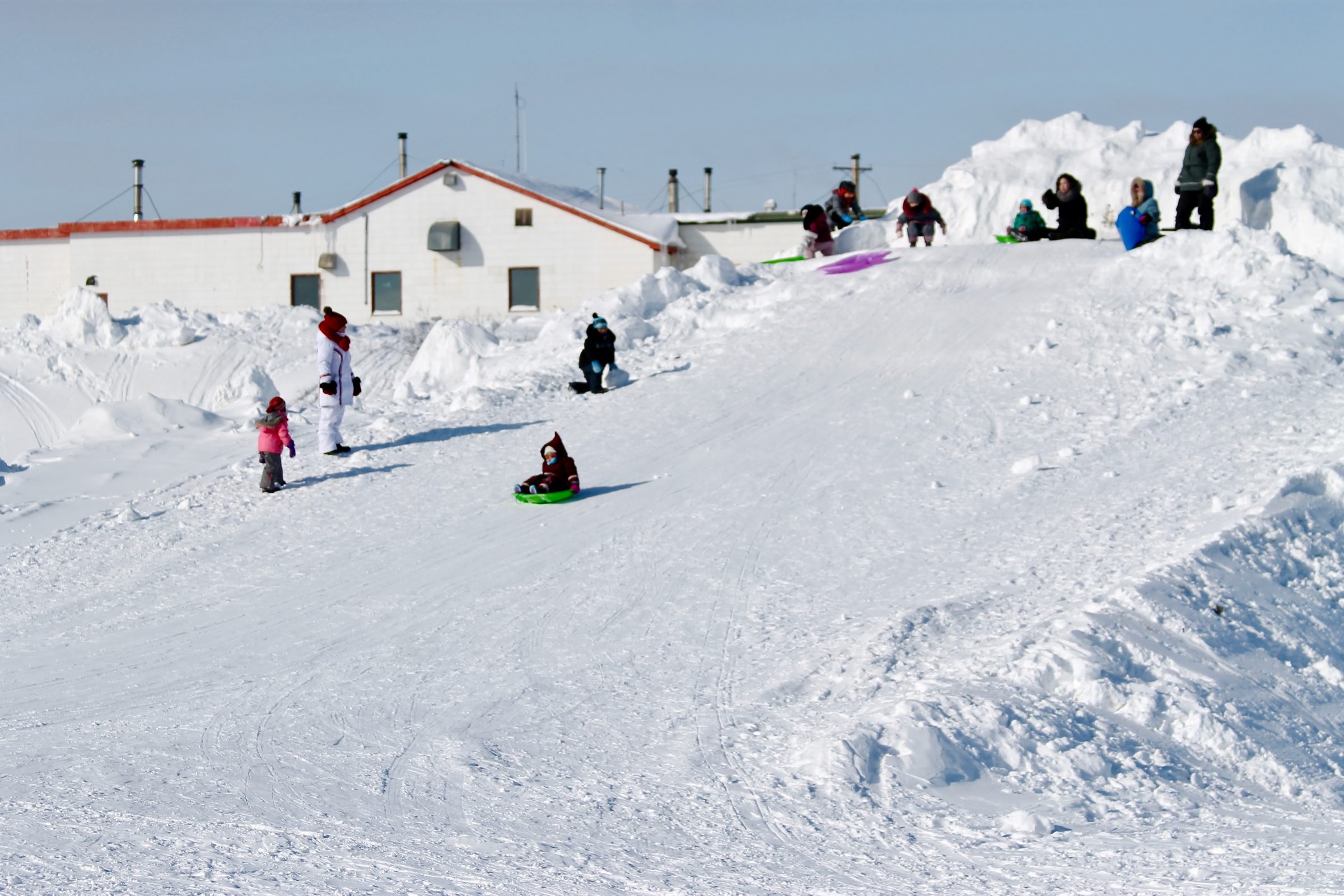
Kids take turns sledding down a slope built up by snowplows near the hockey rink in Kuujjuaq on Feb. 27. (Photo by Elaine Anselmi)
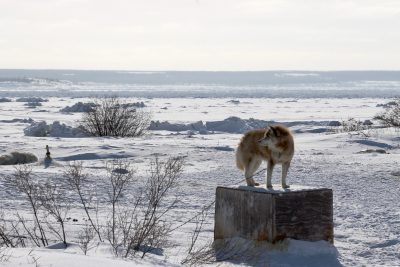
A husky looks back across the frozen Koksoak River in Kuujjuaq on Feb. 27. (Photo by Elaine Anselmi)
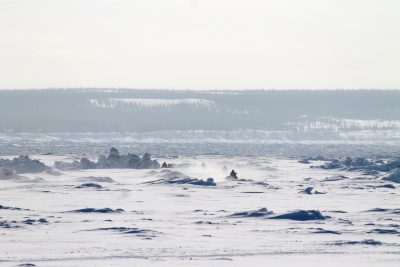
Four hunters set out on snowmobile on Feb. 28, crossing the Koksoak River from Kuujjuaq. (Photo by Elaine Anselmi)
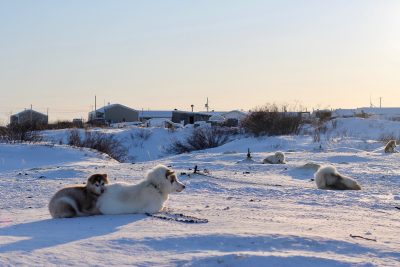
A pup leans in for some warmth on a -23 C day in Kuujjuaq on Feb. 26. (Photo by Elaine Anselmi)
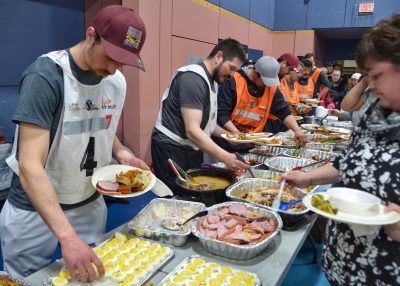
Participants and support crew in this year’s Ivakkak dogsled race lined up to fill their plates at a community feast during their stopover in Kuujjuaq, alongside community members, on Tuesday, March 3. (Photo by Isabelle Dubois)
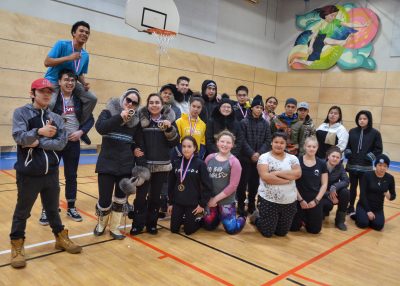
Secondary students celebrate finishing in the top three spots of Inuit game events held at Jaanimmarik School on Feb. 26 in Kuujjuaq. (Photo by Isabelle Dubois)
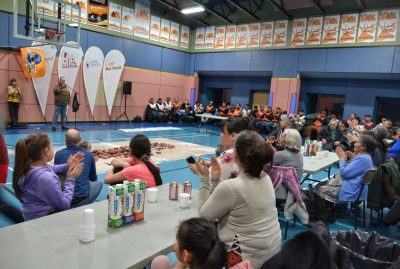
Adamie D. Alaku, Makivik’s vice-president of economic development, pays tribute to participants in this year’s Ivakkak dogsled race, as well as the organizers and support crew (sitting down at the back), at a community feast in Kuujuuaq on Tuesday, March 5. Standing to Alaku’s right is race coordinator Akinisie Sivuarapik. (Photo by Isabelle Dubois)
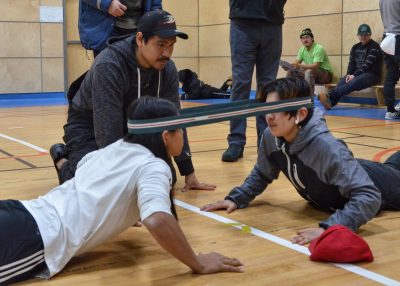
Etua Mark-Greig, left, and Etua Snowball compete in the head-pull competition at Jaanimmarik School’s Inuit games on Feb. 26 in Kuujjuaq. Mark-Greig placed first and Snowball second in their Secondary 2-3 category. (Photo by Niivi Snowball)
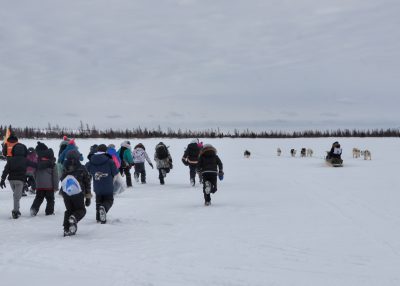
Eric Ittukallak and Jackusi Amamatuak from Puvirnituq, who are participating in this year’s Ivakkak dogsled race, take their dogs to their resting site during their stopover in Kuujjuaq on Tuesday, March 5, as local children run after them to try to hop on their sled. (Photo by Isabelle Dubois)




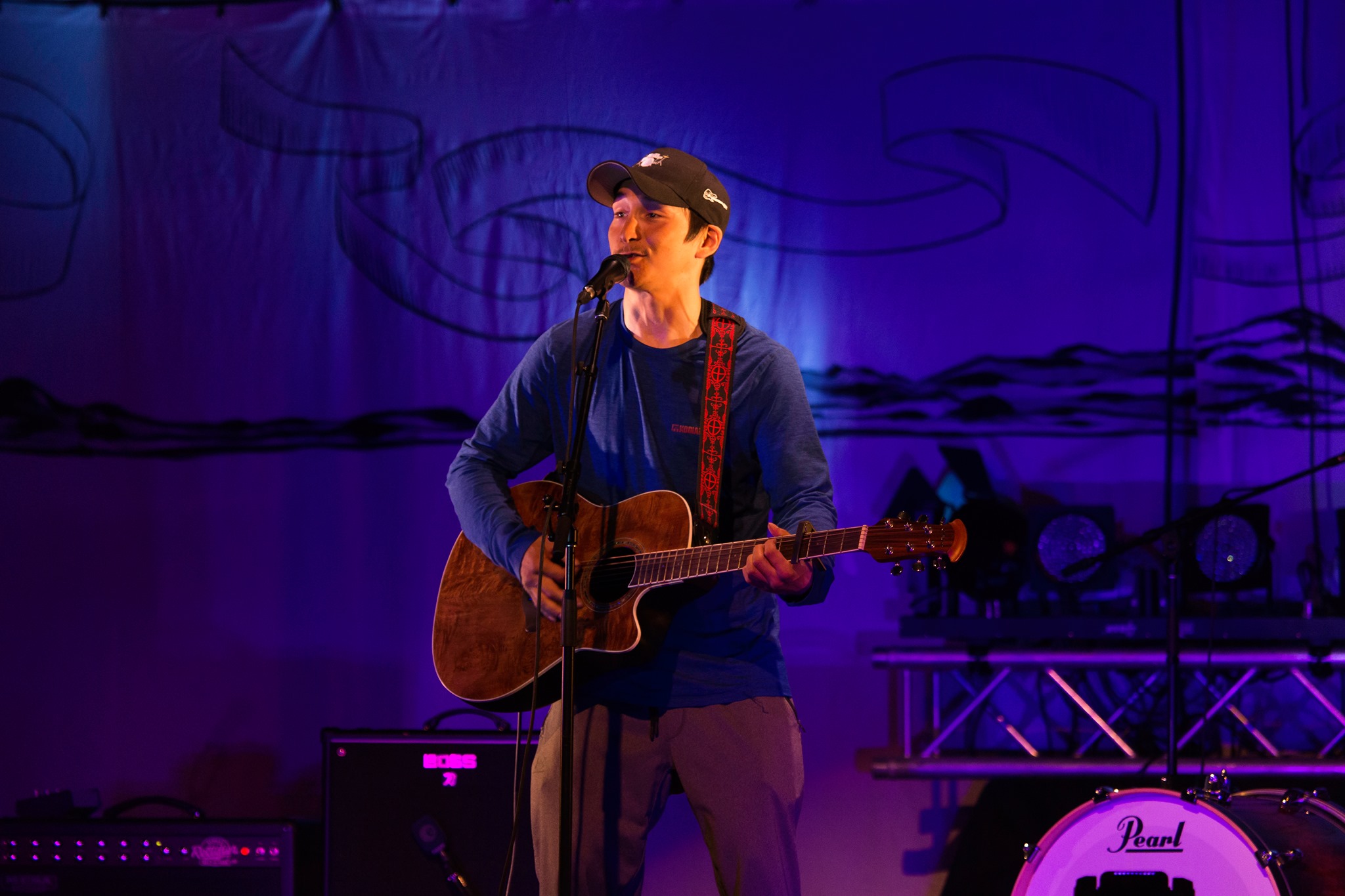 www.facebook.com/alianait. (Photo courtesy of Alianait)">