


Mixed reviews for Plan Nord housing scheme
“It’s a bit disappointing”
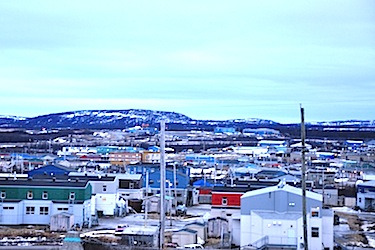
Kuujjuaq mayor Paul Parsons says Quebec should hear directly from Nunavik’s homeowners in order to tailor its subsidy program to the needs of the region— and his community, shown here. (PHOTO BY SARAH ROGERS)
Plan Nord pledges to build hundreds of new houses in Nunavik, but the head of the region’s housing bureau says that number will depend on how many Nunavimmiut are ready to become home owners.
At the May 9 launch of Plan Nord, Quebec’s plan to develop the province’s northern regions, officials announced that the plan would bring 500 new homes for Nunavik by 2016.
But only 300 of them are social housing units – 200 of them are to fall under a program which subsidizes home ownership.
“That means 200 potential home owners that we have to find,” said Watson Fournier, manager of the Kativik Municipal Housing Bureau. “These people are going to have to apply and pay the price of buying a home.”
That’s a price that has traditionally been too steep for most Nunavimmiut – there are only about 80 private homes out of the roughly 2,900 units in the entire region.
Fournier estimates that building a modest, three-bedroom home in Kuujjuaq would cost about $400,000 – and possibly much more in communities farther north.

Like many, Fournier believes home ownership can help relieve the region’s housing crunch. The benefits are two-fold because for every new home owner, a social housing unit is freed up for another family in need, he said.
But Quebec has yet to confirm exactly how the new home ownership program will work, except to say that it will draw on previous subsidy programs.
The previous provincial program for new homeowners — which expired in March 2010 — provided subsidies of up to 75 per cent on the cost of construction.
After a house was built, homeowners could expect to see a second subsidy reimbursed up to 75 per cent of municipal taxes, up to $7,000 per year over 15 years, along with an additional subsidy for home insurance.
Fournier said the new program is likey to offer much higher subsidies, based on the higher cost of living in Nunavik.
But current homeowners already feel the squeeze of the high cost of municipal taxes and house maintenance in Kuujjuaq, said the town’s mayor Paul Parsons, who thinks any new subsidy should consider the pros and cons of past programs.

“We just hear about the struggles [homeowners] have to keep their homes – some have even reverted back to social housing,” Parsons said. “I’d like to hear more from these homeowners to find out what they want to see in a new program.”
Parsons said it’s “hard to say” if increased subsidies will translate into more private homes in the region; either way, he said he thinks the announcement of 500 new homes for Nunavik is misleading when some will be privately-built and owned homes.
“Where are those [200] people going to come from?” he said.
While the Quebec government has touted the housing announcement as the answer to Nunavik’s housing shortage, Parsons said the addition of 300 new social housing units also falls short of meeting the region’s needs.
“It’s great to hear about an injection of new homes,” he said. “But really, we’re getting 300, which is not the 1,000 that we need.

“It’s a bit disappointing.”
Quebec is in discussions with the federal government to deliver on more housing, although at the KMHB, Fournier said discussions with Ottawa have been “difficult.”
“If we only get 300 homes, we’re certainly going to take it,” he said. “But it’s not going to stop us from going after the remaining 700 (that we need).”
Since 2000, Nunavik has seen between 60 and 70 new units built every year until the existing social housing construction program.
So with at least 300 more new social housing units slated for construction over the next five years — plus the 340 pledged in a renewed federal-provincial agreement in 2010 — the region should at least see a temporary increase in housing in the near future.
KMHB statistics will determine which communities are in most need of new housing and units will likely be allotted at the next meeting of the Kativik Regional Government’s regional council later this month.
At that meeting, Parsons knows the region’s municipalities will also have to consider growing their infrastructure to meet the needs of expanding communities.
The addition of new homes will require new roads, new water and sewage trucks and even new daycare spaces, he said.
“It’s all going to put a lean on the system and we’re already reaching a limit now,” Parsons said. “We need to plan for this now.”
(0) Comments