


KRG talks about chickens, telephone woes, urban employment
A round-up of news from Nunavik’s Kativik Regional Government meetings
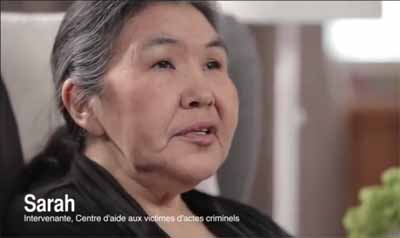
Sarah Ekomiak, a Kuujjuaq-based support worker with Nunavik’s Sapummijiit crime victims assistance centre, explains her role in a new video produced by Quebec’s network of crime victims assistance centres, called CAVAC. Sapummijiit celebrated its 10th anniversary this year.
KUUJJUAQ — The Kativik Regional Government is moving closer to realizing two egg production projects in Nunavik.
The KRG’s department of regional and local development has spent the last couple of years looking at bringing meat and egg production to the region, as a way to cut down on the cost of shipping foods from the south.
In Kuujjuaq, the local hunter and trapper’s association will oversee a chicken coop outside the community that will house about 50 chickens to start.
The birds are expected to arrive in Kuujjuaq in January, the KRG council heard last week.
A second coop is being planned in the Hudson Bay community of Akulivik, which should be ready to receive its first chickens in the spring of 2015. Eggs from both projects will be sold locally.
As part of its efforts to launch bio-food projects in Nunavik, the department has helped to launch a greenhouse in Kuujjuaq, with another planned in Salluit, while efforts have also been made to transform local products like berries and fish.

The KRG has also looked at raising rabbits in Nunavik’s communities.
Ungaluk’s next round of recipients to be announced soon
The latest batch of applications for funding under Nunavik’s Ungaluk crime prevention program are being reviewed, co-ordinator Sarah Airo told KRG councillors last week.
2015 fund recipients should be announced sometime in mid-December, she said.
Since 2006, the program has received roughly $10 million each year to fund wellness and crime prevention activities in Nunavik’s communities.
This is the first round of applications since Ungaluk was revised to give priority to projects that help reduce substance abuse and addiction across the region.
With 70 per cent of the region’s crimes linked to alcohol and drug abuse, and many of them violent, the program has re-focused its efforts this year on fighting addiction, violence and promoting social reintegration.
The criteria has changed, but people responded well to the new guidelines,” Airo said.
“For the next year, we’ll be working with the communities to build capacity on how to run a crime prevention projects,” she added. “A big part of our mandate is to help communities make those plans.”
Bell Canada doing upgrades to Nunavik’s landline phones
Bell Canada has become to upgrade its technology in a handful of Nunavik communities.

The KRG’s administration department says it’s been in contact with Bell Canada, which has begun installing equipment in Aupaluk, Salluit, Kangiqsualujjuaq and Kuujjuaq to increase the number of long-distance lines in those communities.
That’s following a number of complaints made over the last few years from communities throughout Nunavik, who say they’ve been plagued with poor quality and sometimes non-existent long-distance and even local telephone service.
But according to the KRG, Bell has received few of those complaints directly.
That’s why the KRG has asked Nunavimmiut to track and report their phone problems, either directly to Bell Canada by dialing 611, the KRG or through the CRTC (Canadian Radio-television and Telecommunications Commission), which has a mechanism to file an official complaint.
Sapummijiit celebrates 10 years
Nunavik’s crime victims assistance centre, Sapummijiit is celebrating its 10th anniversary this year
The program employs six agents, who offer free, confidential, Inuktitut-language services to victims of crime and their families.
Sapummijiit agents provide information about how court works, how to testify and accompany victims through the court process.
The program falls under a Quebec-wide network of crime victims support centres, who produced a video of Kuujjuaq-based agent Sarah Ekomiak explaining her role.
“Since our court system is in our second language, my role is to explain to them and tell them how important it is to name everything that was done to them,” Ekomiak said.
“It mostly conjugal violence and sexual abuse. Inuit are very easy to forgive and they don’t like to talk about private parts, so my role is to explain to them and support them in naming what they went through.”
In 2013, Sapummijiit agents served 360 clients across the region. About 80 per cent of them were women, while 14 per cent were minors.
Montreal Inuit jobs skills training centre looks for funding
The KRG has sent a funding request to both the Quebec and Ottawa to extend funding to the Montreal-based Irvitivik job and like skills centre.
The centre, which opened in 2010, serves the 1,000 or so Inuit who call Montreal home — the majority of whom are from Nunavik.
Although Inuit make up just 10 per cent of all Aboriginal people in Montreal, they make up almost half of the homeless Aboriginal people living there.
Irvitivik is the only employment service geared to Inuit and available in Inuktitut.
But the centre’s current funding agreement with both levels of government expires next March. The KRG’s department of renewable resources, which oversees the centre, has applied to Emploi-Québec for more funding.
The KRG is also negotiating with the federal government for long-term funding dedicated to urban employment and training services.
“We’re trying to make clear that Inuit are distinct; they are not First Nations and not immigrants,” said department director Margaret Gauvin.
“We want it to become logical, that when you’re homeless in Montreal, you go to Irvitivik.”
The centre has served 66 clients since 2012, Gauvin said.
Kangirsuk’s “place of support” ready to re-open
Nunavik’s Makitautik reintegration centre has closed its doors temporarily while the centre undergoes a restructuring, the KRG’s legal department told council meetings last week.
The Kangirsuk-based halfway house, which first opened in 1999, helps newly-released offenders integrate back into the community.
But a federal inspection in October 2013 revealed a number of issues with the centre: inspectors found it was understaffed and lacking proper management.
At that point, the centre’s director had also resigned, and by mid-2014, Quebec’s department of public security stopped sending clients to the centre.
But Makitautik, which means a place of support, has made a number of changes in hopes of re-opening its doors soon, said the director of KRG’s legal department, Philémon Boileau.
To start, the centre hired a new director, Lucy Grey, this past October. The centre now counts seven staff members, including animators, counsellors, a cook and administrator.
“Since then, things are moving in the right direction,” Boileau said.
The centre has not lost its funding, but is still waiting on a green light from the Quebec government to begin accepting clients again.
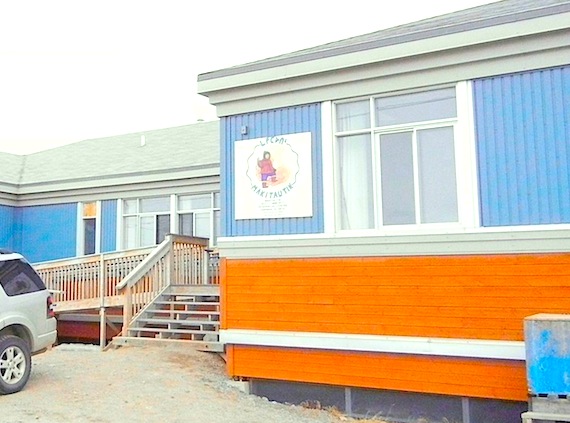
Kangirsuk’s Makitautik reintegration centre hopes to re-open its doors soon. (FILE PHOTO)
(0) Comments