


$823.5M output sign of ‘really strong’ Nunavut travel industry
Study looks at economic impact over course of 2024
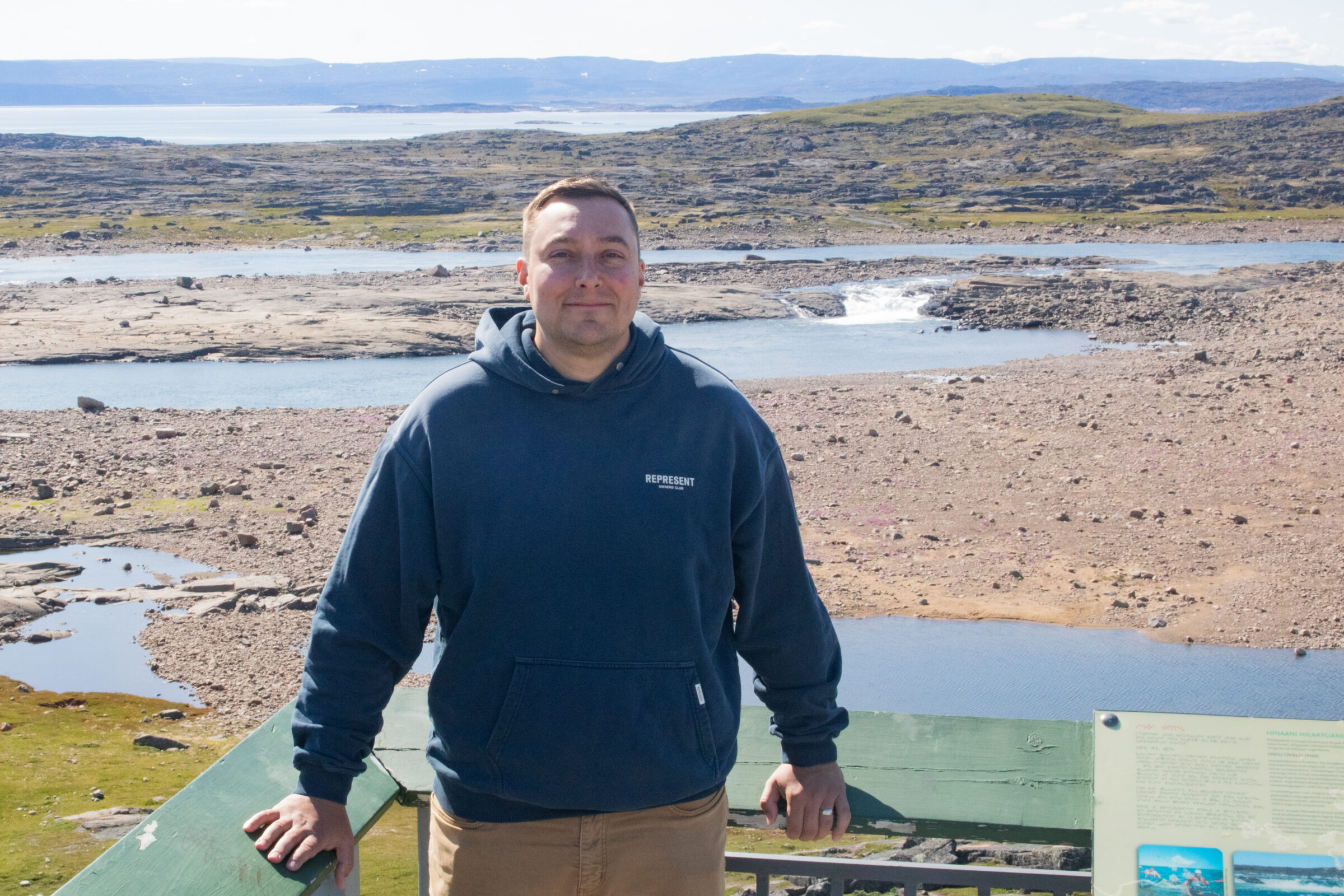
Travel Nunavut president Alex Stubbing says improvements to infrastructure in the territory will grow a “really strong” travel industry. (Photo by Jeff Pelletier)

Nunavut’s travel industry had a $823.5 million output and supported 6,322 jobs in 2024, an economic impact assessment commissioned by Travel Nunavut has found.
“We’re really happy with the results from the study. I think they show great promise and show that the travel industry is really, really strong,” said Alex Stubbing, president and CEO of Travel Nunavut, in an interview.
Gross output is the total value of goods and services produced by an industry.
The purpose of the study was to find out the economic impact of Nunavut’s travel industry. According to Stubbing, no such study had been conducted yet.
A 2019 report put the travel sector’s impact at $400 million, and responsible for 3,000 jobs.
But previous assessments of the economic impact of travel in Nunavut were “guesstimates,” Stubbing said. Numbers in this latest study are the “first figures that have come from actual research and data collection, so these are going to act as as baseline figures.”
Travel Nunavut hired the firm Praxis Consulting, which collected data from Statistics Canada and through interviews with people involved in the travel sector, Stubbing said.

Some of the other dollar figures in the study include $461.3 million in gross domestic product, $333.9 million in labor income, $82.2 million in federal tax revenue and $49.9 million in territorial tax revenue.
When examining travel, it’s not just tourism that adds value to Nunavut’s economy, Stubbing said. Medical, business and scientific travel all contribute.
“When you start to explain the breadth of the travel industry, people then start to understand and think, ‘Oh yeah… those figures definitely make sense,’” Stubbing said.
“[The $823.5-million impact is] a really impressive figure, and from what we can tell, that puts the travel industry as the second biggest industry in the territory outside of the mining activity.”
Of the 6,322 jobs figure, Travel Nunavut describes 5,408 of them as “direct positions.”
Examples of those jobs, Stubbing said, include pilots, hotel desk workers and cooks, and outfitting guides.

The study didn’t offer a breakdown of how many of those roles went to Inuit or locals.
“When we go to do this same study in years future,” Stubbing said, “that’s definitely the type of thing that we’re going to try and gather information about.”
At Travel Nunavut’s 2023 annual general meeting, officials mused over the potential of travel in Nunavut being a $1 billion industry by 2030.
Half-way through the decade, Nunavut could reach that goal sooner than expected.
“There’s so much going on in the territory and so much growth happening in the territory that it’s hard to believe that we wouldn’t get to $1 billion by 2030,” Stubbing said.

For continued stability and growth, Stubbing called for infrastructure improvements such as paved runways, and financial support for hotels and local tourism companies.
“The travel industry supports businesses and jobs in every community in Nunavut, so it’s a very sustainable industry,” he said.
When you include ALL travel to Nunavut even when it’s not tourism. Pat on the back.
Nunavut has never had a meaningful tourism industry.
Cause if u only count real tourism the actual number is obviously way smaller. Then if u remove cruise ships its probably next to nothing.
Examples of those jobs, Stubbing said, include pilots, hotel desk workers and cooks, and outfitting guides.
Also GN Medical Travel, GN staff processing duty travel, the staff who do the travel, the court workers and judges and prosecutors who travel for work, etc etc etc.
Majority of dollars spent is on the airlines they are the most expensive in our country. Go southern city and find out I could have gone around the world with a one way ticket price out of the Nunavut territory. Worst than the tarrifs being imposef by Trump. Airlines up to the arctic a clearly winners of profit.
As others gave said in the comments, the numbers are not credible or even relevant.
The vast majority of the $830 travel is staff going on vacation or coming home, medical, andlocals going from community to community. The number is inflated by that activity (there is no other way to travel). Secondly is the limited accommodation. Thirdly, the extraordinary high cost of sir travel , accommodation and dining inflated the figures disproportionately
As for the 5400 jobs. Lol, half of Nunavuts population is under age 18 or over age 70. Limited employment there. The vast majority of the rest work for one level of government or another, a government agency, an RIA or an NGO. Many are permanently unemployed. Must be the full-time government workers holding down the Travel Industry jobs!
“Nunavut’s travel industry had a $823.5 million output and supported 6,322 jobs in 2024”.
‘Oh yeah… those figures definitely make sense,’” Stubbing said.
According to Nunavut Statistics Bureau, there were 15,700 people in the Nunavut Labour Force in May of 2025.
therefore, tourism accounted for 40% of all employment in Nunavut (2 out of every 5 jobs.)
https://www.gov.nu.ca/en/nunavummit-kiglisiniartiit-nunavut-bureau-statistics/labour-force-and-employment-data
But it gets better. With about 40,000 Nunavummiut, that $823.5 million output works out to a little over $20,000 for every adult, child and infant in Nunavut.
I can definitely see how those numbers make something, but sense, not so much.
Airline prices going even higher,EIC, makes 300 million of that 800 million and it all goes to Winnipeg Manitoba, oh yes Tourism is big in Nunavut, where is this guy from.
Sounds like the Nunavut 3000 playbook…
You should run Nunavut on how things should be done that way we won’t waste time and money. What is your solution!
The article without directly saying it was seemingly making a nuance between current travel and tourism. There is basically no tourism industry in Nunavut. Other commentators have laid this out already. Probably 85% of the so called “travel industry” in Nunavut is basically commercial, business or non leisure. The economic impact numbers provided also do not pass the litmus test. Is travel a major industry in Nunavut? Undoubtedly. However the numbers (dollars and employment) presented in the article make no sense at all. The vast majority of the revenue generated would go directly to the airlines who last time I checked were not based in Nunavut.
The so called economic impacts of the travel industry is simply a byproduct of the isolated and vast nature of the territory and the requirement of anyone working here to fly to get from Point A to point B. The so called “travel industry” here is really not about much more that that.
Additional investment for hotel operators would make no difference unless the current hotel operators used it to renovate their facilities and more importantly add more rooms, train their staff, improve F&B, etc… As for the runways this investment would lead to absolutely no additional airlines flying into Nunavut communities or the current ones upgrading its aircraft or adding more flights. No other airline is going to magically start flying to communities because they asphalt their runways. Nunavut has major airports with asphalt runways and no one wants to fly here so more asphalt is going to increase travel here? Unlikely.
The so called “travel industry” is what it is. Commercially oriented. High ticket costs, lack of flight options, dependable flight schedules, lack of accommodation and lack of substantial tourism initiatives will ensure that the travel industry remains exactly what it is today. A necessary commercial component for the functionality of the territory and nothing more.
Exactly true and well put..i worked for nunavut tourism for 2 yrs…seen this first hand…disgracefull to mislead..majority is government dollars feeding government travel to feed other government departments(corporations)…the number of tourists and the dollars they spend is miniscule