

Baffinland could run out of money by end of next week, CFO says
Company asking court to approve loan from Export Development Canada, which would keep operations going through shipping season
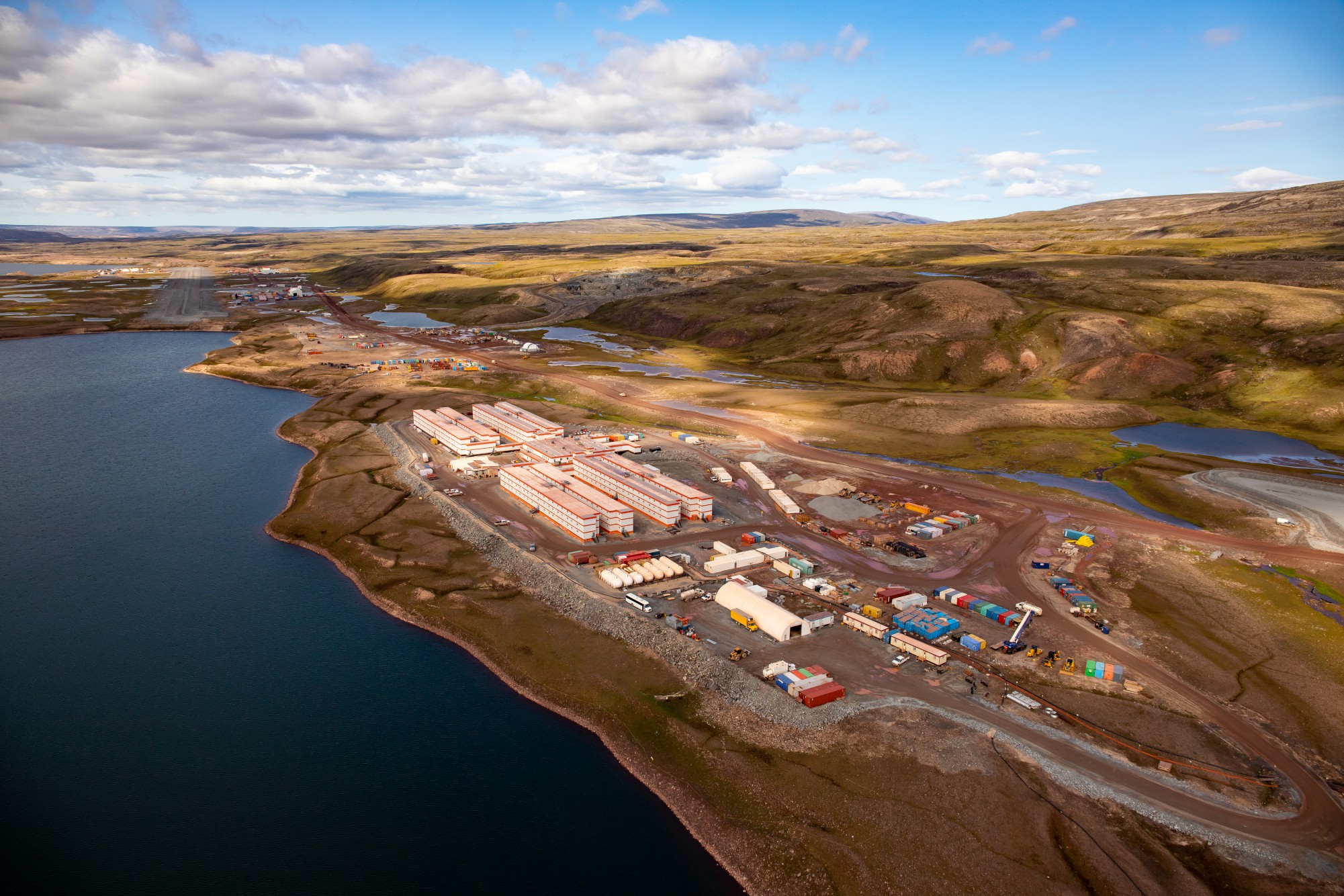
Baffinland plans to ask an Ontario court to approve a $660-million loan from a Crown corporation to cover shipping season costs. (File photo)

Baffinland could soon run out of money if it doesn’t get a loan.
Celeste van Tonder, the company’s chief financial officer, laid out the company’s situation Wednesday in a sworn affidavit.
She said the loan would give Baffinland Iron Mines Corp, which operates the Mary River iron mine on north Baffin Island, the finances required to continue operations through this summer’s shipping season.
Otherwise the company will have a “negative cash balance as of the end of next week,” van Tonder said in the affidavit.
Baffinland is seeking up to $660 million from Export Development Canada, a Crown corporation owned by the federal government, as part of the company’s creditor protection proceedings in the Ontario Superior Court that began May 15.
But a judge needs to approve it. Representatives from Baffinland are expected to make their case Friday in the Ontario Superior Court of Justice.
van Tonder said Baffinland lacks the “liquidity” to keep Mary River Mine operational and that, unless the Oakville, Ont.-based company gets the loan, the mine will be “forced to curtail or cease operations entirely and a significant number employees may need to be placed on leave.”
This comes ahead of the “cash-intensive” three-month shipping season, van Tonder said.
The company asked four entities to bid on offering it a loan by May 30. Export Development Canada, which is already one of Baffinland’s creditors, won. Over the past decade, it has given Baffinland at least four loans, for which the mining company owes more than $100 million.
Not getting the approval would have “far-reaching consequences” for the company and territory, van Tonder said in the affidavit.
Baffinland is Nunavut’s largest private-sector employer with approximately 1,200 people, including 300 Inuit employees, who, along with Inuit businesses, depend on the mine’s “continued operation,” she said.
As of May 14, Baffinland owes a total of $2.6 billion to 231 creditors, according to a list the company compiled for the court.
A dozen of those creditors are northern businesses and entities who are owed at least $27 million.

Baffinland’s financial troubles are linked partly to its failed Phase 2 railway expansion proposal. The company spent more than $1.5 billion on a proposed expansion that was ultimately rejected by the federal government after years of hearings and opposition from some north Baffin communities.
“Baffinland is in active dialogue with all stakeholders, including employees, suppliers, government related institutions and communities, to ensure continued support,” company spokesperson Peter Akman wrote in an email to Nunatsiaq News.
He declined to comment on the “specific figures or details contained in the court materials.”
Business will carry on as per usual this year to we will run out of money next week.
That is quite the change in narrative.
A judge indeed needs to approve it but the article frames it as if Baffinland still needs to make an ask. They got competing offers from multiple parties for DIP financing and accepted the offer from EDC, who was already an existing lender. This means they’ve done enough due diligence to deem the project worthy of rescue and at the very least, that it’s valueable enough that a buyer will emerge
I would be very surprised if this is not approved by the courts. They want to protect shareholder value. A government arm willing to provide financing signals to a buyer that Canada still wants this mine around, which is a good thing for the seller in terms of price.
Everything seems to be pointing at Baffinland being sold in the next 12 months rather than restructuring the debt. Unless something weird happens like iron ore doubling in price
They want to protect the mine and its employees.
The shareholders are not their priority
The former Liberal Northern Affairs minister squashed the mines railway plans to become financially viable because it is on Inuit land.
And QIA, NTI and North Baffin hunters were also not in favour he approve Baffinland Phase 2 proposal, Northern Affairs minister Daniel Vandal stated.
“The land that the mine is on is not Crown land; it’s Inuit owned land…Those for me were the most salient (important) reasons.”
Nunavut MP, NDP Lori Idlout rejoiced, saying she had an “overwhelming sense of relief” on Ottawa’s rejection of the mines proposal.
Interesting, Lori Idlout now sits as a Liberal floor-crosser. Who, a few days ago, sat front row and a few seats from PM Carney during question period.
Before the legally required approval was even granted Baffinland bought and shipped railway tracks at great costs. Was this anybody else’s fault? Now folk are trying to blame everyone else for this mistake the company made.
If the company followed the law and perhaps listened to the people’s concerns, perhaps they would be in a better financial footing.
And what ‘law’ says your not allowed to ship materials intended for construction…
@ facepalm
Mine
Why should taxpayers pay over a half-billion dollars in a “loan” that will probably never be repaid?
According to Wikipedia, “Baffinland operates on investments, not revenues from iron production and sales, and according to a February 2021 report commissioned by Baffinland by Graeme Clinton for the NIRB assessment, the company has had a huge deficit since 2016.[83][101] The investors who acquired the company in 2011, were attracted by the quality of the iron ore and the record high prices of iron ore. With the sharp decline in iron ore prices, investors are unwilling to undertake capital intense projects…”
If you want to subsidize Nunavut workers, it makes more sense to pay them directly, rather than continue to throw money at a mismanaged mining company that refuses to be transparent on “specific figures or details” and has virtually no capability of ever paying its current debts, let alone any new ones.
nonsense. their loan is safe, the resource is worth far more.
And jobs for locals are worth more than handouts. (which are happening in anycase)
So will Pond Inlet’s new training centre be training people to work at a mine that likely will no longer exist? The people of Pond Inlet were “not in favour in favour” of the expansion that would have made the mine economically viable.
And Nunavut MP Lori Idlout is quoted as rejoicing, saying she had an “overwhelming sense of relief” on Ottawa’s rejection of the mines proposal.
Go figure!
Perhaps Baffinland’s 2 shareholders will come up with the money if the alternative is losing their mine.
On the other hand, with Europe’s energy shortage due to the Gulf closure, and the likely collapse of the world economy, the demand for iron, and hence the price of iron ore, could both drop substantially.
So, maybe the 2 shareholders won’t return the money they took out of Baffinland.
“the money they took out of Baffinland”???
You’re a clown, they put money IN not out.
The canary has left the proverbial coal mine, foreshadowing a very bleak outlook. This is not a test, nor a drill, this is what happens when an industry is regulated to death. Literally.
newly coming to nunavik, narrative controls and lack presented for all constituents
Every single asset company who has tried to start an operation in Nunavut has failed.
It seems to be a practical reality, given how much money you have to spend on infrastructure, how long it takes to find, develop and permit a mineral deposit, how much Inuit demand, and how much money you need to operate up here, that a company needs a revenue stream outside of Nunavut to be anywhere close to being successful here.
Which is to say, Nunavummuit must rely on mines elsewhere to have mines here. This is perhaps not the most sustainable or self-reliant approach.
It is probably way too early for lessons learned.
However, it should not pass marking at this stage that it appears highly likely that unless government starts building major infrastructure here like elsewhere in Canada, unless projects can develop more smoothly without the process being coercively economically driven, unless Inuit temper our expectations, that this story may readily repeat itself.
This mine is on Inuit Owned Land. Inuit chose it for a reason…$$$