

Federal government commits $8.5M for French studies in Nunavut
GN will pony up an additional $7.2M; agreement runs until 2028
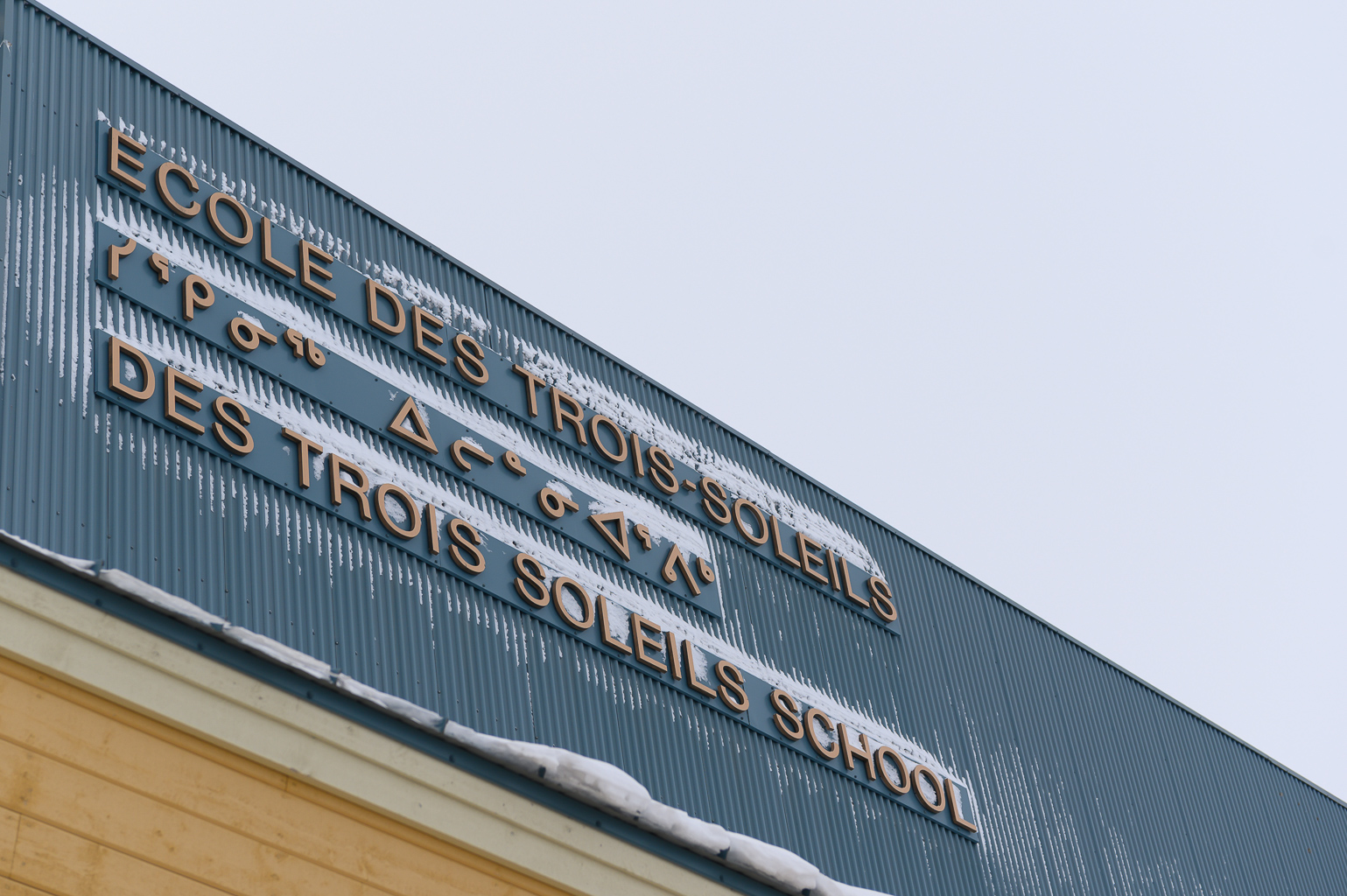
French-language schools like École des Trois-Soleils in Iqaluit will receive a boost to funding for teachers and programming after the GN and federal government signed an $8.5-million deal on Monday, says Nunavut’s Department of Education. (File photo)
Updated Jan. 15 at 5:45 p.m. ET
The federal and territorial governments have reached a new $8.5-million funding agreement to support French education in Nunavut.
The federal Department of Canadian Heritage announced the deal Monday in a news release.
The deal aims to help Nunavut offer education in French as a minority language and French as an additional language from preschool to the post-secondary level, the release said.
French minority language education is mandated under the Charter of Rights and Freedoms for jurisdictions where there is a minority population of French language speakers. French as an additonal language is provided in schools to most anglophones.
It is part of a series of deals between the federal government and the provinces and territories to achieve equality between Canada’s two official languages. The funding is spread over four years, ending in 2028.
“Languages shape who we are, and promoting and protecting them begins with education,” said Marc Miller, the federal minister responsible for official languages, in the release.
The Nunavut Department of Education will contribute an additional $7.2 million.
That money will be for “regular operational and maintenance funding, as well as for teacher salaries, the co-ordination of the official languages programs, early child-care projects, community programs and other projects” for both French minority language and French additional language education, said department spokesperson Victor Pootoogook in an email Tuesday.
Note: This story was updated to clarify how individual organizations will receive their share of funding, and to explain the difference between French minority language education and French as a second language instruction.
Why?
Parce que
Suuma?
Has anyone done the math to see how much per student this works out to be? Based upon the number of students this is a hefty price tag. As well the the French school refuses any student who doesn’t have a Francaphone parent even if they are interested in French immersion for their child. Since it’s our tax dollars it’s time the French school opened their doors to all families!
Quick math computes to $30,000 per French student per year
while reading the article i was thinking , wow offering French in all communities… am i correct in assuming this?
I wonder how many Nunavut children would eat from the 8.5 million bucks? Rather teach a colonists lingo than feed children.
How dare the Government invest in children’s education and future when they should be offering more handouts and teaching dependence, reliance and perpetuating the existing welfare mentality. And all the while I thought colonialism was bad!
French education in Nunavut is provided because rights-holders ask for it and does not reduce Inuktut or Inuit education funding.
Blaming minority-language education for food insecurity misdirects anger away from the real causes: cost of living, supply chains, housing, and poverty.
Children should be fed and constitutional language rights respected—these goals are not in conflict.
Pitting hungry children against minority language rights is a false and misleading argument.
Not sending my family to Quebec. So, learning french is not my idea of helping my kids and Nunavutmiut. They should open an Inuktitut school instead. That way we keep our lingo instead of learning the colonists ways.
Your child will eventually make their own decisions in life and if you want them to have as much runway as possible, being bilingual both national languages in Canada opens up significant opperunities across Canada and gives you a major advantage when applying to Federal jobs.
I don’t see how anyone wouldn’t want to maxamize the potential future for their child.
I understand that it’s not the language of Nunavut but let’s be honest, Nunavut has limited opportunities and will be highly if not always dependant on federal transfers due to the limited economic activity and the non gov’t economic activity will always be driven primarily from outside of Nunavut investment, mines for instance, who will be using English and In Agincos case French. We can reasonably conclude English and French will be the dominate languages around non GN employment in Nunavut.
Don’t hamper your kids future over your own bias, be objective.
I agree with what you’re saying but investing that amount of money into French schools without creating a French immersion program for all the non-francophone families seems like a disservice to the rest of the families living in Nunavut. This is where the backlash is coming from – all the families who want their children to learn French and can’t access the services. The French school has received a lot of funding so it’s obvious the rest of the community is going to see it as unfair (even though “technically” it’s not).
Blaming minority-language education for food insecurity misdirects anger away from the real causes: cost of living, supply chains, housing, and poverty.
Children should be fed and constitutional language rights respected—these goals are not in conflict.
Where is this energy for Inuktitut?
I wish this was for Inuktitut not French .
I feel like Iqaluit is in the wrong language
It would be great for our indigenous languages to get the same financial and political support that colonial languages get, the French population in Nunavut is so small yet they can get all kinds of funding while our language is slowly dying and being replaced.
Colonization is still going very strong today. Maybe the younger generations will be more open minded and less threatened by indigenous people.
A better understanding, it still amazes me how in today’s age this is still going on. Things change and yet most things stay the same.